Quick Answer
Shinrin-yoku means forest bathing in Japanese.
It does not mean swimming in a forest. It means spending slow, quiet time among trees and letting the quiet of the forest slow you down.
You do not need to hike fast, climb a mountain, or reach a famous viewpoint. Shinrin-yoku is more about slowing down, noticing your surroundings, and letting your body and mind settle.
Japan’s official tourism site describes shinrin-yoku as the simple and therapeutic act of spending time in a forest. It also notes that the concept was developed in Japan in 1982 as a way to reconnect people with nature. Japan Travel gives a short overview of its modern origins.
What Does Shinrin-yoku Mean?
The word shinrin means forest, and yoku means bathing.
So shinrin-yoku is usually translated as forest bathing.
The idea is not to treat the forest like an activity to complete. It is to be in the forest, slowly and intentionally.
Instead of rushing to finish a trail, you might:
- Walk slowly
- Listen to birds
- Notice the smell of trees
- Feel the air temperature change
- Sit quietly
- Look at light filtering through leaves
- Put your phone away for a while
That is why shinrin-yoku can be useful for travellers. Japan trips can become very packed with trains, hotels, reservations, restaurants, temples, and photo spots. A quiet forest walk gives your mind a chance to breathe.
Is Shinrin-yoku the Same as Hiking?
Not exactly.
Hiking usually has a route, distance, destination, or physical goal. Shinrin-yoku does not need any of that.
The point is not how far you go. The point is not how fast you go. The point is how present you are, and how much you are actually there for yourself instead of rushing toward the next thing.
You can experience shinrin-yoku on a short temple path, a quiet cedar forest, a park trail, or a mountain viewpoint walk. You can even sit still.
This is one reason I like the idea so much. It fits a slower style of travel. You are not just trying to see more places. You are trying to feel where you are.
Why Forest Bathing Matters in Japan Travel
I did not actually learn the word in Japan. I first heard it on the Netflix series Virgin River, where a character mentions shinrin-yoku in passing, and it explained why the walks I remembered most from Japan were the quiet forested ones rather than the famous viewpoints.
Some of my favorite travel moments in Japan have not been the famous must-see spots.
They have been the quiet transitions:
- Walking up a forested temple path
- Hearing birds instead of traffic
- Arriving at a viewpoint with no one else there
- Sitting under trees after a busy morning
- Feeling the temperature drop slightly in the shade
These moments are easy to overlook when planning a trip because they are not always attractions on a checklist.
But they can become the memories that stay with you.
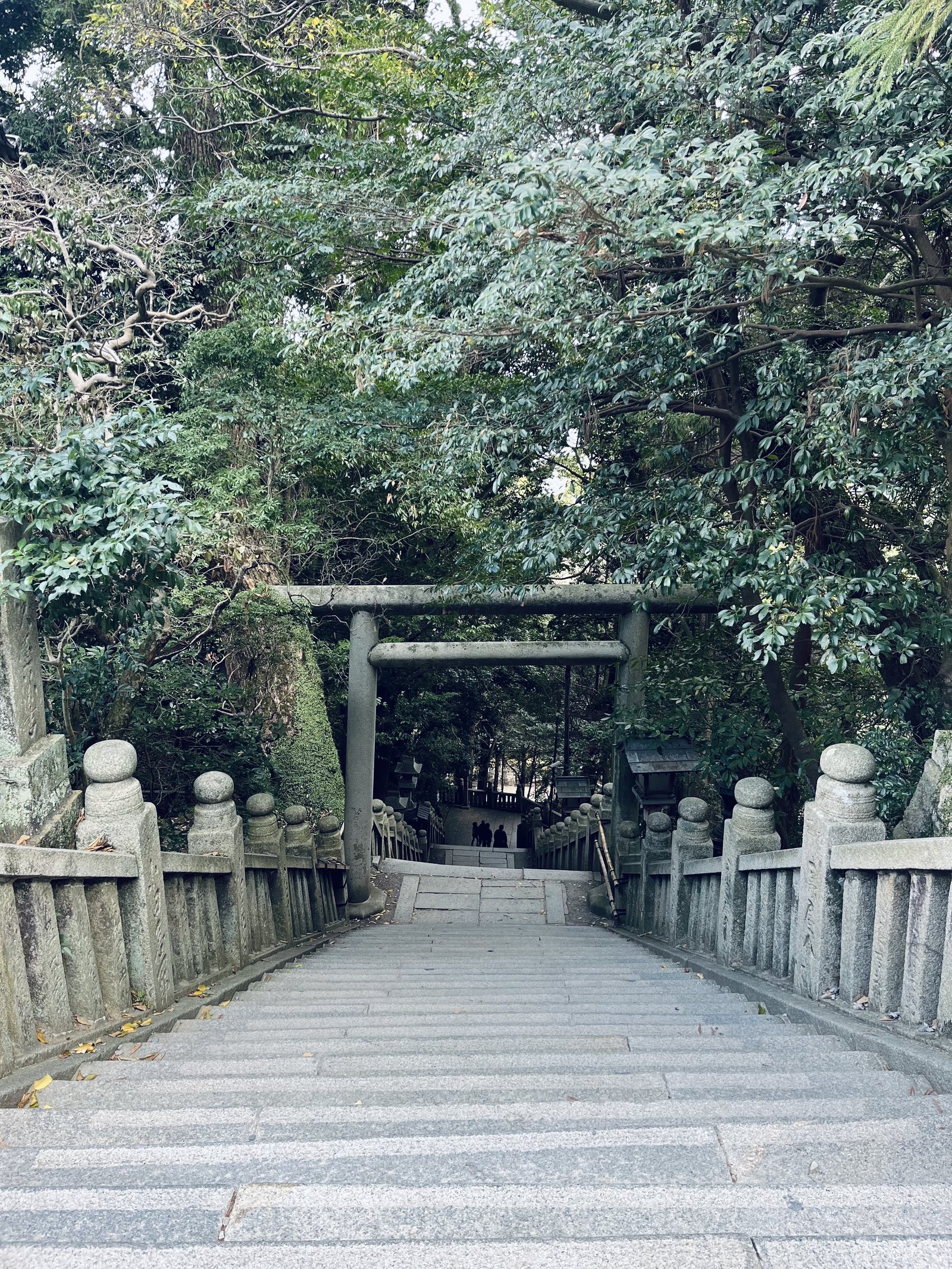
During our visit to Tomiyama Kannon-do and Daigyoji Temple in Matsushima, the walk from the parking area up to Tomiyama Kannon-do had this feeling. We did not go there specifically for forest bathing, but the quiet uphill path, the trees, and the lack of crowds created a calm forest-bathing atmosphere.
How to Try Shinrin-yoku as a Traveller
You do not need a special tour to try forest bathing, although guided experiences do exist in Japan.
For a simple self-guided version:
- Choose a quiet forest path, shrine approach, temple path, park, or nature trail.
- Put your phone away, or at least stop checking it constantly.
- Walk slower than usual.
- Notice sounds, smells, light, shade, wind, and textures.
- Stop somewhere comfortable.
- Sit or stand quietly for a few minutes.
- Do not rush to make the moment productive.
That last part is important.
Shinrin-yoku is not about getting the best photo. It is about actually noticing where you are.
Where Can You Experience Shinrin-yoku in Japan?
You can experience forest bathing almost anywhere in Japan with trees and quiet space.
Good places include:
- Temple forests
- Shrine approaches
- Old pilgrimage trails
- Cedar forests
- Mountain paths
- Quiet viewpoint walks
- National parks
You do not need a famous forest. Sometimes a small local path is enough.
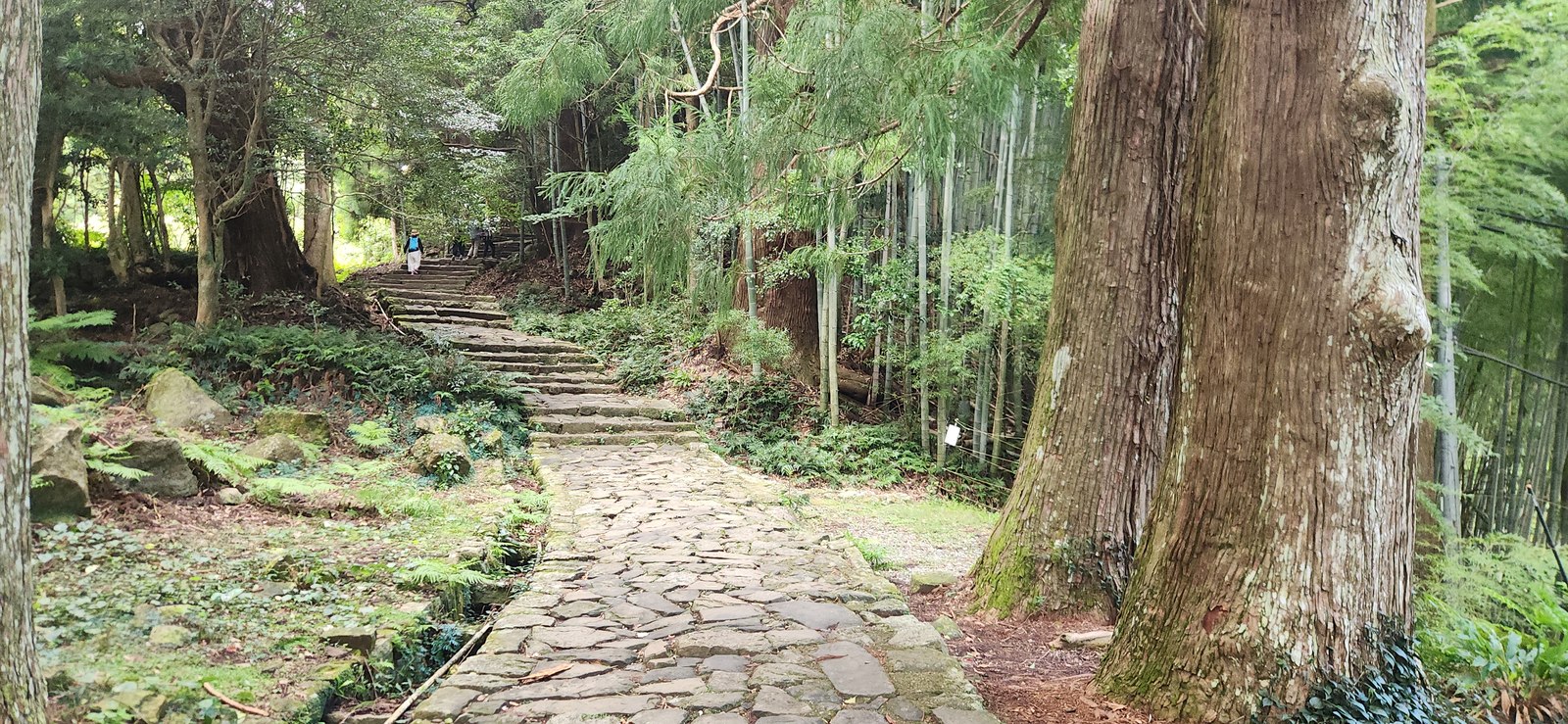
For us, the clearest example was the short stair path from the parking area up to Tomiyama Kannon-do in Matsushima. It only took about 10 minutes, but it was shaded, quiet, and we had it to ourselves. We had the same feeling on a much bigger scale when we walked part of the Kumano Kodo forest trails.
For travellers, temple and shrine approaches are often the easiest introduction. Many of them naturally combine trees, stone paths, shade, and quietness.
What to Bring
For a simple forest-bathing walk, bring:
- Comfortable shoes with good grip
- Water
- Insect repellent in warmer months
- A light jacket in cooler seasons
- A small towel if it is humid
- A flexible schedule
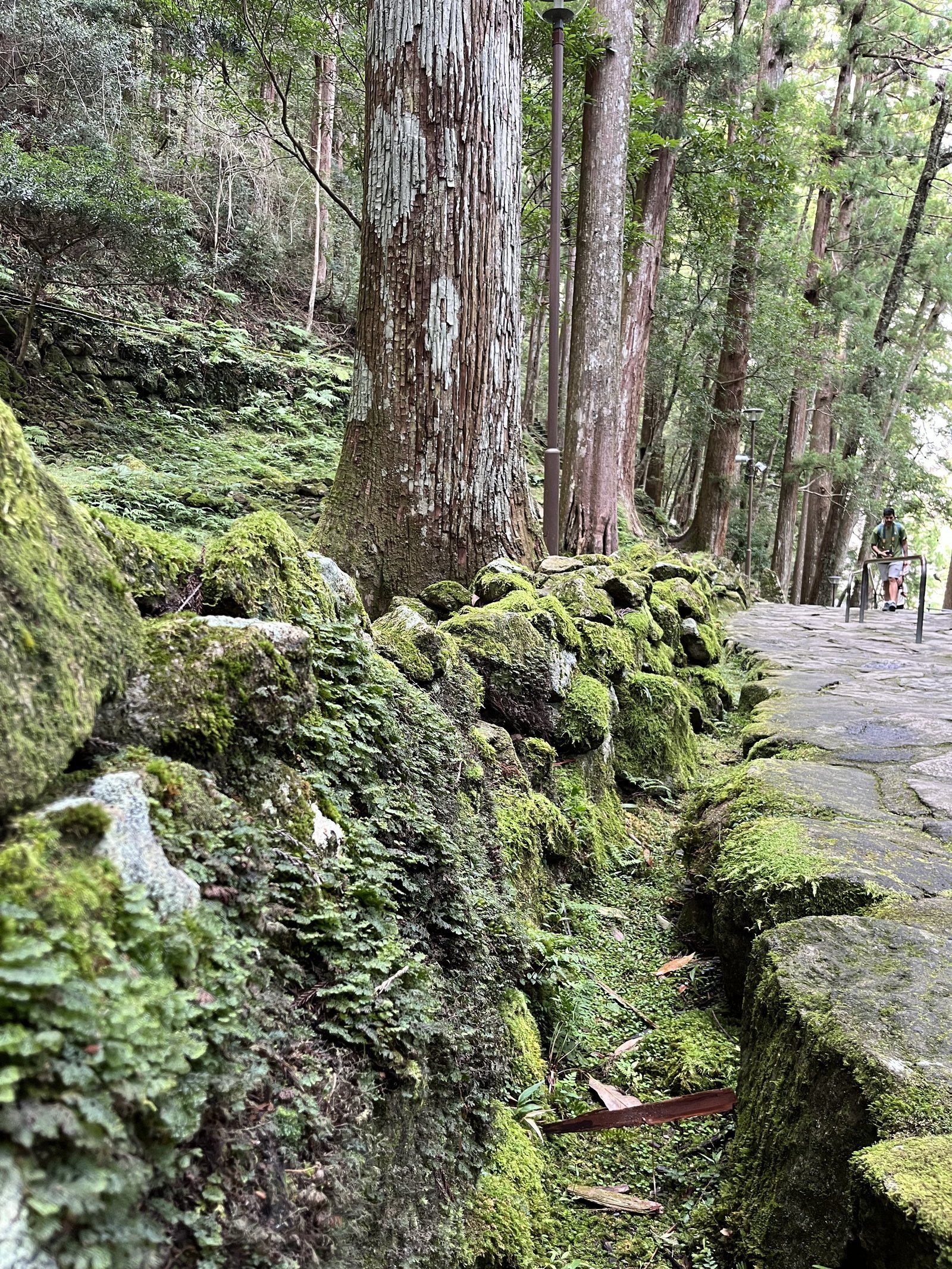
Shoes matter more than people might expect. Shaded and humid paths in Japan can have moss or algae on stone, wood, or pavement, and that can make the ground slippery. Comfortable non-slippery shoes are much better than smooth-soled fashion shoes.
What Shinrin-yoku Is Not
Shinrin-yoku is not a magic cure.
It is also not a replacement for medical care, therapy, sleep, or rest if you need those things. It is better understood as a gentle wellness practice: a way to slow down, reconnect with nature, and reduce the feeling of constant stimulation.
For travellers, the simplest benefit may be the most useful one.
It helps you slow down.
Final Thoughts
Shinrin-yoku is one of the simplest ideas in Japanese travel, but also one of the easiest to forget.
You do not need a major hike. You do not need a famous forest. You only need to give yourself time to slow down among trees.
For me, that is one of the best parts of travelling in lesser-known Japan.
Sometimes the quiet path to the viewpoint matters as much as the viewpoint itself.
FAQ
What does shinrin-yoku mean?
Shinrin-yoku means forest bathing. It refers to spending slow, mindful time in a forest atmosphere rather than hiking quickly or trying to complete a route.
Do I need a guided tour for shinrin-yoku?
No. Guided forest-bathing walks exist, but you can also try a simple version yourself by walking slowly, putting your phone away, and paying attention to the forest around you.
What should I wear for forest bathing in Japan?
Wear comfortable shoes with good grip. Shaded paths, stone steps, and wooden walkways can become slippery when damp or mossy.