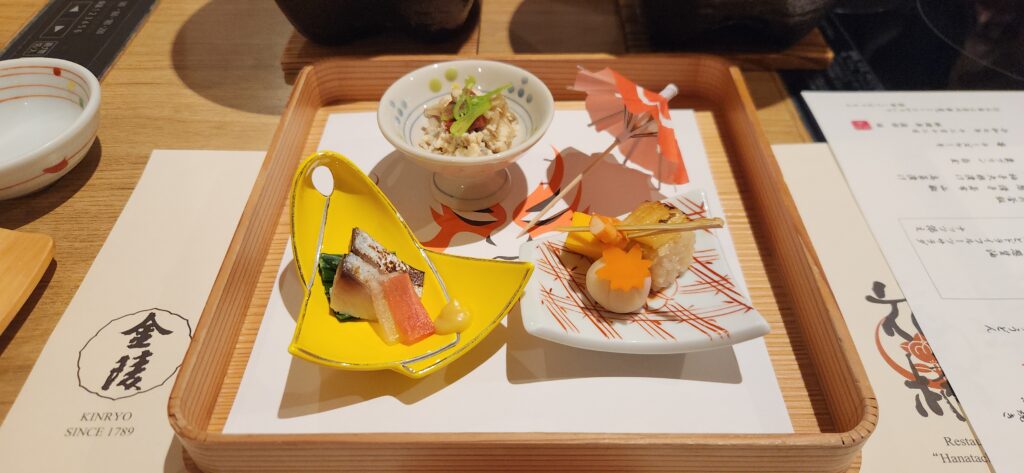
Kaiseki dinner is one of the best parts of staying at a ryokan in Japan, but it can be hard to understand before you experience it.
It is not just “a Japanese dinner.” It is usually a multi-course meal built around seasonality, presentation, pacing, and small details. At many ryokan, dinner is the part of the stay guests remember most.
If you are booking a dinner-included ryokan for the first time, this guide explains what kaiseki is, what to expect, and how to decide whether it is worth paying for.
What Is Kaiseki?
Kaiseki is a traditional multi-course Japanese meal. In a ryokan setting, it usually means a carefully prepared dinner with several small dishes served together or in stages.
The word can be confusing because there are different historical roots behind Japanese kaiseki. One tradition is connected to tea ceremony cuisine, where a light seasonal meal was served before tea. Another modern restaurant style, often written as 会席料理, developed as a more elaborate multi-course meal often enjoyed with sake. For travellers booking ryokan today, the practical meaning is usually simple: a seasonal multi-course Japanese dinner.
The meal often focuses on:
- Seasonal ingredients
- Local products
- Careful presentation
- Balance of flavours and textures
- Small portions across many dishes
- A slower meal pace than a normal restaurant dinner
The exact style depends on the ryokan. Some meals are very formal and refined. Others are simpler but still seasonal and multi-course.
What Does a Kaiseki Dinner Usually Include?
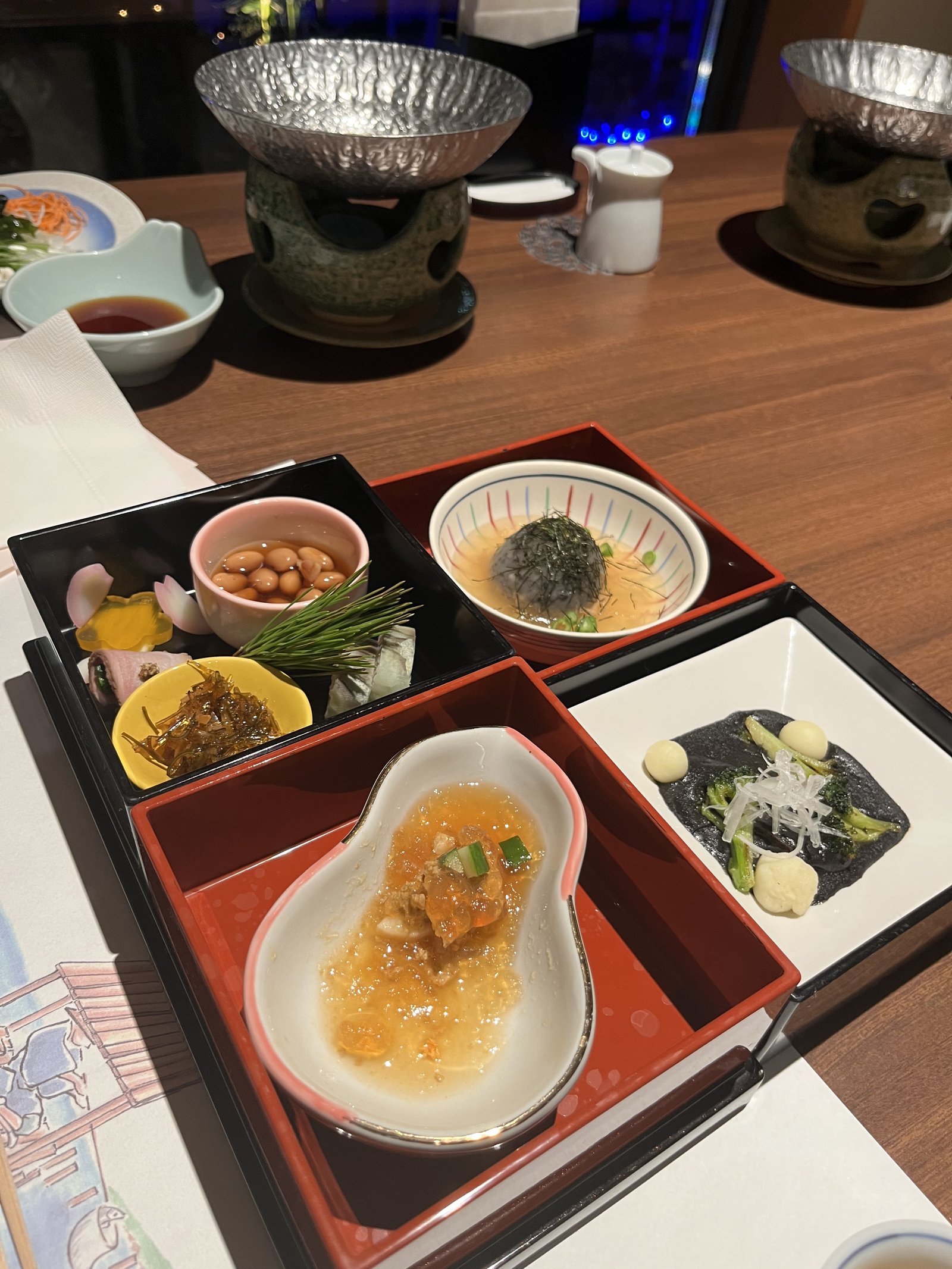
Every ryokan is different, but a kaiseki-style dinner may include:
- Small appetizers
- Sashimi
- Grilled fish or meat
- Simmered dishes
- Hot pot or steamed dish
- Seasonal vegetables
- Rice
- Soup
- Pickles
- Dessert
The point is not to fill one large plate. The experience comes from the sequence and variety.
At many good ryokan, the meal often feels connected to the season and region. For example, spring dishes may include mountain vegetables, cherry blossom details, or lighter flavours, while autumn meals may highlight mushrooms, chestnuts, or richer ingredients.
Is Kaiseki Always Served Course by Course?
Not always.
In some high-end ryokan, dishes may be served one by one. In other ryokan, several dishes are already set out when you arrive, with hot items added later. Both can still be kaiseki-style.
This is why I usually avoid judging a ryokan meal only by whether it follows a strict restaurant-style sequence. What matters more is whether the meal feels thoughtful, seasonal, and complete.
In-Room Dining vs Dining Hall
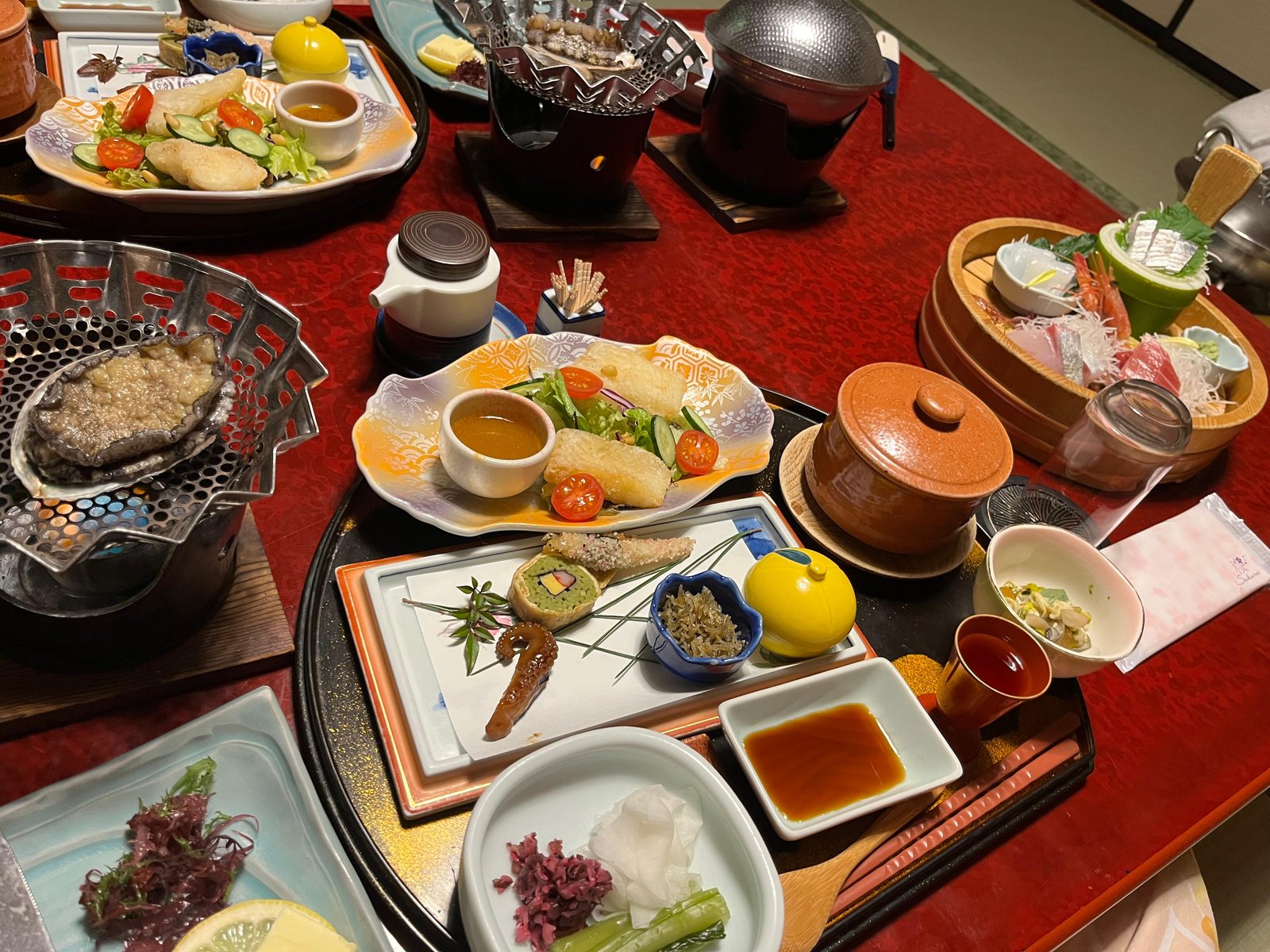
Kaiseki dinner may be served in different places:
- In your room
- In a private dining room
- In a shared dining hall
- In a restaurant area inside the ryokan
In-room dining feels the most private. You can relax in your room, take your time, and enjoy the meal without moving around the building. A dining hall may feel less private, but it can be more efficient and sometimes more comfortable for staff service.
At Nekonaki Onsen Izutsuya, dinner was served in our room. This made the stay feel much more relaxing after a long driving day. The meal included many seasonal dishes, fresh sashimi, tender abalone, and dessert. What stood out was the overall quality and effort, not just one single dish.
Is Kaiseki Dinner Worth It?
Kaiseki dinner is usually worth it if you want the full ryokan experience.
A room-only ryokan stay can still be pleasant, but dinner is often what makes the stay feel complete. This is especially true in rural areas where restaurants may be limited, close early, or require driving.
Dinner-included plans can look expensive at first. But if you compare the price to a separate hotel room plus a multi-course dinner, the value may make more sense.
At the time of our stay in April 2026, our dinner-and-breakfast plan at Izutsuya was ¥24,500 total for two people. Considering the in-room kaiseki-style dinner, breakfast, onsen, and overnight stay, the value felt very strong. Current plan prices can change, and official plan notes may treat consumption tax and onsen tax differently, so always check the booking confirmation rather than relying on an old review price.
What If You Are a Picky Eater?
Kaiseki is not the safest choice for picky eaters.
You may be served raw fish, shellfish, seasonal vegetables, tofu, pickles, soup, unfamiliar textures, or small dishes you do not immediately recognize. For many travellers, that is part of the fun. For others, it can be stressful.
If you are unsure, check photos of the ryokan’s meals before booking. If you have allergies or dietary restrictions, contact the ryokan in advance. Do not assume they can change the meal after you arrive.
What Should You Do During Kaiseki Dinner?
You do not need to know complicated rules. Just approach the meal with curiosity.
A few simple tips help:
- Arrive on time for dinner
- Try a little of each dish if you can
- Do not rush through the meal
- Ask staff if you are unsure how to eat something — ryokan staff are usually used to helping guests without making the interaction awkward
- Take photos quickly and respectfully if you want them
- Remember that the meal is part of the stay, not just fuel
Common Misunderstandings About Kaiseki
“Kaiseki means tiny portions.”
Each dish may be small, but the full meal can be filling because there are many dishes.
“Kaiseki is always luxury.”
Not always. Some ryokan serve very refined kaiseki, while others serve simpler regional kaiseki-style meals.
“If dinner is included, it must be kaiseki.”
Not always. Some ryokan serve buffet dinner, set meals, hot pot plans, or seasonal plans. Check the meal description before booking.
“I can arrive late and still enjoy it.”
Usually not a good idea. Ryokan dinners are often served during fixed time windows, and arriving late can make the stay feel rushed.
Best For
A kaiseki dinner is best for travellers who:
- Want the full ryokan experience
- Enjoy Japanese food
- Like seasonal ingredients
- Are open to unfamiliar dishes
- Want a slower dinner experience
- Are staying in a rural area with limited restaurant options
Skip or Be Careful If
You may want to skip dinner-included plans if:
- You are a very picky eater
- You have dietary restrictions the ryokan cannot handle
- You prefer choosing your own restaurant
- You will arrive late
- You want a casual, quick dinner
- You are travelling on a very tight food budget
If you are choosing between a set-course dinner and a buffet plan, see Kaiseki Dinner vs Dinner Buffet in Japanese Hotels.
Final Thoughts
Kaiseki dinner is one of the clearest examples of why a ryokan is different from a hotel.
You are not just paying for a room. You are paying for a slower evening, a seasonal meal, and the feeling of staying somewhere that has prepared for your arrival.
For travellers who enjoy food and want to experience a traditional side of Japan, booking at least one ryokan with kaiseki dinner is worth considering.
FAQ
Is kaiseki dinner the same as a tasting menu?
It is similar in the sense that both are multi-course meals, but kaiseki has its own Japanese traditions, seasonal focus, and presentation style.
Do all ryokan serve kaiseki dinner?
No. Many dinner-included ryokan serve kaiseki-style meals, but some offer buffets, hot pot plans, or simpler set meals. Check your booking plan.
Is kaiseki dinner filling?
Usually yes. Individual dishes may be small, but the full meal often includes many courses.
Can ryokan change kaiseki meals for allergies?
Sometimes, but not always. Contact the ryokan before booking or as early as possible. Do not wait until arrival.