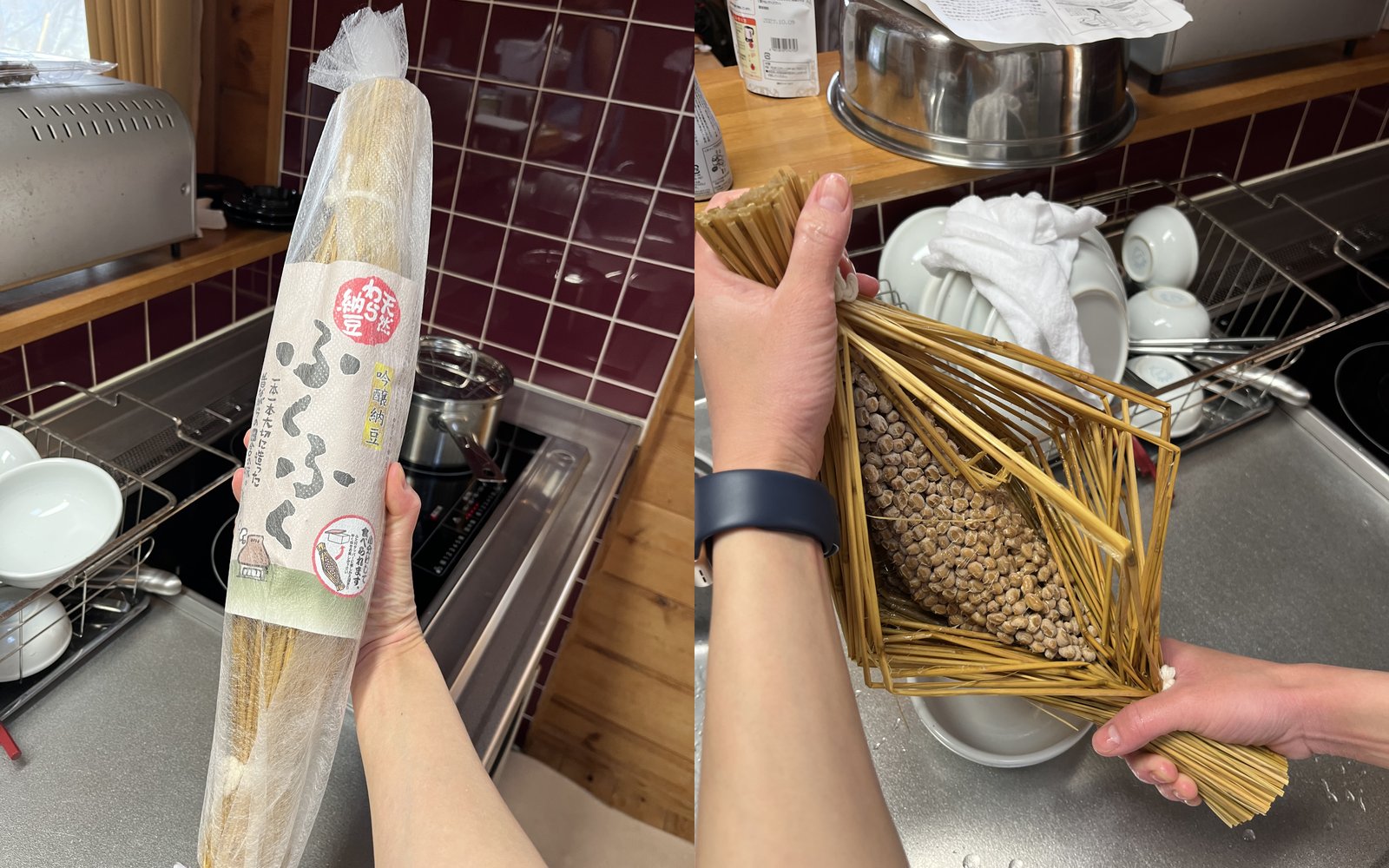
If you like natto, one of the most interesting food stops we made in Tochigi was a small shop in Nasu that sells wara natto, natto fermented and sold in bundles of rice straw.
It was very different from the natto we usually eat at hotel breakfasts. The beans come wrapped in a long straw bundle, the flavour is deeper, and the shop staff were happy to explain the different kinds to us even though we were clearly first-timers.
If you are new to natto itself, start with What Is Natto? A Beginner’s Guide. This article is about the older, straw-wrapped style.
Quick Facts
- Shop: Fukufuku (天然わら納豆 ふくふく), a specialty wara natto shop
- Location: Takaku-ko, Nasu Town, Tochigi Prefecture (Google Maps)
- What they sell: natural straw-wrapped natto made with Japanese soybeans, plus a few related food products
- Best for: natto fans, food-focused travellers, and anyone driving around the Nasu area
- Getting there: easiest by car; it is on the road network around Nasu rather than in a walkable town centre
- Bring: your own soy sauce or natto sauce, because the straw natto we bought did not come with any
What Is Wara Natto?
Wara natto (藁納豆) means straw natto. Before modern natto factories, natto was made by wrapping boiled soybeans in rice straw and keeping them warm. The straw naturally carries the bacteria that ferment soybeans into natto (Bacillus subtilis, the same family of bacteria used in modern natto), so the straw bundle was both the starter and the container.
The bundle is called a warazuto, and it is the shape many Japanese people still associate with the “original” natto. Today most natto is made with cultured bacteria in small foam or plastic tubs, which is cheaper, more consistent, and easier to sell in supermarkets. Straw natto is now more of a specialty product, made by smaller producers who want to keep the traditional method alive.
In practical terms, wara natto usually tastes stronger and more rustic than supermarket natto, and each batch can vary a little.
Our Visit to Fukufuku
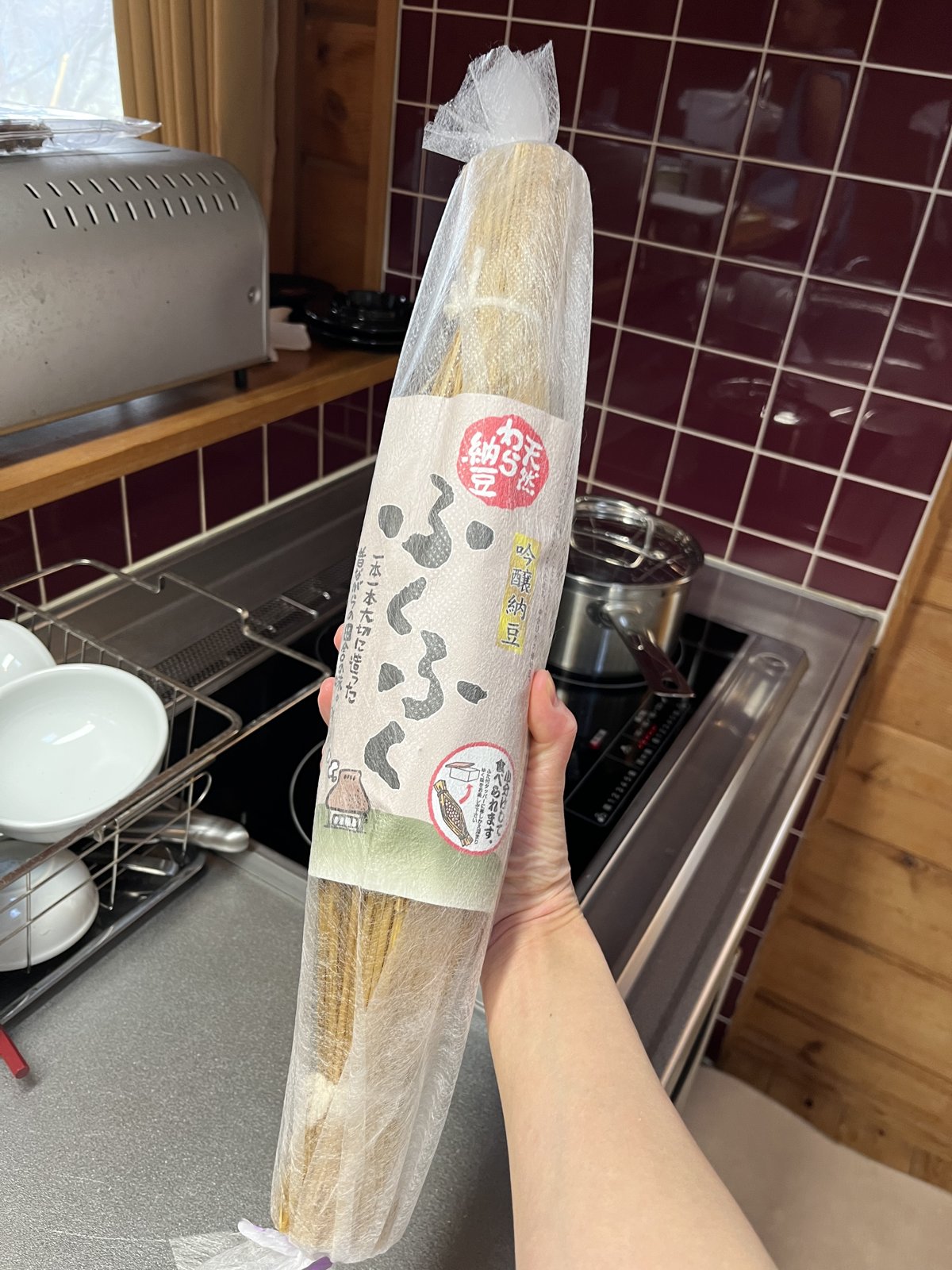
We stopped at Fukufuku during our spring road trip around Nasu. It is a small, local-feeling shop rather than a tourist attraction, and it was one of those places we were glad we made time for.
The staff were very friendly. They tried to explain the different types of natto available, and even with the language gap we understood the basics: the natto is made fresh, and it is packed in straw bundles in the traditional shape, the way natto was originally made in the old days.
We found that really interesting. It is one thing to eat natto from a foam tub at breakfast, and another to hold a long straw bundle and realise that this is how the food started.
What Did It Taste Like?
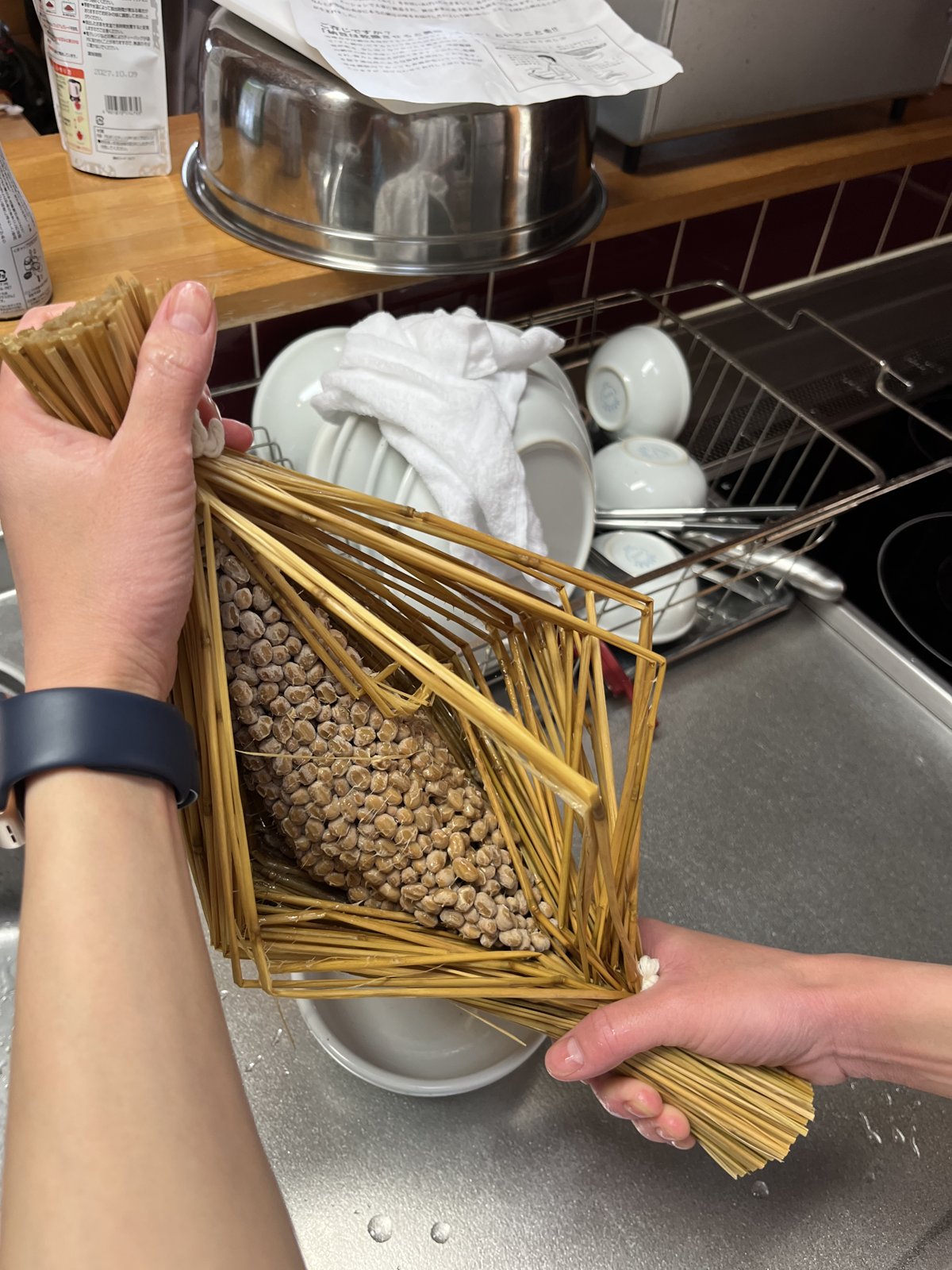
The flavour was different from supermarket natto. It was slightly more bitter, but in a pleasant way, with a deeper, more earthy soybean taste. We really liked it.
The texture was still recognisably natto, sticky and stringy once stirred, but the taste felt less uniform and more “alive” than the mass-produced packs we were used to.
How We Ate It While Travelling
One bundle was more than enough for two people. We split it into four portions and had it over two days of breakfast.
The only catch was that the straw natto did not come with the usual sauce or mustard packets, so we had to prepare our own. Since we were travelling, we did not want to buy a full bottle of condiments just for one bundle of natto. Instead, we mixed it with the small soy sauce packets that came with some supermarket sashimi, and skipped the mustard.
That turned out to be a nice way to eat it. With only a little soy sauce, we could taste the natto itself instead of mostly tasting the condiments.
Tips Before You Go
- Bring or save a little soy sauce. Straw natto may not include sauce or mustard. Sashimi soy sauce packets work well if you are travelling.
- Plan to eat it soon. Fresh natto is meant to be eaten within a few days. Check the date on the package and keep it cool, especially if you are staying somewhere with a fridge.
- Check opening days before driving there. Opening hours listed online are not always consistent, and small specialty shops can close on irregular days.
- Bring cash. Online listings suggest card payment may not be available, so cash is the safer option.
- Think about where you will eat it. Holiday rentals or rooms with a fridge make it much easier than a one-night hotel stay.
Is It Worth a Stop?
Yes, if you already like natto or enjoy tasting traditional versions of everyday foods. It is a small stop, not a half-day attraction, but it adds a real taste of rural Tochigi to a Nasu driving day.
If you do not like natto at all, the straw version is unlikely to change your mind, because the flavour is stronger rather than milder. But if you are curious about how natto used to be made, it is one of the easiest ways to try it.
For more on getting around this area, see Do You Need a Rental Car for Tohoku and Tochigi?
FAQ
What is wara natto?
Wara natto is natto fermented and sold in a bundle of rice straw, the traditional way natto was made before modern containers and cultured bacteria.
How is wara natto different from supermarket natto?
In our experience, it tasted slightly more bitter and earthy in a pleasant way, with a deeper soybean flavour. Supermarket natto is milder and more consistent.
Does wara natto come with sauce and mustard?
The straw natto we bought did not. Bring your own soy sauce or natto sauce if you want to season it.
Where can you buy wara natto in Nasu?
We bought ours at Fukufuku (天然わら納豆 ふくふく) in Takaku-ko, Nasu Town, Tochigi. Check opening days on Google Maps before visiting.