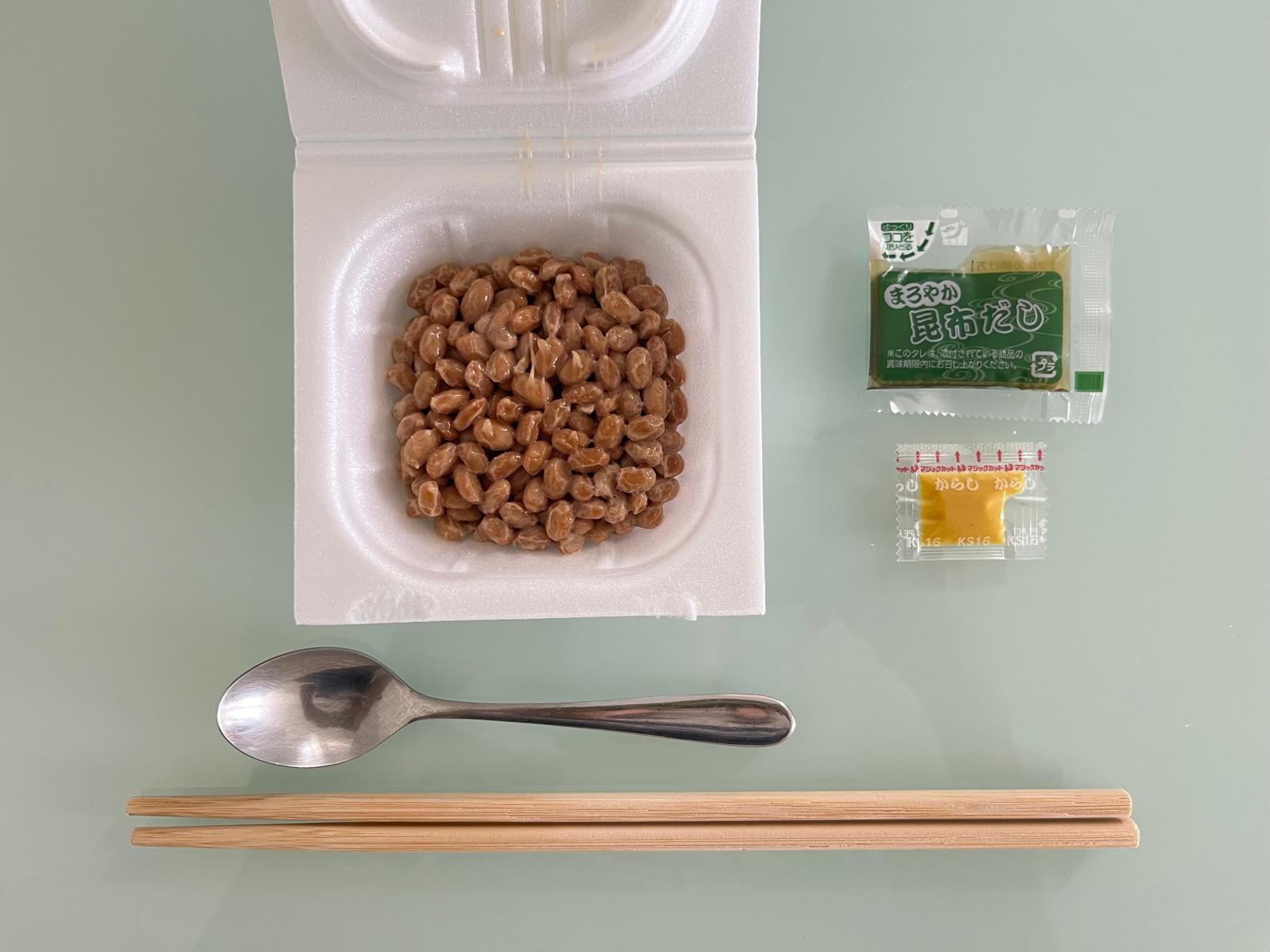
Natto is one of those Japanese foods that people often describe before they actually explain.
You may hear that it is sticky, stringy, smelly, slimy, healthy, delicious, or impossible to eat. All of those reactions can be true depending on the person. But at its simplest, natto is fermented soybeans, usually eaten with rice as part of a Japanese breakfast.
I personally love natto. Whenever we travel in Japan, if natto is available at breakfast, I usually want it. For me, it is tasty, satisfying, and a good protein-rich breakfast food. For many first-time travellers, though, natto can be confusing because the texture and smell are very different from most western breakfast foods.
This guide explains what natto is, what it tastes like, how it is usually eaten, and whether you should try it during a ryokan or hotel breakfast in Japan.
What Is Natto?
Natto is a traditional Japanese food made from soybeans fermented with natto bacteria. The beans are usually soft, sticky, and covered in thin strings when stirred.
It is commonly served at breakfast, especially with rice. It is particularly associated with eastern Japan, including regions like Kantō and Tōhoku, although travellers can now find natto in many parts of the country. You may see it at hotel buffets, ryokan breakfasts, business hotels, convenience stores, supermarkets, and home-style restaurants.
What Does Natto Taste Like?
Natto has a strong flavour and an even stronger reputation.
The taste is savoury, earthy, and bean-like. The smell can be sharp or funky, especially when you first open the packet. The texture is the part that surprises most people: sticky, slippery, and stringy.
That texture is exactly why some people dislike it and why others love it.
If you are trying natto for the first time, I would not judge it by smell alone. Stir it properly, mix in the sauce or mustard if provided, and try it with hot rice.
How Do You Eat Natto?
A typical supermarket or hotel pack of natto comes in a small foam container with a sauce packet and a tiny packet of mustard. Here is how we prepare one:
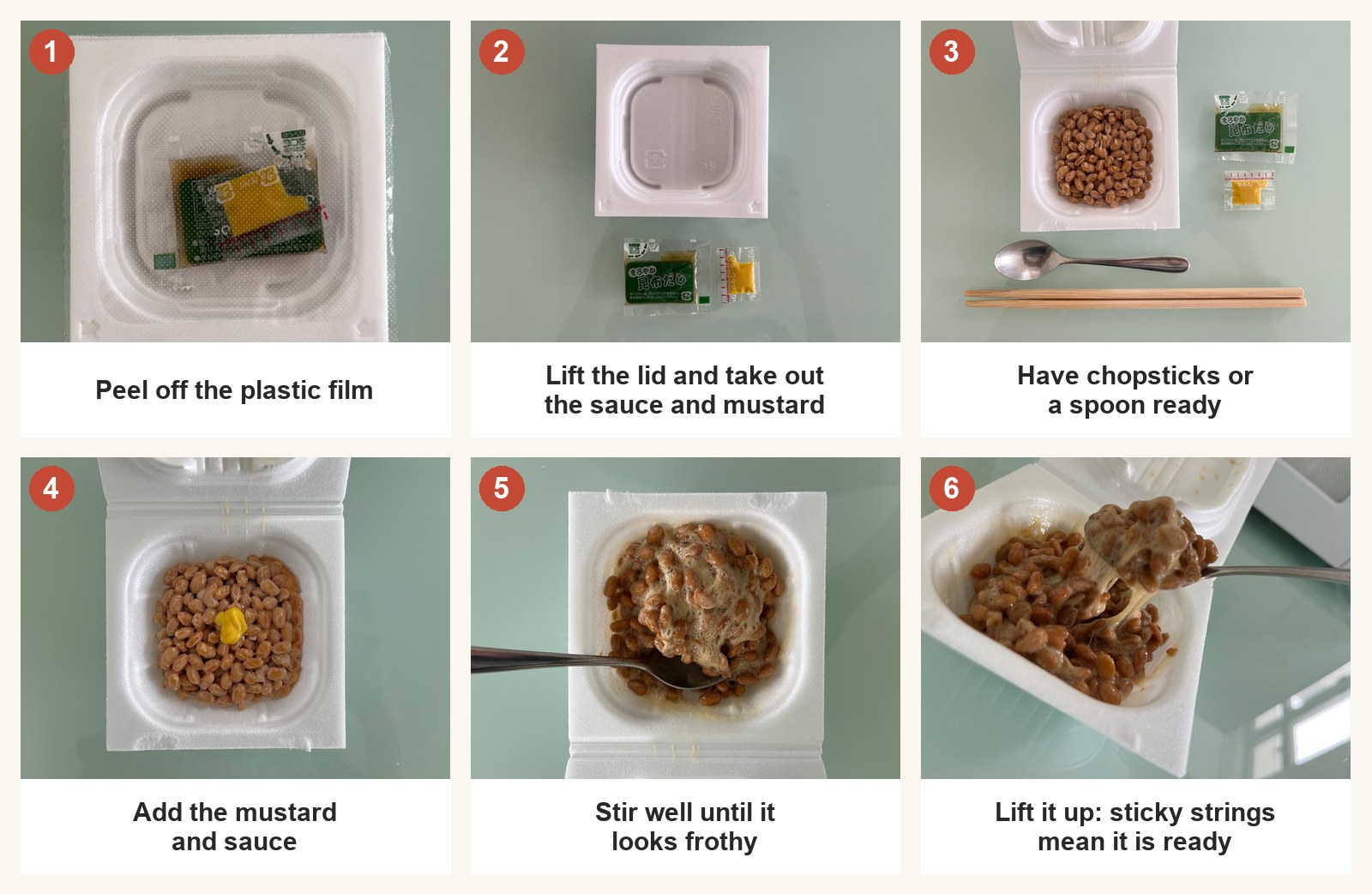
- Peel off the plastic film.
- Lift the lid and take out the sauce and mustard packets.
- Have chopsticks or a spoon ready.
- Add the mustard and sauce.
- Stir well until the natto looks frothy and sticky.
- Lift some up. Long sticky strings mean it is ready to eat, usually on top of hot rice.
Some people add green onion, egg, seaweed, soy sauce, or other toppings. At a ryokan or hotel breakfast, it is usually served more simply.
Is Natto Healthy?
Natto has a strong health-food image in Japan because it is made from soybeans and is fermented. It can be a good source of plant-based protein and contains nutrients from soybeans.
For travellers, the more useful point is this: natto is a common, traditional breakfast food, and it can be a satisfying protein-rich addition to a Japanese breakfast if you enjoy it.
If you have soy allergies, take blood-thinning medication, or have medical dietary concerns, check with a medical professional rather than relying on travel advice.
Where Will Travellers See Natto in Japan?
You may see natto at:
- hotel breakfast buffets
- ryokan breakfasts
- convenience stores
- supermarkets
- teishoku restaurants
- breakfast sets at casual chains
At some breakfasts, natto is self-serve. At others, it may be placed on the tray automatically. If you do not want it, you usually do not need to eat it.
Natto at a Ryokan Breakfast
At Nekonaki Onsen Izutsuya, natto was part of the self-serve breakfast items along with rice and miso soup. The main breakfast set was already prepared at the table, while natto was available for people who wanted it.
I liked that setup because it made natto optional. People who enjoy it can add it to their rice, while people who are unsure can skip it without affecting the rest of the meal.
Straw-Wrapped Natto: A Different Experience
Most natto in Japan comes in small foam containers, but natto was traditionally fermented in bundles of rice straw. This style is called wara natto, and a few specialty makers still produce it.
We bought straw-wrapped natto from a small specialty shop in Nasu, Tochigi, and it tasted noticeably different from supermarket natto. If you are curious, read about it in Wara Natto in Nasu: Trying Straw-Wrapped Natto from Fukufuku.
Should You Try Natto?
Yes, if you are curious and open to unfamiliar textures.
Natto is not dangerous or extreme. It is just different. The best first try is a small amount with hot rice, not a huge spoonful by itself.
You may love it immediately. You may hate it. You may understand why it is popular but decide it is not for you. Any of those reactions is fine.
For me, natto is one of the breakfast foods I genuinely look forward to in Japan.
Best For
Natto is best for travellers who:
- enjoy fermented foods
- like savoury breakfasts
- want to try a very normal Japanese breakfast item
- are open to sticky or unusual textures
- want a simple protein-rich addition to breakfast
Skip If
You may want to skip natto if:
- you dislike strong smells
- you are sensitive to sticky textures
- you have a soy allergy
- you are taking medication or have a medical condition where fermented soy may matter
- you want a very familiar western-style breakfast
Final Thoughts
Natto is one of the easiest ways to make a Japanese breakfast feel more local and more memorable.
It is also a good reminder that “Japanese breakfast” is not one single thing. Some travellers remember the grilled fish. Some remember miso soup. For me, if there is natto available, it becomes part of the morning routine.
Try a small amount with rice before deciding whether you like it.
FAQ
What is natto made of?
Natto is made from soybeans that have been fermented with natto bacteria.
Why is natto sticky?
The sticky strings are a natural result of the fermentation process and become more noticeable when natto is stirred.
Is natto usually eaten for breakfast?
Yes. Natto is commonly eaten with rice as part of a Japanese breakfast, though it can be eaten at other times too.
Does natto taste bad?
It depends on the person. Natto has a strong smell, savoury flavour, and sticky texture. Some people love it, while others find it difficult at first.
How should I try natto for the first time?
Try a small amount mixed with the provided sauce or mustard and eaten with hot rice.