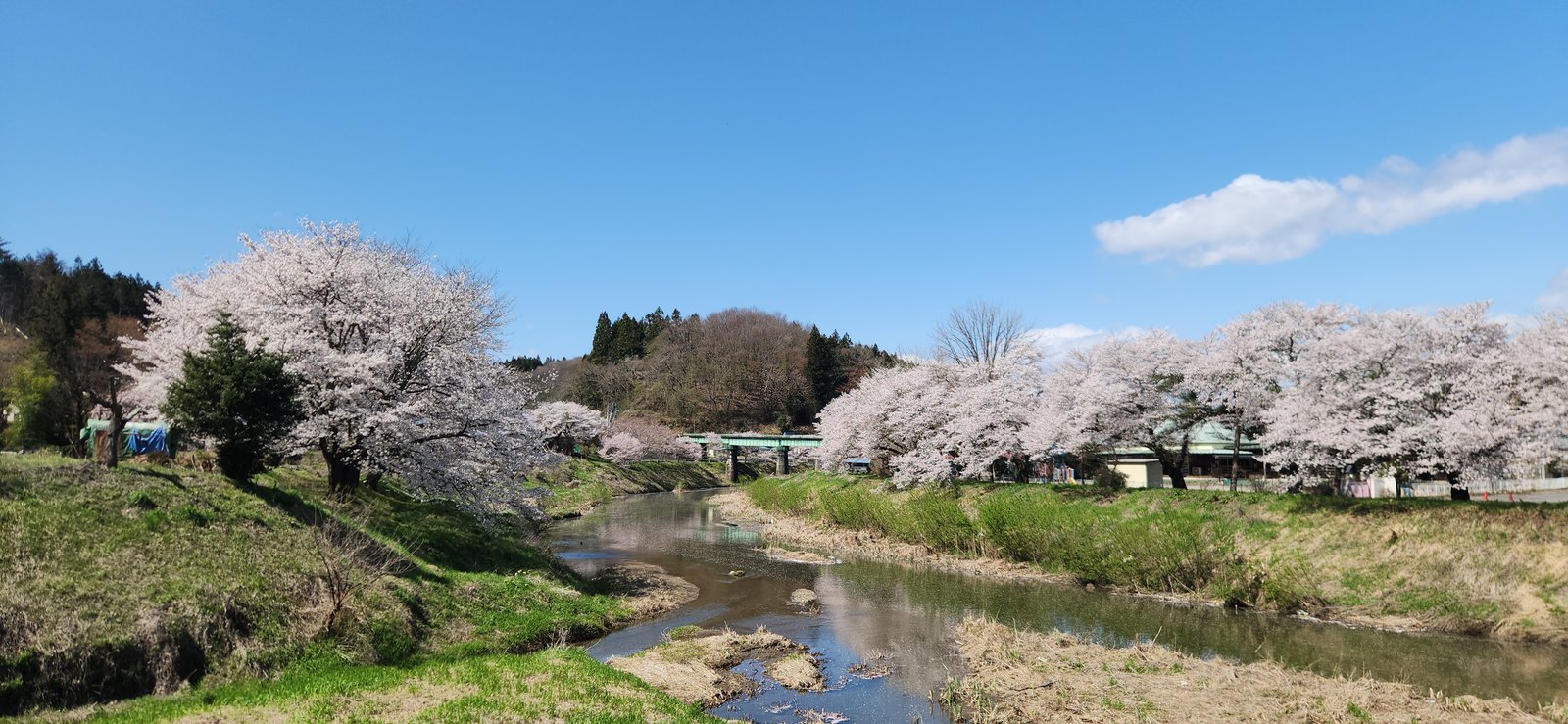
Famous cherry blossom spots in Japan are famous for a reason. They are beautiful, easy to research, and usually well prepared for visitors.
But some of the most memorable sakura stops are not the ones everyone already knows. They might be a quiet river embankment, a small shrine approach, an old school tree, a castle ruins park, or a single cherry tree standing beside farmland.
The challenge is that these places are much harder to find in English.
This guide explains the practical method I use to find lesser-known sakura spots in rural Japan, especially when travelling by rental car. The goal is not to find “secret” places or disturb local areas. It is to use better research habits so you can find quieter, beautiful, realistic sakura stops that fit naturally into your route.
Quick Strategy
To find quieter sakura spots, do not start only with English travel blogs or “best sakura spots in Japan” lists.
Start with Japanese-language sakura forecast sites, then filter for places that are:
- outside major city centres
- not in the top popularity rankings
- close to your actual route
Then cross-check the spot with Google Maps, local tourism pages, recent photos, and local advice.
This is how a small place like Nogi Sando near Nogi Shrine can become a realistic stop instead of a random map pin. It may not be famous internationally, but if the bloom timing, parking, and route all make sense, it can be one of the most rewarding parts of a spring driving day.
That is exactly how we found it. During a Nasu Highland driving day in early April, I checked the sakura forecast, saw that the blossoms around Nogi Shrine were already blooming, confirmed there was a free parking area at one end of the approach, and added it to our afternoon. It turned out to be a proper sakura tunnel with hardly anyone else there.
Why Lesser-Known Sakura Spots Are Worth Finding
Lesser-known sakura spots are not always “better” than famous ones. They are different.
A famous spot may have thousands of trees, festival stalls, night illuminations, and easy public transport. A rural spot may have fewer facilities, fewer signs, and very little English information.
But the tradeoff can be worth it.
A quiet sakura stop can feel more personal. You may be able to walk slowly, take photos without crowd pressure, and experience cherry blossoms as part of normal local scenery rather than as a major tourist event.
The best rural sakura spots often work well as:
- short stops during a driving day
- quiet morning or afternoon walks
- seasonal detours between larger destinations
- alternatives when famous spots are crowded
- photo-first stops for travellers who enjoy local scenery
The key is to keep expectations realistic. A rural cherry blossom row may be beautiful for 30 minutes, but it may not be a full destination by itself.
1. Use Japanese Sakura Forecast Sites, Not Only English Guides
My first tip is simple: use the Japanese version of sakura forecast and hanami sites, then translate the page with Google Translate or your browser’s built-in translation.
The English versions of travel sites are often simplified. The Japanese versions usually have more local spots, more categories, and more detailed bloom-status information.
Three useful sites are:
These sites are not only for famous places. They also include many regional parks, riversides, shrine areas, castle ruins, and smaller local hanami spots. Walkerplus, for example, has a dedicated page for 桜並木 and 桜トンネル spots, and Weathernews lists about 1,400 sakura spots across Japan.
The trick is not just to search for “best sakura spots.” The trick is to use the Japanese listings like a filter.
Look for:
- prefecture pages instead of national rankings
- city or town pages instead of major tourist cities
- spots outside the “popular ranking” section
- places with words like 桜並木, 桜のトンネル, 堤, 参道, 城址公園, or 一本桜
- bloom status pages that show places currently at 開花, 三分咲き, 五分咲き, 八分咲き, 満開, 散り始め, or 葉桜
If a place is outside a major city and not in the top popularity ranking, it may still be beautiful but much quieter than the headline spots.
Useful Japanese Search Terms
| Japanese term | Reading | Meaning / how to use it |
|---|---|---|
| 桜 名所 | sakura meisho | Cherry blossom famous spot |
| 桜並木 | sakura namiki | Row or avenue of cherry trees |
| 桜のトンネル | sakura no tonneru | Sakura tunnel |
| 穴場 桜 | anaba sakura | Lesser-known / hidden sakura spot |
| 見頃 桜 | migoro sakura | Best viewing timing for sakura |
| 開花状況 桜 | kaika jōkyō sakura | Current bloom status |
| 一本桜 | ippon-zakura | A single famous cherry tree |
| 城址公園 桜 | jōshi kōen sakura | Castle ruins park cherry blossoms |
| 堤 桜 | tsutsumi sakura | Embankment cherry blossoms |
| 参道 桜 | sandō sakura | Shrine or temple approach cherry blossoms |
For example, instead of searching only:
cherry blossoms near Nasu
Try:
那須 桜 名所
那須塩原 桜並木
栃木 一本桜
那須塩原 参道 桜
栃木 穴場 桜
You do not need to read perfect Japanese. Machine translation is usually enough to understand the basics: where it is, when it blooms, whether there is parking, and whether the place is realistic for visitors.
2. Ask Locals, Especially Hotel Staff and Tourist Information Centers
Online research is useful, but local advice can be even better. This is often the best way to find a sakura spot that might not even appear on the map.
If you are staying in a smaller town, ask hotel staff, ryokan staff, or staff at a local tourist information centre:
地元の人が行く桜スポットはありますか?
Jimoto no hito ga iku sakura spotto wa arimasu ka?
Are there any cherry blossom spots that local people go to?
Look for 観光案内所 (kankō annai-jo), which means tourist information centre. You often find them at or near train stations, roadside stations, and major local sightseeing areas. Even in smaller towns, there may be a staffed counter, a tourism association office, or at least a pamphlet rack with local maps.
This is especially useful for rural sakura hunting because some of the best information is still offline.
Local tourist information centres may have:
- locally printed sakura maps
- current bloom updates
- parking advice
- festival dates
- walking route suggestions
- warnings about roads, closures, or private land
Some of these maps are never translated into English and may not even be fully digitised. That makes them easy to miss if you only plan from overseas.
3. Search Google and Google Maps in Japanese
I often start with Google Maps first, then move to Google Search if I need more detail.
For Google Maps, the simplest combinations to try are:
桜 名所 [area name]
桜 穴場 [area name]
Use any level of area name: city, town, or prefecture. Even though 名所 technically means “famous place,” in my experience the results often include lesser-known spots too. The number of reviews, photos, and total locations on the map will give you a sense of how crowded the area actually is and whether it is worth visiting.
For Google Search, I usually need to be a bit more specific. I would start with 桜 穴場 [area name] and, if the results are thin, work through the other terms from the table above: 桜並木, 桜のトンネル, 一本桜, 城址公園 桜, 堤 桜, and 参道 桜. Combining one keyword with a specific city, town, or river name usually narrows the results quickly.
Ippon-zakura (一本桜) is worth special attention. It is not a row or tunnel, but a single cherry tree that is notable because of its age, size, shape, location, or history.
These trees are often found in rural areas: beside fields, near temples, on hillsides, at former school sites, or in small villages. Some are designated as natural monuments. Others are only locally known.
The main caution is access. Some ippon-zakura trees are in fields, near homes, or on narrow local roads. Always check whether visitors are expected and where to park.
4. Learn the Location Types That Often Have Quiet Sakura
Once you understand the types of places where cherry trees are commonly planted, you can start spotting potential sakura stops on maps before they appear in travel guides.
Here are the location types I would investigate first.
River and Canal Embankments: 堤防 / 土手 / 河川敷
Japanese rivers, streams, and irrigation channels are some of the best places to look for cherry blossom rows.
Useful words:
- 堤防 (teibō) — embankment
- 土手 (dote) — riverbank / embankment
- 河川敷 (kasenjiki) — riverside area / floodplain
- 桜堤 (sakura-zutsumi) — cherry blossom embankment
Many rural rivers have at least some cherry trees along their banks. The longer and straighter the embankment, the more likely it can become a tunnel or long walking route during bloom season.
This does not mean every riverside sakura row is a visitor attraction. Some are just local walking paths. But from a research point of view, rivers are extremely productive.
When checking a river or canal area, look for:
- a walking path on one or both sides
- a nearby park or public parking lot
- recent Google Maps photos from April
- search results using the river name plus 桜並木 or 桜堤
- whether the route passes through residential or agricultural areas
If there is no safe parking or the path looks like private farmland access, skip it.
Castle Ruins and Old Fortifications: 城址公園
Japan has many former castle sites that are now public parks. Some are major tourist attractions, but many are small town-level castle ruins with moats, stone walls, earthworks, or hilltop viewpoints.
Search for:
- 城址公園 (jōshi kōen) — castle ruins park
- 城跡 桜 (shiroato sakura) — castle site cherry blossoms
- 城山公園 桜 (shiroyama kōen sakura) — castle mountain park cherry blossoms
These places are often promising because they are usually public, scenic, and already designed as walking areas. Cherry blossoms also pair naturally with moats, stone walls, slopes, and old town views.
The caution is that some castle ruins parks are famous and crowded. Hirosaki, Takato, and Yoshino-level spots are not “hidden.” But many smaller jōshi kōen are quiet, especially on weekdays or outside festival hours.
Temples, Shrines, and Shrine Approaches: 寺 / 神社 / 参道
Temples and shrines are another strong category.
Search for:
- 神社 桜 (jinja sakura) — shrine cherry blossoms
- 寺 桜 (tera sakura) — temple cherry blossoms
- 参道 桜 (sandō sakura) — cherry blossoms along an approach road
- しだれ桜 寺 (shidare-zakura tera) — weeping cherry at a temple
Rural temples and shrines often receive far less tourist traffic than famous city temples, but the atmosphere can be just as beautiful: old gates, stone lanterns, quiet paths, small ponds, and petals drifting across the ground.
This is the category that includes places like Nogi Sando near Nogi Shrine. The cherry blossoms are not just roadside trees; they are part of a shrine approach, which changes the feeling of the walk.
When visiting, be respectful. Do not block the approach, avoid loud photo sessions, and do not enter restricted areas.
Old and Closed School Grounds: 廃校 / 旧校舎
Cherry trees and Japanese schools are strongly connected because the school year begins in April, around cherry blossom season in many parts of the country. The most visitor-appropriate examples are closed schools that have been converted into community centres, museums, cafés, or local tourism facilities. The combination of an old wooden school building, a playground, and large cherry trees creates a nostalgic rural scene, and these places are generally happy to receive visitors during bloom season.
Useful search terms:
- 廃校 桜 (haikō sakura) — closed school cherry blossoms
- 旧校舎 桜 (kyū-kōsha sakura) — former school building cherry blossoms
- 〇〇小学校跡 桜 — cherry blossoms at a former elementary school site
Active schools are a different matter. Cherry trees at currently operating elementary and junior high schools are part of daily life for children, parents, and teachers, and they are not visitor attractions. Do not enter the grounds, do not photograph through fences, and do not linger near entrances, especially around arrival or dismissal times. If you are unsure whether a school is active or closed, skip it.
Mountain Ridges and High-Elevation Passes
Elevation is one of the most useful tools for sakura planning.
Cherry blossoms in higher, cooler areas often bloom later than those in the valleys below. This can extend your sakura season by days or even weeks, depending on the region and elevation.
Look for:
- highland towns
- mountain passes
- post towns in valleys
- hiking trailheads
- roadside parks at elevation
- temple or shrine areas on hillsides
This is especially useful in regions such as Tohoku, Chubu, Kansai mountain areas, and parts of Shikoku. If the city-level sakura is already finished, a higher valley or mountain town may still be blooming.
Do not assume the whole region blooms at one time. Check towns and elevations separately.
5. Plan Around the Fringes of Famous Regions
Another good strategy is to avoid thinking only in terms of famous cities.
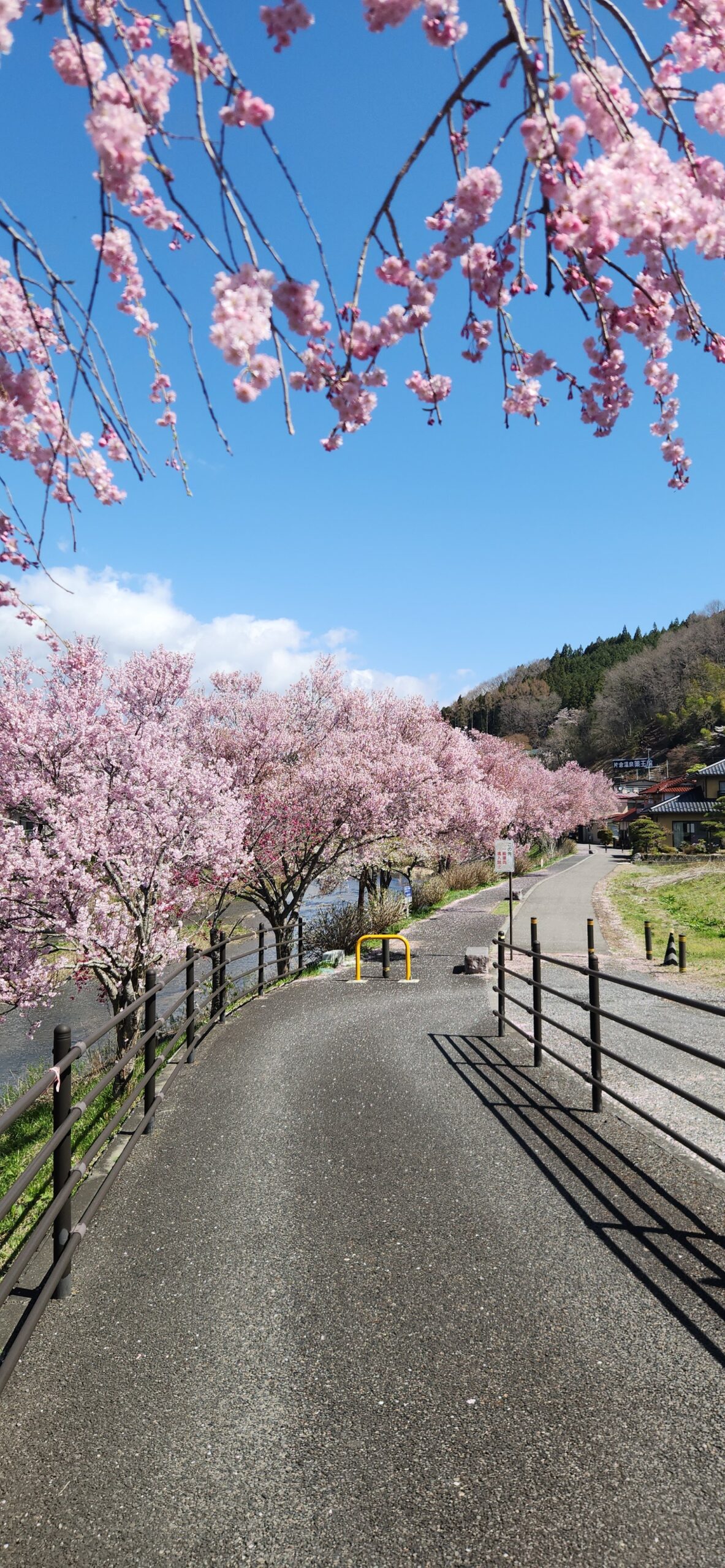
Famous destinations draw crowds because they are well connected and easy to understand: Tokyo, Kyoto, Osaka, Sendai, Sapporo, and so on. But the rural areas around those cities often bloom at similar times and receive far fewer international visitors.
Instead of building your whole sakura plan around the famous city, pair each famous region with a nearby rural alternative.
| Famous city or hub | Nearby rural direction to investigate | Notes |
|---|---|---|
| Tokyo | Saitama river valleys, Chichibu, Nagatoro | Chichibu and higher inland areas may bloom slightly later than central Tokyo. |
| Kyoto | Miyama, Wazuka, Kameoka, rural northern Kyoto | Better for travellers with a car or extra time. |
| Osaka | Nara countryside, Asuka, Uda, Yoshino area | Yoshino itself is famous, not hidden, but the surrounding Nara countryside has many quieter spring routes. |
| Nagoya | Kiso Valley, Ina Valley, Gifu mountain towns | Good for later blooms, post towns, and valley scenery. |
| Sendai | Shiroishi River, southern Miyagi, Okitama Sakura Corridor in Yamagata | Excellent for Tohoku sakura routes. |
| Sapporo | Matsumae, rural Hokkaido plains, smaller castle and park towns | Bloom timing is later, often extending the sakura season into late April or May. |
A good example is the Okitama Sakura Corridor in Yamagata Prefecture. It is a 43 km route through Nanyo City, Nagai City, and Shirataka Town, with about 20 cherry blossom viewing spots, including old and notable trees such as Yakushi-zakura. It is not unknown in Japan, but compared with Tokyo or Kyoto sakura routes, it receives far fewer international visitors.
This kind of route is exactly what I look for: regional, scenic, spread out, and better understood through Japanese or local tourism sources than through international top-ten lists.
6. Leave Room for Wandering
Some of the best sakura moments happen when you leave space in the day for small discoveries. A good productive wandering plan has boundaries:
- one main destination
- one or two researched sakura candidates
- one flexible hour for local detours
For example, instead of saying:
Let’s drive around and look for sakura.
A better plan is:
We’ll visit the main stop first, then leave an extra hour to take a detour alongside the river that appears scenic and might have sakura.
This keeps the day relaxed without becoming inefficient.
Common Mistakes to Avoid
Only using English searches
English searches usually show the same famous places. Use Japanese searches and translate the results.
Chasing every “hidden” pin
Some quiet spots are quiet because they are inconvenient, private, or not worth a long detour. Be selective.
Ignoring bloom timing
A beautiful sakura tunnel can look ordinary one week too early and finished one week too late. Check bloom status close to your visit.
Assuming rural means easy parking
Rural roads can still be narrow, busy, or important for local residents. Confirm parking before you go.
Treating local places like photo studios
Stay on public paths, do not enter fields or school grounds, and keep shrine and temple spaces respectful.
Final Thoughts
Finding lesser-known sakura spots in rural Japan is less about secret knowledge and more about better research habits.
Use Japanese forecast sites. Ask locals. Learn the location types that often have cherry trees. Search for words like 桜並木, 参道, 堤, 城址公園, and 一本桜. Plan around the edges of famous regions. Leave space for productive wandering, but only where access is safe and respectful.
Not every spot will be spectacular. Some will be too early, too late, or too small to justify the detour.
But when it works, the reward is exactly what makes rural Japan travel special: a quiet road, a local shrine, a riverside path, or a single old tree blooming beautifully without the feeling that everyone else is trying to take the same photo.
FAQ
Are lesser-known sakura spots really hidden?
Usually not. Many are known locally, listed on Japanese tourism pages, or included in Japanese sakura forecast sites. They are “lesser-known” mainly from an international traveller’s point of view.
Is it better to search in Japanese?
Yes. Searching in Japanese usually gives more local results. Use Google Translate or browser translation if you cannot read Japanese.
What is the most useful Japanese keyword?
For quiet rural spots, 一本桜 is one of the most useful keywords. For walking routes, use 桜並木, 桜のトンネル, 堤, and 参道.
Can I visit sakura spots at schools?
Only with care. Closed schools that have become public facilities may be visitor-friendly. For active schools, do not enter the grounds. View only from public space, avoid school arrival or dismissal times, and skip the spot if anything feels inappropriate.
Do I need a rental car?
Not always, but a rental car helps a lot in rural areas. Many lesser-known sakura spots are hard to combine by public transport, especially if you want to check several places in one day.