If you are planning a trip to Matsushima, you will probably see the famous bay, the cruise boats, Godaido, Zuiganji, and the central waterfront first. So what is Oku-Matsushima, and should you add it?
But you may also come across another name: Oku-Matsushima.
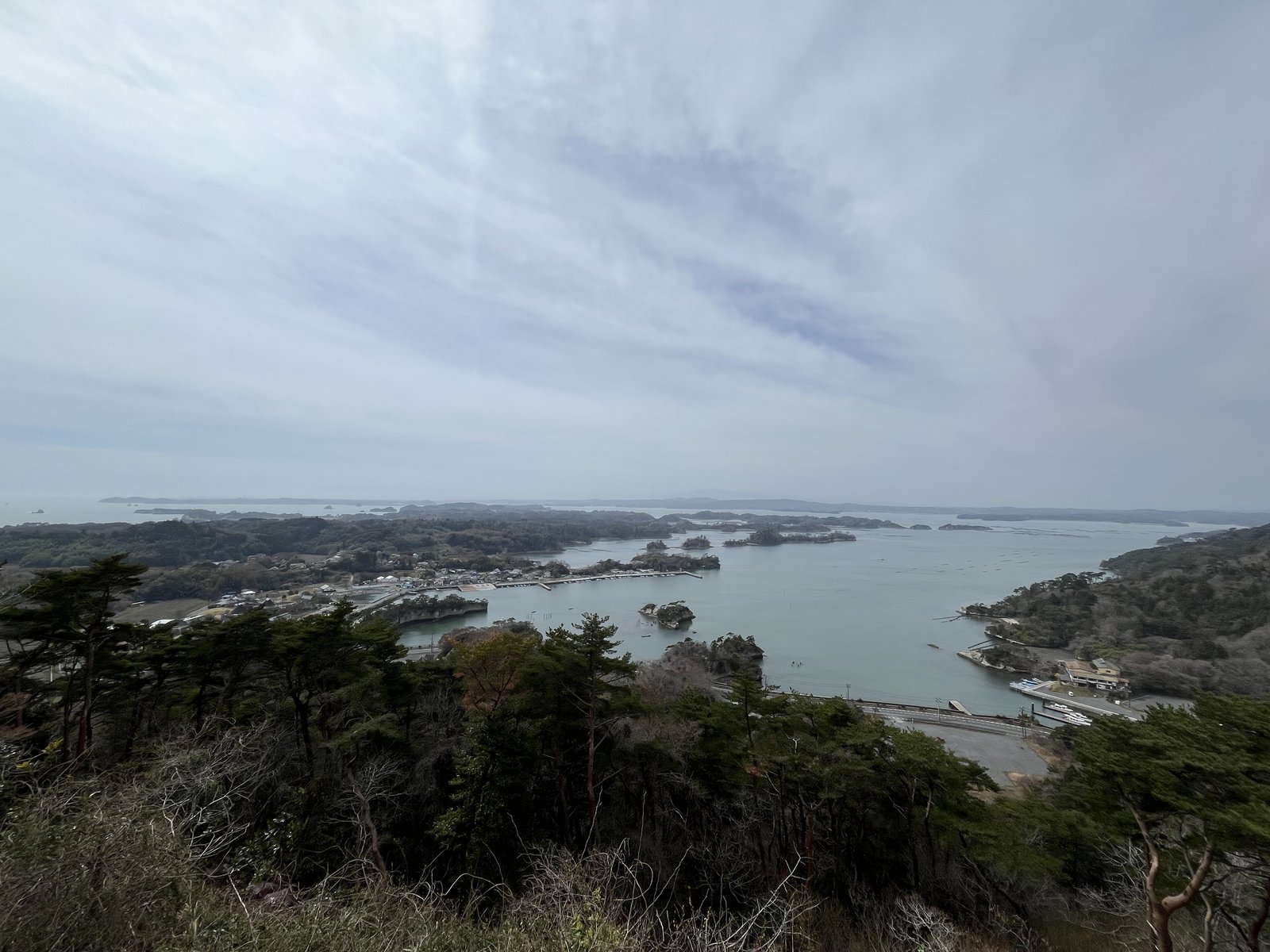
Oku-Matsushima is the quieter, more rural eastern side of the Matsushima area, mainly around Higashimatsushima and Miyato Island. It is part of the same broad bay landscape, but it has a noticeably different feel from central Matsushima: less polished, less busy, and more open.
If you want a wider version of Matsushima, especially by car, Oku-Matsushima is one of the most rewarding directions to head.
Quick answer: what is Oku-Matsushima?
Oku-Matsushima is the eastern side of the Matsushima Bay area, mainly associated with Higashimatsushima and Miyato Island.
The main reasons travellers go are:
- Rural coastal scenery
- Quieter viewpoints, especially Otakamori
- The Oku-Matsushima Olle Trail
- The Jomon Village History Museum and Satohama Shell Mound
- The Sagakei Gorge sightseeing cruise from the Aomina Visitor Center area
- A noticeably less touristy feeling than central Matsushima
It is best for travellers who enjoy scenery, hiking, driving, culture, and slower local exploration.
How to get to Oku-Matsushima
By train: the JR Senseki Line runs from Sendai through Matsushima-Kaigan and continues east. For travellers using public transport, Nobiru Station is one of the most useful rail access points for the Oku-Matsushima / Higashimatsushima area. From Nobiru, some places are walkable, but many Oku-Matsushima stops are easier with a bus, taxi, rented bicycle, or car.
By car: from central Matsushima, plan around 25 to 35 minutes of driving depending on your specific Oku-Matsushima destination. The route is not difficult. Once you leave central Matsushima the roads become quieter quickly, which is part of why driving here is enjoyable.
By bicycle: in good weather, cycling around parts of Oku-Matsushima is possible, but distances are longer than they look on a map. Plan it as a half-day activity rather than a quick spin, and check current bike rental options before relying on it.
Current Miyagi tourism information lists Aomina as open 8:15–17:00 daily and notes that rental-cycle reception is available there. Cycling information for the area also lists bike rental around Oku-Matsushima Eat Plaza near Nobiru Station and Aomina, typically around 9:00–16:00 for rentals. Because bike types, availability, and prices can change, confirm at Nobiru/Aomina before relying on cycling as your main transport.
How Oku-Matsushima feels different from central Matsushima
Central Matsushima is the easy introduction. It is where most visitors go first. You can walk from Matsushima-Kaigan Station to the waterfront, visit Godaido, cross to Fukuurajima, browse shops, and take a bay cruise.
Oku-Matsushima is different in three concrete ways.
First, the landscape is open. Central Matsushima is dense with shops, hotels, and the famous cluster of small islands close to the pier. Oku-Matsushima has more space between things, and the coastline feels like coastline rather than a sightseeing strip.
Second, there are fewer people. Even on a good-weather weekend, the wider area is much quieter than the central pier.
Third, the decisions are different. In central Matsushima, you choose between attractions clustered close together. In Oku-Matsushima, you usually pick one or two anchor stops (often Otakamori plus the Jomon museum, a coastal drive, or the Sagakei cruise) and let the day breathe around them.
On my own trip, this was the part of Matsushima I remember most clearly. Not because every stop was dramatic, but because the rhythm of the day was different.
Main places to know in Oku-Matsushima
Otakamori
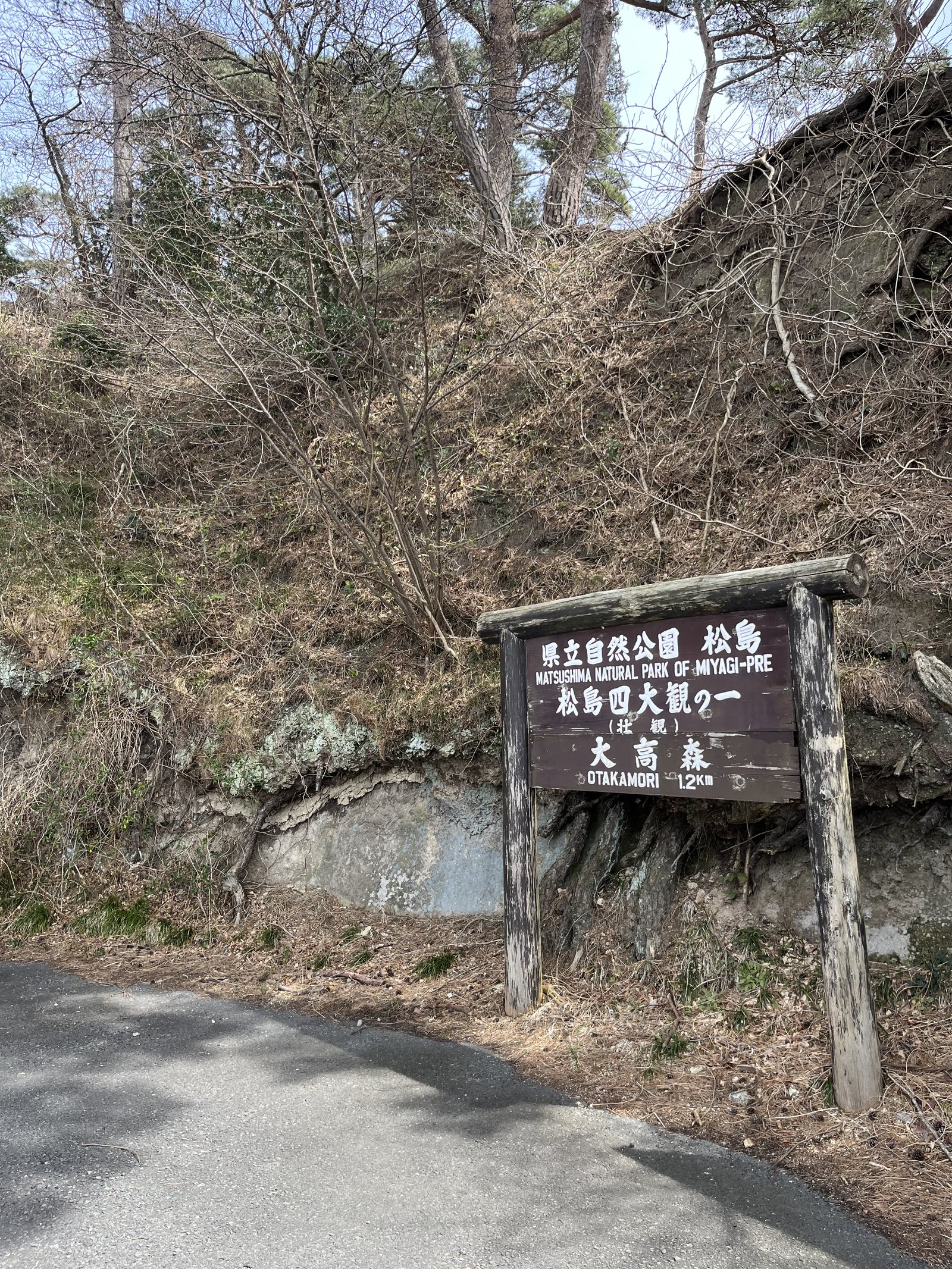
Otakamori is one of the best-known viewpoints in Oku-Matsushima and one of the Matsushima Four Great Views.
It is not a quick roadside stop. The climb to the summit takes around 20 minutes. There are stairs, but each step is short, so it is not too steep. If you walk the whole route, a realistic time budget is up to 90 minutes including parking, walking, viewpoint time, and coming back down. Wear proper shoes.
Aomina Visitor Center
Aomina Visitor Center is a useful starting point for Oku-Matsushima. It is associated with the Oku-Matsushima Olle Trail and works well as an orientation stop, especially if you have not been to the area before.
The official Miyagi Olle route information describes the Oku-Matsushima Trail as beginning and ending around Aomina Visitor Center, connecting nature, Miyato Island, Jomon-period history, and scenic viewpoints.
Aomina is also important because the Oku-Matsushima / Sagakei sightseeing boat operates from the nearby pleasure boat information center. If you are interested in seeing Oku-Matsushima from the water rather than only from viewpoints or hiking trails, this is the cruise option to know.
Sagakei Gorge sightseeing cruise from Aomina
One thing that is easy to miss when researching Oku-Matsushima is that there is a separate sightseeing boat option from the Aomina Visitor Center area.
This is different from the standard Matsushima Bay cruise that leaves from the central Matsushima waterfront. The Oku-Matsushima boat is focused on Sagakei Gorge, a rugged coastal area around Miyato Island with cliffs, sea-carved rock formations, small caves, oyster beds, and marine birds.
The usual Sagakei outer-sea course is listed as about 60 minutes, with a shorter 45-minute alternative course when ocean conditions are rough. Current published fares are ¥2,000 for adults and ¥1,500 for children on the 60-minute course, and ¥1,500 for adults and ¥1,000 for children on the shorter course, but check the latest information before going.
The boat is not a fixed timetable service like the central Matsushima cruise. It runs as a shared boat, generally 8:45–16:00 from April to September and 8:45–15:00 from October to March, depending on passengers and sea conditions. The larger Saga Mirai boat usually needs 5 adults or a ¥10,000 minimum, and the smaller boats usually need 3 adults or a ¥6,000 minimum. The boat office is open 8:15–17:00 daily.
How it compares with the central Matsushima Bay cruise
For a first-time visitor, the central Matsushima Bay cruise is still the easier and more classic choice. It leaves from the main Matsushima waterfront, is easier to combine with Godaido, Fukuurajima, shops, and the train station, and the regular large-boat course is about 50 minutes. It is the simplest way to add a boat ride to a Matsushima day trip.
The Aomina / Sagakei cruise sounds more like a second-layer Oku-Matsushima experience. Official and local tourism descriptions emphasize the contrast: central Matsushima Bay is calmer and island-focused, while Sagakei is more rugged, cliff-focused, and shaped by open-ocean waves.
Traveller reviews I found tend to say the same thing in practical terms. People describe the Sagakei boat as smaller, closer to the rocks, and more personal because the captain guides the ride more directly. Some reviewers also mention that it feels less crowded than central Matsushima. The tradeoff is that it is farther from the main sightseeing area, less convenient without a car, more dependent on sea conditions, and potentially rougher because it goes toward the open ocean.
So I would think about the choice this way:
| Choose this | Best for | Main tradeoff |
|---|---|---|
| Central Matsushima Bay cruise | First-time visitors, day trips, classic Matsushima scenery, easy logistics | More popular and more touristy |
| Aomina / Sagakei cruise | Repeat visitors, car travellers, Oku-Matsushima explorers, rugged coastal scenery | Less convenient, weather-dependent, may need minimum passengers |
If you only have one day from Sendai, I would usually choose the central Matsushima cruise or viewpoints near central Matsushima. If you are already spending time in Oku-Matsushima, especially with a car, the Sagakei cruise becomes a much more interesting option.
Oku-Matsushima Olle Trail
The Oku-Matsushima Olle Trail is a longer walking route. Official information describes it as a 10 km course beginning and ending at Aomina Visitor Center.
This is a better fit for hikers or travellers who want to spend several hours in the area. If you only want one viewpoint, you may prefer going directly to Otakamori or combining Oku-Matsushima with other stops by car.
Jomon Village History Museum
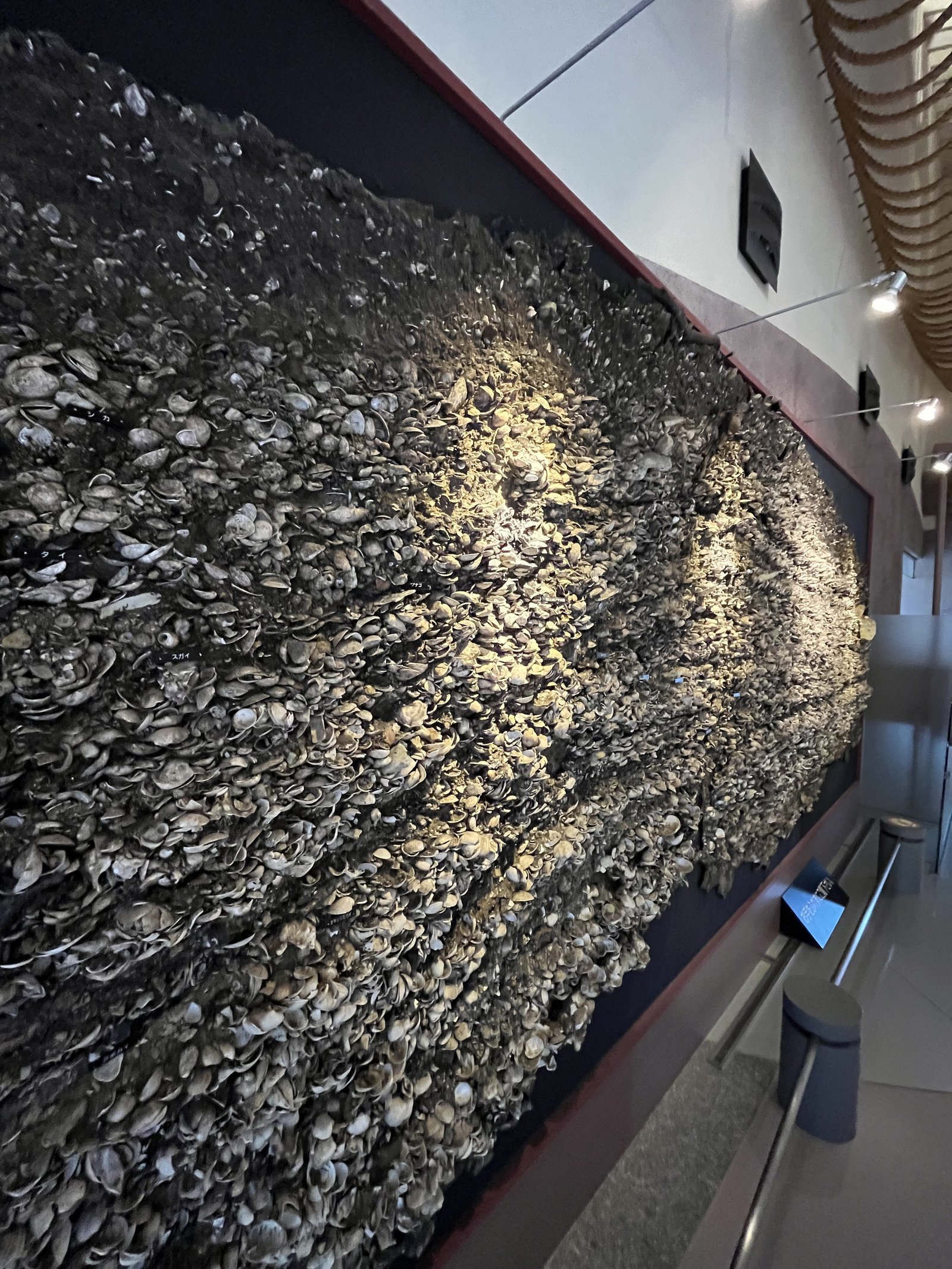
The Jomon Village History Museum is a small museum connected with the nearby Satohama Shell Mound area.
It is not a large museum, and I would not recommend it to everyone. But if you have an interest in archaeology, prehistory, or quieter local museums, it adds a layer to the Oku-Matsushima day that pure scenery does not. The shell mound display in particular gave me a clearer sense of how long this coastline has been inhabited.
Do you need a car for Oku-Matsushima?
A car makes Oku-Matsushima much easier. That is the short answer.
Without a car, central Matsushima is much more convenient. You can still reach parts of Oku-Matsushima by train, especially via Nobiru, then taxi, bus, or bicycle, but the day requires more planning.
For a first-time visitor doing Matsushima as a day trip from Sendai, I would usually not push to include Oku-Matsushima in the same day. It is possible in theory, but it tends to make the day feel spread thin.
For someone staying overnight in Matsushima with a car, Oku-Matsushima makes much more sense. See Car vs Train in Matsushima for the longer comparison.
Is Oku-Matsushima worth it?
Oku-Matsushima is worth it if you want a quieter and wider version of Matsushima.
It is probably not necessary if this is your first visit, you only have a few hours, or you mainly want the classic Matsushima experience.
But if you have a car and enjoy scenery, rural areas, short hikes, local history, or a less standard boat ride, Oku-Matsushima helps turn Matsushima from a simple sightseeing stop into a fuller travel experience.
Suggested ways to include Oku-Matsushima
Simple version (half day)
Drive directly to Otakamori. Allow up to 90 minutes there. Combine with a quick stop at Aomina if you want orientation, or head straight back.
Culture and scenery version (full day)
Combine Otakamori with the Jomon Village History Museum and a coastal drive. Add a local food stop for lunch. This gives you both landscape and a sense of the area’s history.
Cruise version (half day to full day)
If the schedule and sea conditions work, use Aomina as your anchor and consider the Sagakei cruise. This is a better fit if you already have a car or are intentionally spending time in Oku-Matsushima, not if you are squeezing Matsushima into a quick day trip from Sendai.
Hiking version (full day)
Plan around the Oku-Matsushima Olle Trail and allow enough time for the 10 km walk. Treat this as a main activity rather than an add-on.
How Oku-Matsushima fits into your trip
The simplest way to think about whether to include Oku-Matsushima:
- Day trip from Sendai: central Matsushima is enough.
- Overnight without a car: central Matsushima plus a nearby viewpoint.
- Overnight with a car: add Oku-Matsushima.
- Repeat visit or slower trip: consider the Sagakei cruise or the Olle Trail.
Oku-Matsushima is not the easiest version of Matsushima. But for the right traveller, it is the part that makes the trip feel less touristy and more memorable. For the longer story of how Oku-Matsushima fits into a wider Matsushima trip, see Matsushima Beyond the Bay.