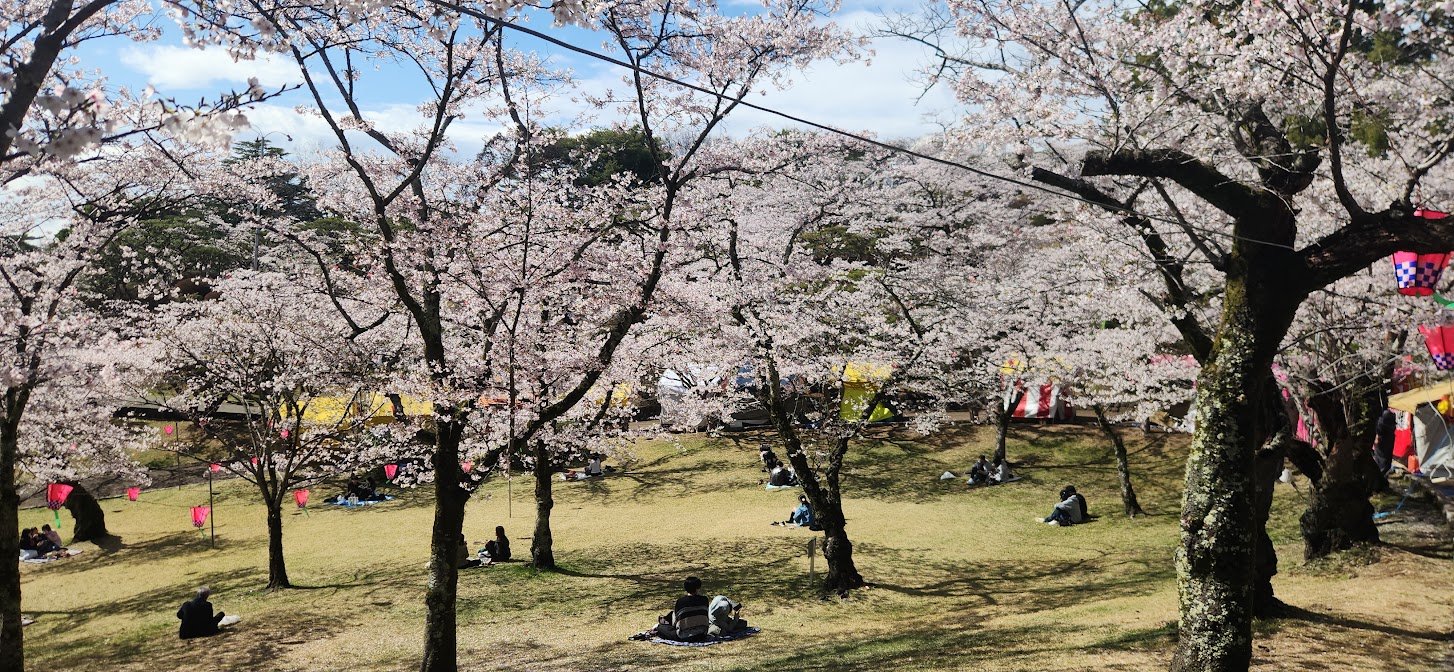
A sakura picnic is one of the simplest and most memorable ways to enjoy cherry blossom season in Japan.
You do not need anything fancy. You can buy food from a supermarket or convenience store, find a respectful place to sit, and enjoy the blossoms slowly. But if it is your first time, there are a few things worth knowing so the experience feels easy instead of awkward.
This guide explains how to plan a sakura picnic in Japan, what to bring, where to sit, where to buy a picnic sheet, and how to follow basic hanami etiquette.
What is a sakura picnic?
A sakura picnic is usually called hanami in Japanese.
Hanami literally means “flower viewing,” but during spring it usually means enjoying cherry blossoms. It can be as simple as walking under the blossoms, but it also often involves picnic gatherings under blooming cherry trees.
For travellers, a sakura picnic can be very simple:
- Buy food before arriving.
- Find a place where sitting is allowed.
- Spread a small picnic sheet.
- Enjoy the blossoms.
- Pack up everything you brought.
That is enough.
Do you need to reserve a picnic spot?
Usually not, at least for a casual traveller.
In very popular parks, groups may reserve picnic space early with a sheet, especially for larger gatherings. But for most travellers, I would avoid complicated spot-saving. Instead, keep the picnic small and flexible.
A casual picnic is much easier if you:
- Go with a small group.
- Use a compact picnic sheet.
- Avoid peak lunch hour if possible.
- Choose a long riverside or larger park instead of a tiny famous viewpoint.
- Stay flexible and move if the area feels too crowded.
This is one reason we liked the Shiroishigawa Hitome Senbonzakura riverbank. Because the walk is long, it was easier to find a place to sit than at a compact park.
What food should you bring?
The easiest option is to buy food from a supermarket, convenience store, train station shop, or department-store food floor before you arrive.
Good picnic choices include:
- Onigiri
- Bento
- Sandwiches
- Fried chicken or simple deli items
- Fruit
- Seasonal sweets
- Bottled tea or water
- Small snacks you can pack out easily
For our Shiroishigawa Hitome Senbonzakura visit, we brought supermarket food and had a picnic along the riverbank. That worked well because we did not need to depend on festival stalls or queue for food.
At some famous sakura spots, food stalls may be available during festival season. These can be fun, but I still prefer bringing at least some food with me. It gives you more flexibility, especially if the stalls are crowded or not located where you want to sit.
What should you bring for a sakura picnic?
You do not need much, but a few small items make the picnic easier.
| Item | Why it helps |
|---|---|
| Picnic mat (leisure sheet / レジャーシート) | Keeps you dry and marks your sitting space; available at many budget or variety stores in Japan |
| Trash bag | Many parks have limited bins, so be ready to take trash with you |
| Wet wipes / tissues | Useful before and after eating |
| Small towel | Helpful if benches or grass are damp |
| Light jacket | Spring can still be chilly, especially near rivers |
| Portable battery | Useful if you are taking photos and checking maps |
| Simple food and drinks | Easier than relying only on stalls |
| Small bag for leftovers | Keeps your trash contained until you find a proper bin |
Keep the setup compact. A sakura picnic should not block paths, take too much space, or make it harder for other people to enjoy the area.
Where to buy a picnic sheet in Japan
If you do not already have a picnic mat, you can buy one after arriving in Japan.
In Japanese, a picnic sheet is usually called a leisure sheet or レジャーシート. This is the term I would search for or ask for in a shop.
You can often find leisure sheets at budget and variety stores such as:
- Daiso
- Seria
- Don Quijote, often called Donki
For a sakura picnic, you do not need anything expensive. A simple compact leisure sheet is enough, especially if you are travelling and do not want to carry bulky outdoor gear.
If you are shopping in person, try looking around the outdoor, leisure, picnic, seasonal, or travel-goods sections. You can also show this word to staff:
レジャーシート
This small item can make a big difference. Grass, riverbanks, and park seating areas may be damp during spring, and a leisure sheet makes it much easier to sit comfortably without worrying about your clothes or bags.
Where should you sit?
Look for places where people are already sitting and where you will not block movement.
Good places to sit:
- Open grass areas
- Wide riverbanks
- Designated picnic zones
- Benches, if available
- Areas away from narrow walking paths
Avoid sitting:
- On tree roots
- In flower beds
- In the middle of a path
- Too close to private property
- In areas with signs saying not to enter or not to sit
A good rule is to look at how local visitors are using the space. If people are sitting on picnic sheets in a wide grassy or riverside area, it is usually a good sign. If an area is roped off, planted, narrow, or clearly part of a walking route, keep moving.
Basic hanami etiquette
The most important rule is simple: leave the place as good as you found it.
For travellers, I would simplify hanami etiquette to this:
- Do not touch, pull, shake, or climb the cherry trees.
- Do not pick blossoms.
- Do not sit on roots or inside roped-off areas.
- Keep your picnic space small.
- Do not block paths or photo spots.
- Take your trash with you.
- Follow local signs.
- Keep the atmosphere respectful.
You do not need to be nervous. Just be considerate.
Should you rely on food stalls?
Food stalls can be fun, but I would not rely on them completely.
They may be seasonal, crowded, cash-focused, or located only in certain areas. They also may not be operating outside festival dates, even if the trees are blooming.
The best approach is:
- Bring enough food that you can still enjoy a picnic.
- Use stalls as a bonus if they are available.
- Carry cash if you plan to buy from small vendors.
- Avoid planning your entire meal around one specific stall.
For Shiroishigawa Hitome Senbonzakura, food stalls and markets can be part of the festival experience, but the riverbank picnic itself is more flexible if you bring your own food.
How long should a sakura picnic be?
For most travellers, one to two hours is enough for a relaxed picnic.
You can make it shorter if the weather is cold, windy, or crowded. You can make it longer if you have a good spot and the park atmosphere feels comfortable.
For a place like Shiroishigawa Hitome Senbonzakura, the picnic works best as part of a longer visit: walk, take photos, sit for food, then continue walking.
What if the ground is wet?
Spring weather can be unpredictable, so do not assume the grass or riverbank will be dry.
A leisure sheet helps, but if the ground is too wet, choose a bench, a paved area where sitting is allowed, or switch to a walking hanami instead.
A sakura day can still be good without a full picnic. You can buy snacks, walk under the blossoms, and sit briefly when you find a dry place.
Best places for a sakura picnic
The best picnic spots are not always the most famous ones.
For a picnic, I would prioritize places with:
- Space to sit
- A longer walking route
- Nearby toilets
- Easy food access
- Less pressure to rush
- A relaxed atmosphere
Riverside sakura spots are often good because there is usually more space than in compact parks. City parks are easier for food and toilets, but they can be busier.
Final recommendation
A sakura picnic in Japan does not need to be complicated.
Buy simple food, bring or buy a small leisure sheet, choose a respectful place to sit, and take your trash with you. The best picnic is not the most elaborate one. It is the one that lets you slow down and enjoy the blossoms without creating stress for yourself or other people.
For a first sakura picnic, I especially like places with room to spread out, such as long riverbanks or larger parks. That is why Shiroishigawa Hitome Senbonzakura worked so well for us: the riverbank gave us space, the blossoms were close, and the picnic became one of the best parts of the visit.
FAQ
Can tourists have a hanami picnic in Japan?
Yes, as long as picnics are allowed in that location and you follow local rules. Keep your setup small, avoid blocking paths, and take your trash with you.
What should I buy for a sakura picnic?
Supermarket or convenience-store food works well. Onigiri, bento, sandwiches, snacks, fruit, tea, and water are all easy options.
What is a picnic sheet called in Japanese?
A picnic sheet is usually called a leisure sheet or レジャーシート in Japanese. You can often find one at stores like Daiso, Seria, or Don Quijote.
Can I sit anywhere under the cherry blossoms?
No. Sit only where it is allowed and where you are not blocking paths or damaging tree roots. Always follow signs and local instructions.
Do parks in Japan have trash cans?
Some do, but many have limited bins or none at all. Bring a bag and be ready to take your trash with you. See Why Are There So Few Garbage Bins in Japan?