Zenjiro vs Kisuke is the comparison I wish I had read before my first gyutan meal in Sendai. First things first: if you are new to gyutan, do not let the word “tongue” put you off too quickly. In Sendai, gyutan is usually served as a grilled set meal, and the thicker cuts can eat more like a juicy grilled beef cut than many first-time visitors expect. If you are completely new to it, you may want to start with What Is Gyutan? A Beginner’s Guide to Sendai Beef Tongue.
I tried both Zenjiro (たんや善治郎) and Kisuke (喜助), and below is my honest take on which one I preferred, what I would order, and what I think first-time visitors should know before choosing.
This article is intentionally focused on the two places I actually visited. I would rather give a useful firsthand comparison than pretend I tested every gyutan restaurant in Sendai.
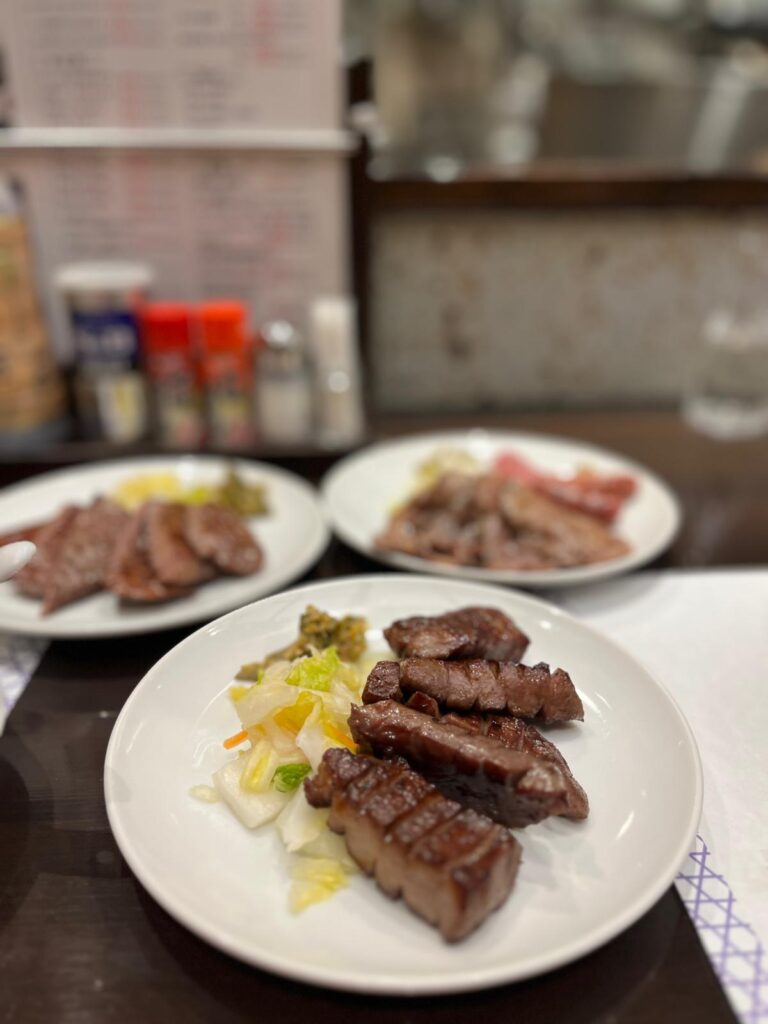
Thick-cut gyutan at Zenjiro was the version I liked most in Sendai.
Quick answer
If food is the main priority, I would choose Zenjiro.
If I specifically wanted to compare two well-known Sendai names, or if a Kisuke branch fit my route better, I would still consider Kisuke.
My simple recommendation for most first-time visitors is this:
Go to Zenjiro first.
Why gyutan is worth trying in Sendai
Gyutan is one of Sendai’s signature foods, and it is one of the easiest local specialties to build into a trip.
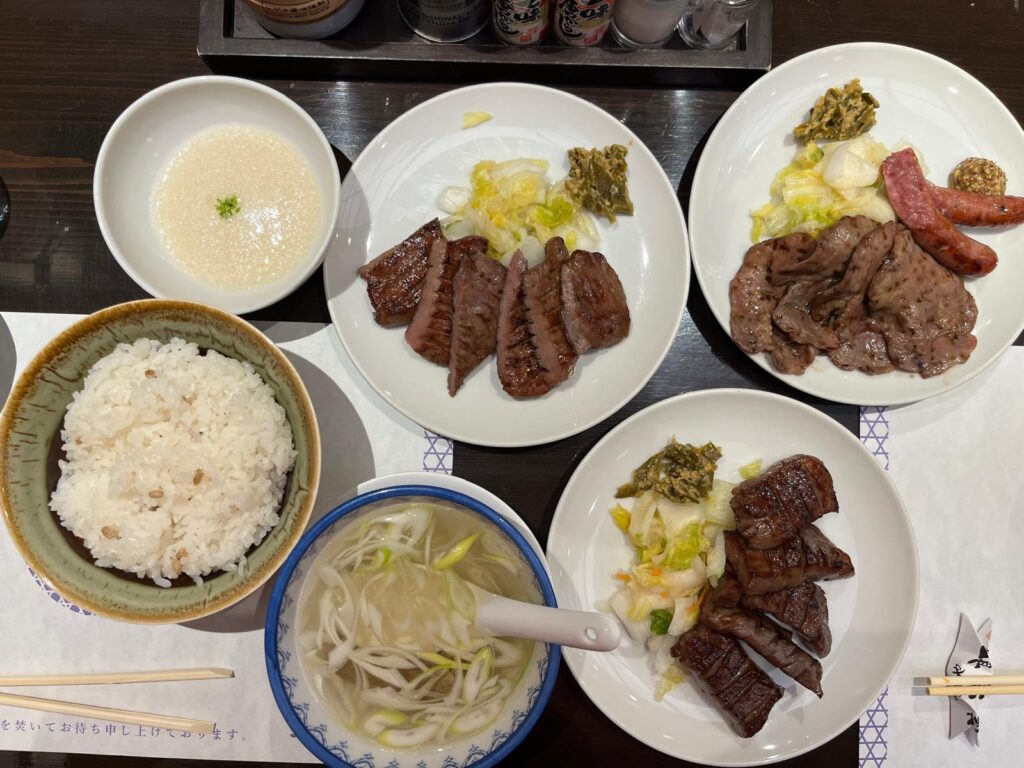
A classic Sendai gyutan meal is more than just grilled beef tongue. It usually includes:
Grilled gyutan
Barley rice
Tail soup
Pickles
Nanban miso, or another spicy green chili side
Depending on the set, you may also get tororo (とろろ), which is grated Japanese mountain yam. A common way to eat it is to spoon some over your barley rice, then eat it with the gyutan. If you have never had it before, the texture is slippery and sticky, so it is better to try a little first instead of pouring the whole bowl over your rice right away.
This photo shows one full set meal plus two extra shared gyutan dishes, so do not expect a standard single set to come with three beef tongue plates.
Why I preferred Zenjiro
The main reason was the food.
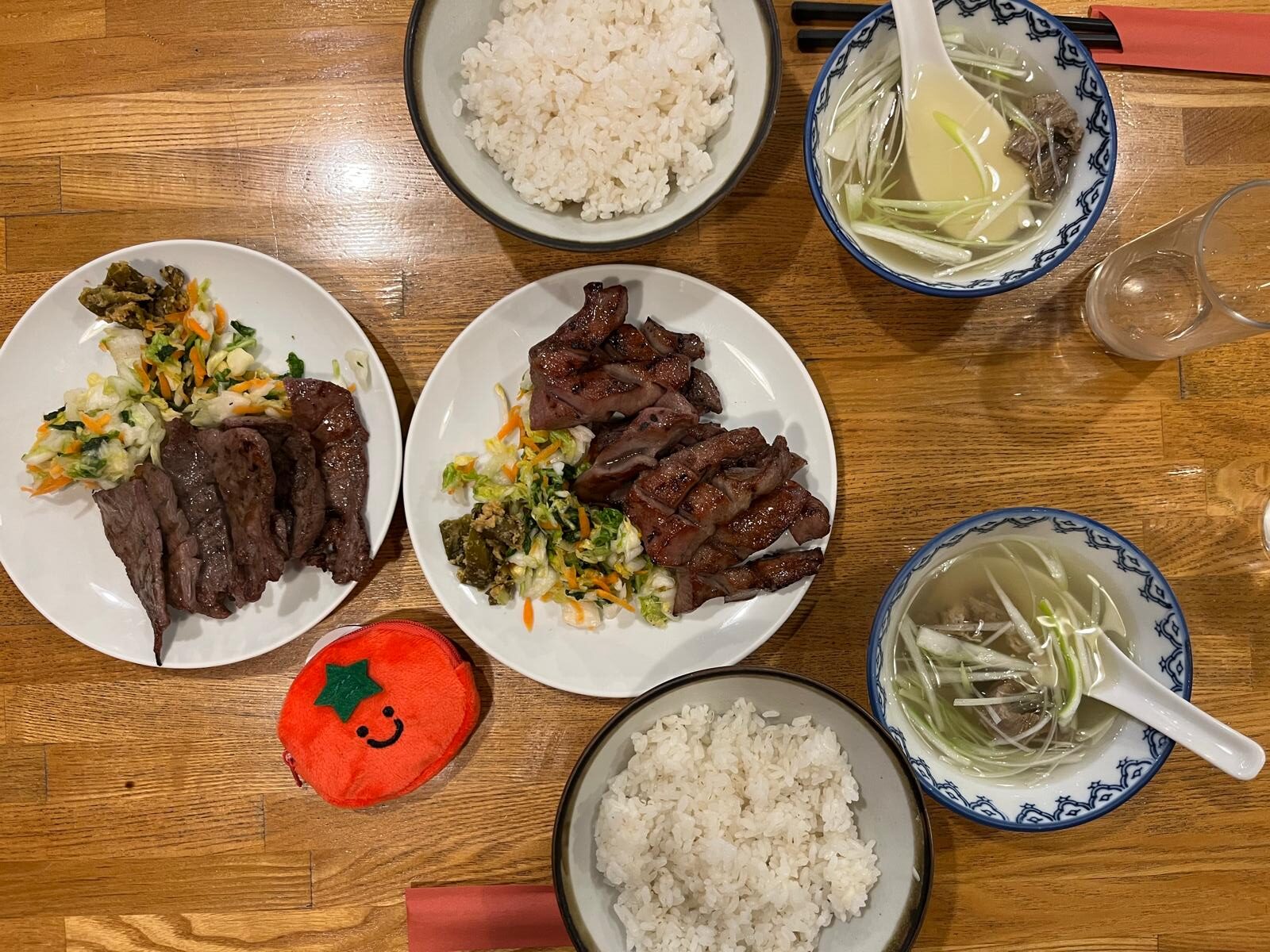
The thick-cut gyutan at Zenjiro was the one I kept thinking about afterward. It had the texture I was hoping for: browned and lightly charred outside, juicy inside, and tender enough to feel worth the price.
Zenjiro also had a wider menu, which made it easier to choose something that felt more special than a basic plate.
The atmosphere of the branch I visited also helped. It felt clean, bright, and modern. That was not the main reason I preferred it, but it made an already better meal feel even better.
Zenjiro vs Kisuke
I do not think Kisuke is bad. It is not.
But for me, Kisuke felt more limited. At the branch I visited, the grilled beef tongue choices were simpler, basically thick or thin, while Zenjiro gave me more options. Since I cared most about getting the best thick-cut gyutan I could, that mattered.
So if I were recommending them to a friend, I would put it this way:
Choose Zenjiro (たんや善治郎) if:
Food is the main priority
You want the thick-cut experience that really shows why people like Sendai gyutan
You want more menu options
You like a brighter, more modern branch experience
Choose Kisuke (喜助) if:
You want to try another famous Sendai gyutan name
A Kisuke branch fits your route better
You are happy with a simpler menu
You want to compare two of the better-known gyutan chains in the city
That is the fairest version of my opinion. Kisuke was still good. Zenjiro was just the one I liked more.
I did try Kisuke as well. It was still good, but I preferred Zenjiro for the juicier thick-cut gyutan and the wider menu.
What to order if you do not want to gamble
If you do not want to overthink the menu, I would not start with the cheapest basic lunch set.
The two safest picks from the menu I photographed were:
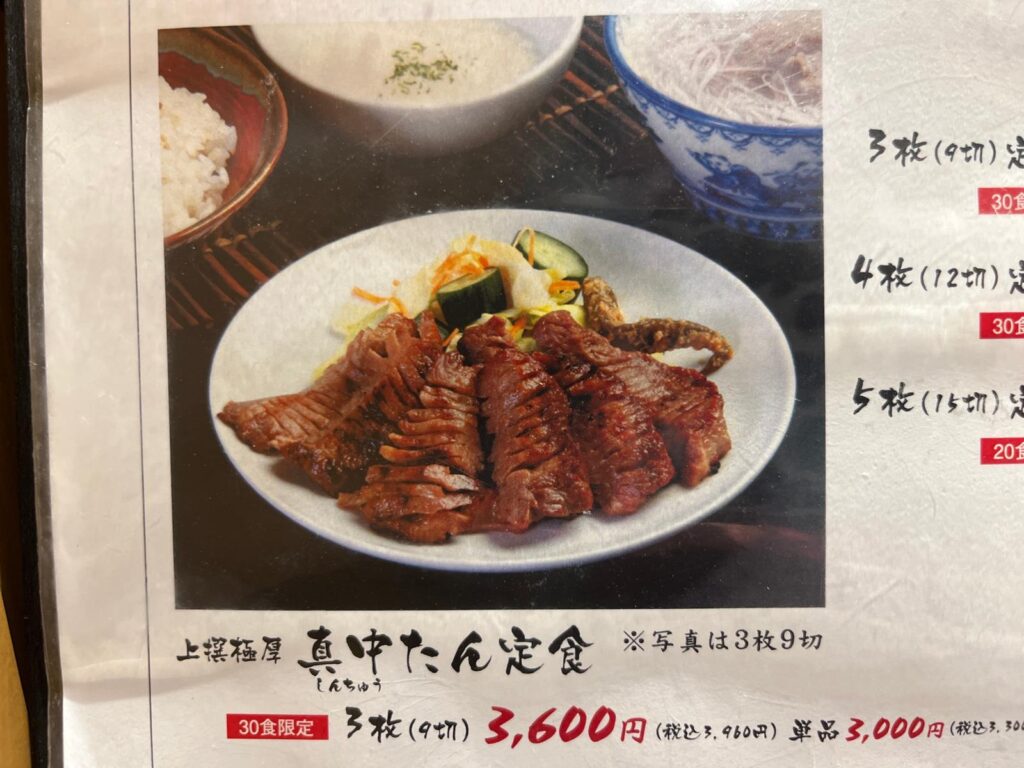
1. Premium extra-thick center-cut set (上選極厚 真中たん定食)
This is the one I would be most excited to order. 真中たん refers to the center section of the tongue, and on the menu photo I took, this set was marked as limited to 30 sets a day.
If you see it available and it fits your budget, this is a strong choice.
The premium extra-thick center-cut set (上選極厚 真中たん定食) was marked as limited to 30 sets a day.
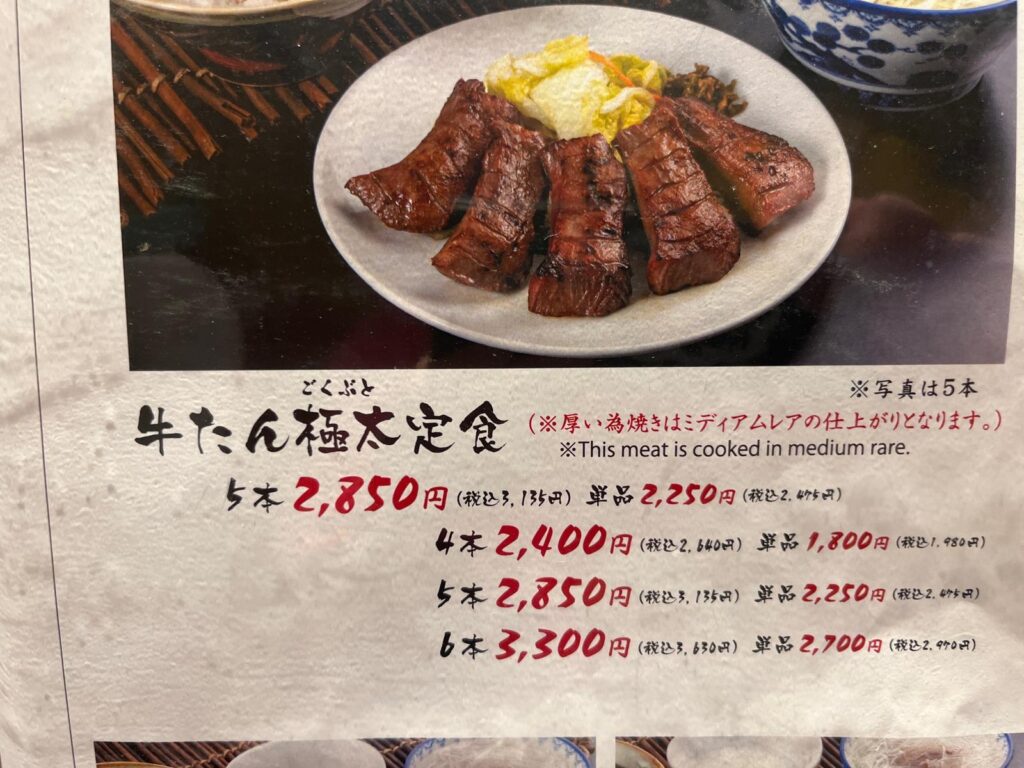
2. Extra-thick gyutan set (牛たん極太定食)
This is the easier recommendation if you want a thick-cut order without overcomplicating things. It is a very good way to get the full thick, juicy style that makes Sendai gyutan stand out.
So if you want the short version:
Best order if available: Premium extra-thick center-cut set (上選極厚 真中たん定食) Best easy fallback: Extra-thick gyutan set (牛たん極太定食)
The extra-thick gyutan set (牛たん極太定食) is a great fallback if the limited center-cut set is gone.
How much should you expect to spend
This depends a lot on what you order.
A basic lunch set can start at around ¥1,430. Once you move into thicker or more premium sets, you are more in the ¥2,400 to ¥4,500 range, depending on the portion and the restaurant.
That puts gyutan in a useful middle category. It does not have to be a splurge, but if you choose one of the better sets, it can easily become your one deliberate food stop in Sendai.
How much time should you budget
If there is no queue, this is just a normal dine-in meal. We were lucky and did not have to queue at either restaurant.
I would budget:
About 60 to 90 minutes for a standard meal
Closer to 90 to 120 minutes if you want drinks and a slower pace
That matched my experience well. We stayed longer because we had sake.
To reduce the chance of lining up, I would aim for:
Before 11:30 am
Or after about 1:30 pm
Do you need Japanese, cash, reservations, or patience
You do not need strong Japanese to eat at either place. The menus have helpful photos, and Google Translate is enough for most travelers.
Payment is worth checking.
When we visited:
Zenjiro accepted both card and cash
Kisuke Ichibancho was cash only
We did not make reservations, and I generally prefer keeping my day flexible. If someone really wants a specific branch at a specific time and does not speak Japanese, asking the hotel concierge to help is probably the easiest workaround.
The branches I visited
For reference, these are the two branches I actually went to:
Tanya Zenjiro Futsukamachi (たんや善治郎 二日町店)
Kisuke Hassho no Mise Ichibancho (喜助発祥の店 一番町店)
I chose these two branches because they were farther away from Sendai Station and, logically, more likely to be less crowded. We chose not to go to Gyutan Street because we did not want to queue at the most obvious station option if we could get a similar or better meal with less waiting elsewhere.
If your schedule is flexible, I still think this is a smart way to approach gyutan in Sendai.
What Gyutan Street actually is
This is worth explaining clearly because the name can give the wrong impression.
Gyutan Street (牛たん通り) is not a street-food lane with little stalls. It is a cluster of individual sit-down gyutan restaurants inside Sendai Station.
That means it is convenient, but it also means it behaves like a row of proper restaurants. If you hit it at a busy time, you should expect real queues.
Is Gyutan Street worth it
I would put it this way:
Gyutan Street is convenient if you are already at Sendai Station, but not necessarily the best choice if you want to avoid queues.
It makes sense if:
You are arriving or leaving by train
You do not want extra walking
You are happy to line up
Or you happen to be there at a clearly off-peak time
I would skip it if:
You hate queues
You are happy to walk a bit or take a short subway ride
You want a slightly calmer experience away from the station crowd
That was my own approach. I skipped Gyutan Street and went to branches outside the station area, and I was happy with that choice.
Other gyutan restaurants in Sendai
Sendai has many other gyutan restaurants beyond Zenjiro and Kisuke, including long-established names and station-area options. I focused this article on the two places I actually visited, because I would rather give a useful firsthand comparison than pretend I tested the whole city.
If you want a broader researched guide that includes other notable restaurants such as Aji Tasuke, Rikyu, and Date no Gyutan Honpo, see:
If I were sending a friend to one gyutan restaurant in Sendai, I would send them to Zenjiro.
That is mainly because of the food. The thick-cut gyutan I had there was the most enjoyable version I tried. The wider menu and the brighter branch experience made that recommendation even easier, but the food came first.
So my simple advice is:
Go to Zenjiro (たんや善治郎) first
Order the premium extra-thick center-cut set (上選極厚 真中たん定食) if you can get it
If not, go for the extra-thick gyutan set (牛たん極太定食)
Keep Kisuke (喜助) as a good alternative, not a bad one
Treat Gyutan Street (牛たん通り) as a convenience option, not the automatic best choice
FAQ
Which gyutan restaurant do I recommend in Sendai?
I would recommend Zenjiro (たんや善治郎) first.
What should I order if I do not want to gamble?
The safest higher-upside orders are the premium extra-thick center-cut set (上選極厚 真中たん定食) and the extra-thick gyutan set (牛たん極太定食).
Is the center-cut set limited?
Yes. On the menu photo I took, the 真中たん set was marked as limited to 30 sets a day.
Do I need Japanese to order?
Not really. Menu photos plus Google Translate are enough for most travelers.
Is Gyutan Street worth it?
Yes for location convenience. Not necessarily if your main goal is avoiding a queue.
How much does gyutan cost in Sendai?
A basic lunch set can start around ¥1,430, while thicker or more premium sets can move into the ¥2,400 to ¥4,500 range.