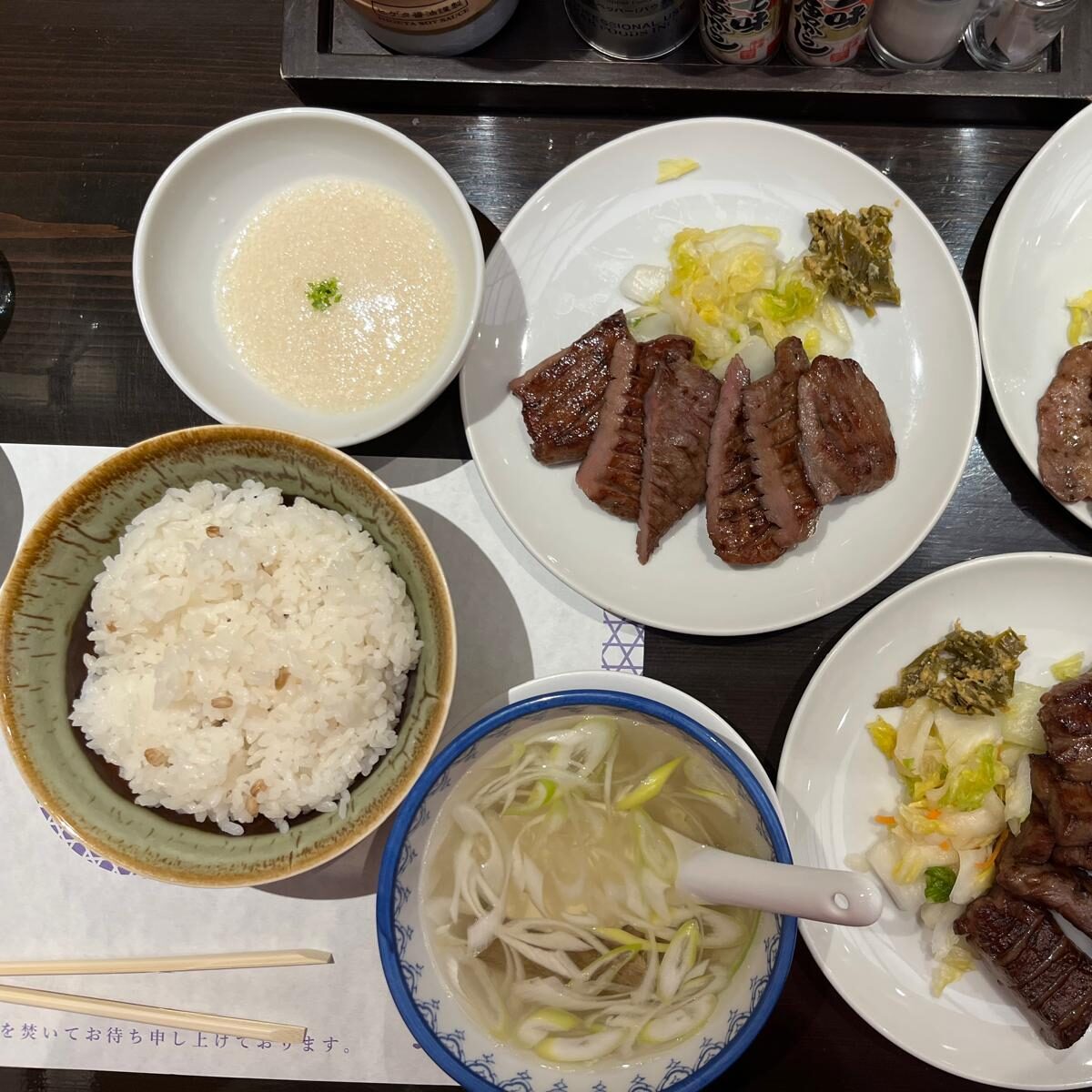
What is gyutan? It is grilled beef tongue, and Sendai is the Japanese city most closely associated with it. If you have seen gyutan on a menu and were not quite sure what to expect, this guide will help you understand what it is, how it tastes, and how to order it with confidence.
For many English-speaking travelers, gyutan sounds more intimidating than it actually is. In reality, the classic Sendai version is one of the easiest local specialties to try: grilled slices of beef tongue served with barley rice, tail soup, pickles, and a spicy chili-miso side.
If you are new to gyutan, this guide covers what it is, why Sendai is famous for it, what it tastes like, what comes in the set meal, and what first-timers should order.
If you already know you want to eat it, see:
- Where to Eat Beef Tongue (Gyutan) in Sendai: Best Restaurants, What to Order, and Queue Tips
- Best Beef Tongue (Gyutan) in Sendai? Zenjiro vs Kisuke
What Is Gyutan?
Gyutan is the Japanese word people commonly use for beef tongue.
In Sendai, the best-known version is gyutan-yaki, or grilled beef tongue. It is usually seasoned, grilled over charcoal, and served as a set meal rather than as a standalone snack.
That matters because many first-time readers imagine something much stranger than it really is. In practice, it is closer to a local grilled meat specialty than a shock-value food challenge.
Why Sendai is famous for it
Gyutan originated in Sendai.
Local tourism and gyutan history sources trace modern Sendai gyutan to 1948, when Keishiro Sano of Aji Tasuke developed the style that later became known as Sendai gyutan.
There is also a well-known story that gyutan began with beef tongue discarded by the U.S. occupation. It makes a dramatic anecdote, but local history sources treat that version as a myth. The simpler version is the more useful one: modern grilled gyutan began in Sendai and became one of the city’s signature foods.
Today, tourism sources commonly say there are around 100 gyutan specialty restaurants in Sendai.
So if you are going to try gyutan for the first time, Sendai is the place where it makes the most sense.
What a gyutan meal usually includes
A classic Sendai gyutan set usually includes:
- Grilled beef tongue
- Barley rice
- Tail soup
- Pickles
- A spicy green chili side, often preserved in miso
Some restaurants also offer:
- Tororo (とろろ), grated Japanese mountain yam
- Extra tongue dishes such as sausage, stew, curry, or boiled tongue
- Premium cuts or thicker slices
A few notes help this make more sense for beginners.
Barley rice
This is usually white rice mixed with barley. It gives the meal a slightly nuttier texture and helps balance the rich, salty meat.
Tail soup
This is usually a light oxtail soup. It is not there just to fill the tray. It gives the meal warmth and balance and helps reset your mouth between bites.
Spicy green chili side
This is often called nanban miso or described as a green chili-miso side. It cuts through the richness of the meat. If you are spice-sensitive, start with a tiny bite.
Tororo
If your set includes tororo, a common way to eat it is to spoon some over your rice and eat it with the gyutan. The texture is slippery and sticky, so first-timers may want to try a little first.
This is one reason gyutan works so well for travelers. It is not just a few slices of tongue on a plate. It is a proper, filling meal with a structure that makes sense once you see all the parts together.
What gyutan looks, smells, and tastes like
The best short answer is:
Beefy, savory, lightly smoky, slightly chewy, and often more tender than many first-timers expect.
When I had the thick-cut gyutan at Zenjiro in Sendai, the outside was browned and lightly charred, the inside stayed juicy, and it was tender enough that I kept thinking about it afterward.
When it is done well, the outside is browned and lightly charred, while the inside stays juicy. On the grill, it looks more like slices of well-seared meat than something strange or scary.
The smell is one of the most reassuring parts for first-timers. It usually smells like grilled beef, smoke, and seasoning, not like an overpowering offal dish.
Restaurants differ in:
- How thick they slice it
- How heavily they season it
- What cuts they use
- And how much they age or cure it before grilling
That is why gyutan can taste quite different from one restaurant to another, even within Sendai.
Is gyutan chewy
Sometimes, yes.
That does not mean it is bad. Chew is part of the identity of gyutan. But there is a big difference between:
- A thinner or firmer cut that leans more chewy
- And a thicker premium cut that feels juicier and more tender
If you are nervous about texture, the easiest solution is:
Order a thicker or more premium cut on your first try.
That gives you a better chance of understanding why people love it.
How to eat it the first time
You do not need a special ritual, but a few small tips help.
1. Start with the gyutan on its own
Take a bite before mixing everything together. That helps you understand the flavor and texture.
2. Try the spicy green side in a small amount
The chili-miso side is there to cut through the richness. If you are spice-sensitive, start small.
3. Use the soup and rice as part of the meal, not as fillers
The tail soup and barley rice are part of the classic balance of the set.
What to order as a beginner
If this is your first gyutan meal, you have three sensible options.
Safest first order
The standard gyutan set meal
This gives you the classic Sendai experience without overcomplicating things.
Best first order if you already like grilled meat
A thick-cut gyutan set
This is usually a better showcase of why gyutan is special.
Best first order if gyutan is one of your main food priorities
A premium or signature cut
Different restaurants use different names, but look for terms that suggest thicker, premium, center, or core cuts.
The simplest rule is this:
If you only plan to eat gyutan once in Sendai, do not automatically choose the cheapest set.
Is gyutan always wagyu
No.
Gyutan is beef tongue, but that does not automatically mean wagyu.
If the origin of the beef matters to you, check the menu rather than assume. Some restaurants highlight premium or domestic beef more clearly than others.
For most first-time travelers, the more important question is not “is it wagyu?” but:
Is this the style of gyutan and cut I actually want to try?
How much it costs
A beginner-friendly way to think about the price is:
- Basic set: low ¥1,000s
- Solid standard meal: usually ¥2,000s
- Thicker or premium set: can move into the ¥3,000 to ¥4,000+ range
So gyutan can be casual, but it can also become your one intentional food stop in Sendai.
Who should try it
Gyutan is especially worth trying if:
- You like grilled meat
- You enjoy local specialties tied to place
- You want a Sendai meal that feels distinctive but not overly complicated
You may want to think twice if:
- You strongly dislike chewy textures
- The idea of eating tongue makes you too uncomfortable to enjoy the meal
- You only want very familiar, predictable foods
That said, many first-time eaters find gyutan easier to enjoy than they expected.
FAQ
What is gyutan?
Gyutan means beef tongue.
Why is gyutan associated with Sendai?
Modern grilled gyutan originated in Sendai and became one of the city’s best-known local foods.
What comes with a gyutan set meal?
Usually grilled tongue, barley rice, tail soup, pickles, and a spicy green chili-miso side.
Is gyutan weird to eat?
For some people the idea sounds unusual at first, but the actual meal is usually more approachable than expected.
Is gyutan chewy?
Yes, a little, but premium or thicker cuts are usually much more tender and juicy.
What should I order first?
A standard set is the easiest starting point, but a thick-cut or premium set is often a better showcase.
If you are ready to move from “what is gyutan?” to “where should I actually eat it?”, read: