If you are planning your first gyutan, or grilled beef tongue, meal in Sendai, the hardest part is usually not whether to try it. It is where to go, what to order, and how to avoid wasting time in a long queue.
This guide is for travelers who want a practical shortlist, not a bloated top-20 roundup.
It combines:
My firsthand experience at Zenjiro and Kisuke
Official station information for Gyutan Street
And restaurant or tourism source research for other well-known gyutan names in Sendai
To keep things transparent, I have clearly marked which places I visited personally and which ones are researched only.
If you want the detailed firsthand comparison between the two places I actually ate at, see:
This is a great option if gyutan is one of your trip priorities and you enjoy food comparisons.
What beef tongue means in Sendai
Gyutan is the Japanese word people commonly use for beef tongue.
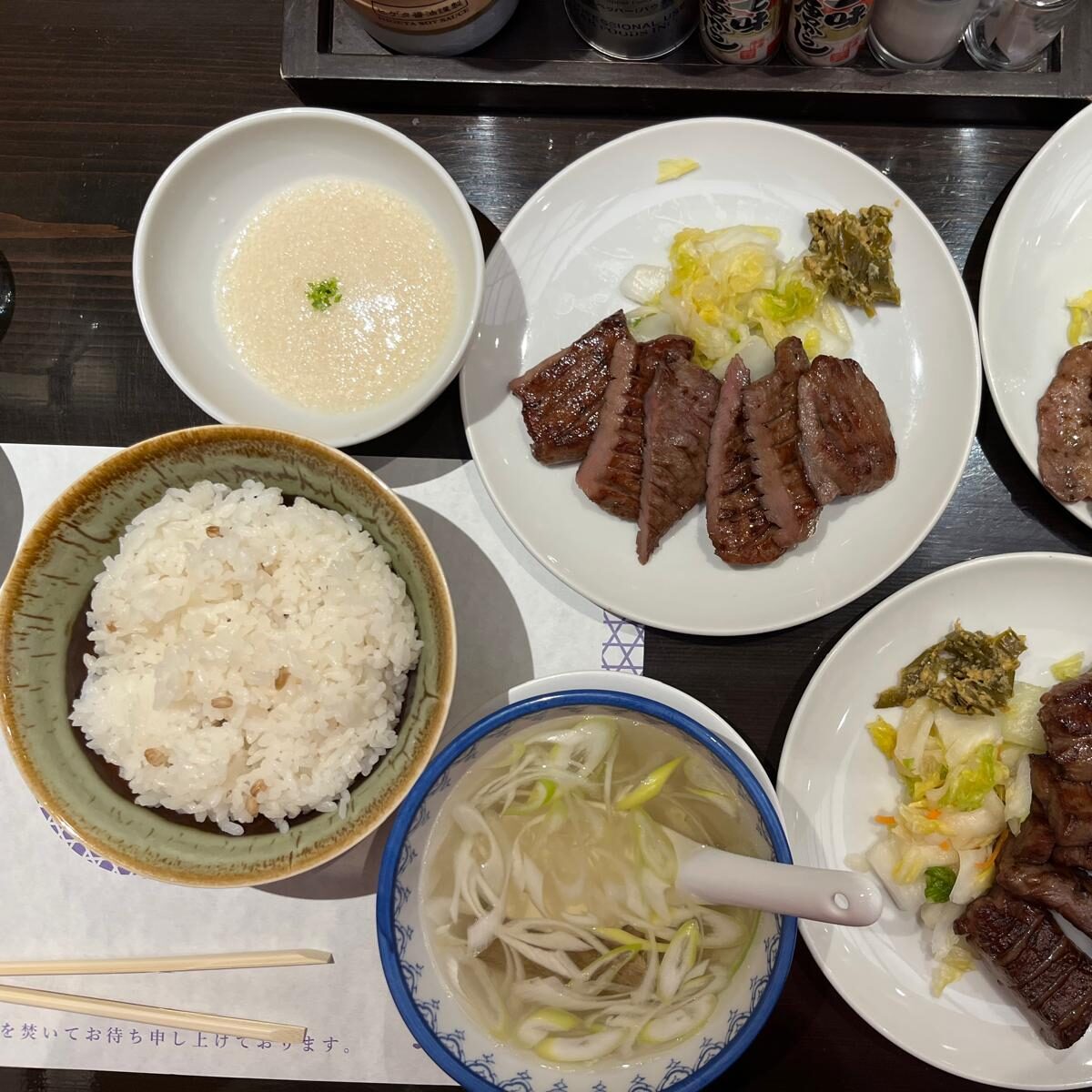
In Sendai, gyutan is not just one grilled plate of meat. The classic style is usually served as a set meal with:
Grilled beef tongue
Barley rice
Tail soup
Pickles
And a spicy green chili miso side
That set meal format is one reason gyutan works so well for travelers. It feels like a complete local meal rather than a novelty bite.
One useful history note: modern Sendai gyutan originated in Sendai in 1948, and the often-repeated idea that it began as leftovers discarded by the U.S. occupation is treated as a myth by local history sources. If you want the fuller origin story, What Is Gyutan? A Beginner’s Guide to Sendai Beef Tongue covers it in more detail.
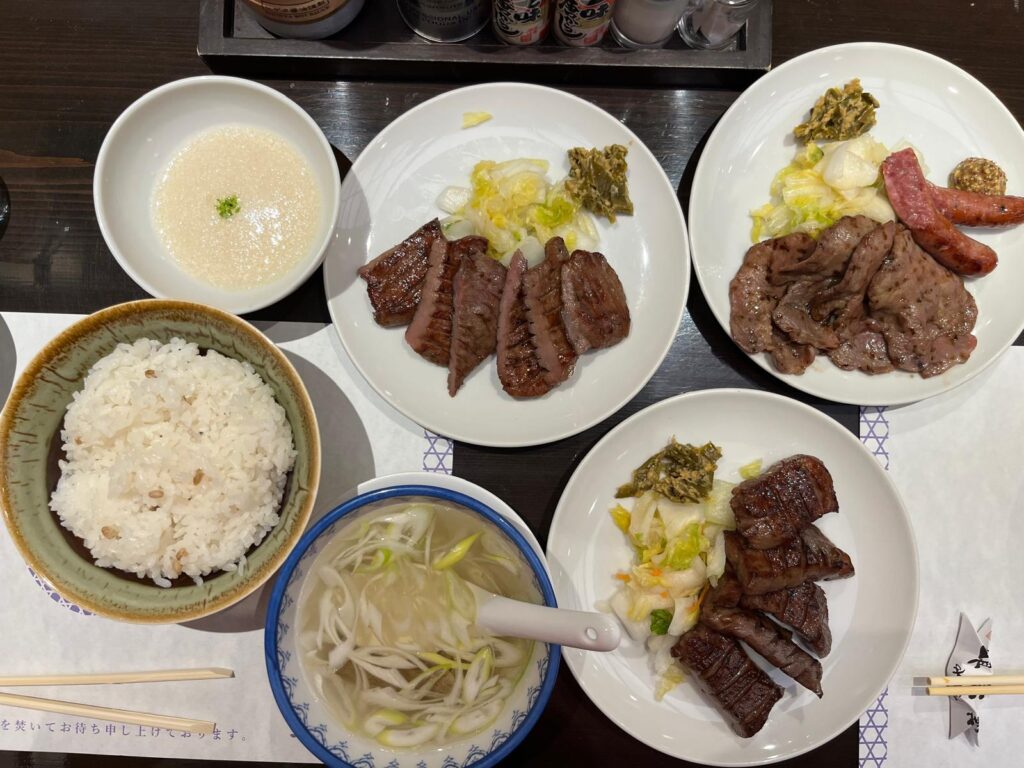
A classic Sendai gyutan meal usually comes with beef tongue, barley rice, tail soup, pickles, and a spicy green chili side.
The best-known gyutan options in Sendai
1. Zenjiro (visited personally)
Why it stands out:
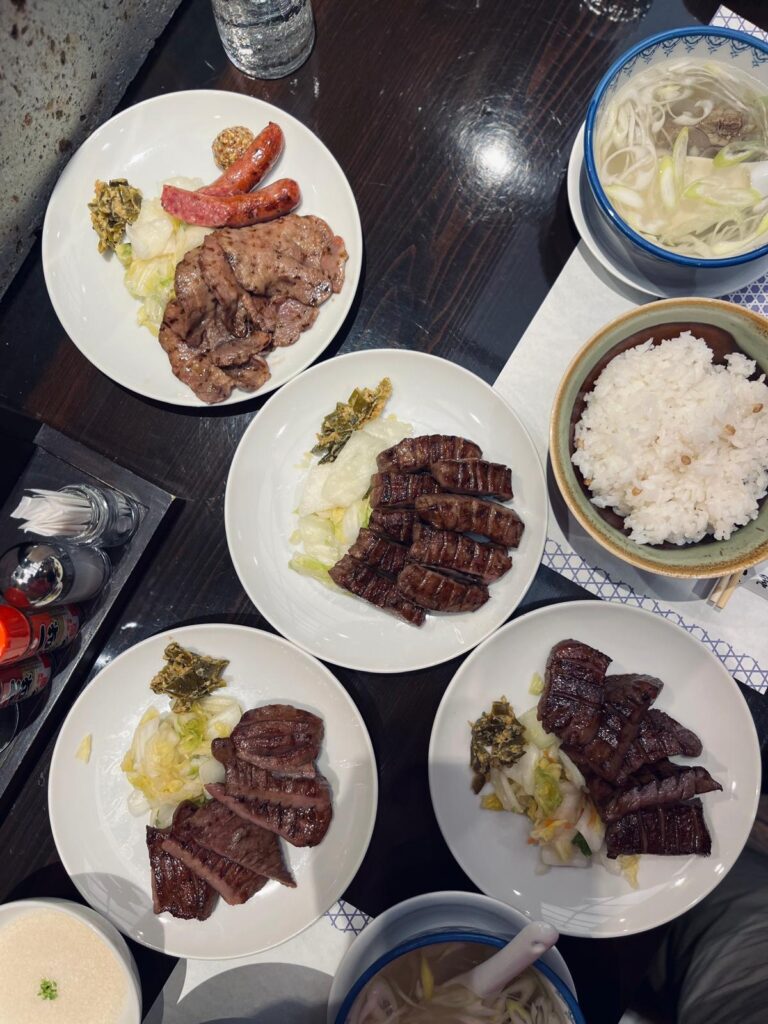
A Zenjiro gyutan spread in Sendai, including thick-cut beef tongue, rice, soup, and extra shared dishes.
Thick cuts are a major draw
The brand emphasizes hand preparation, scoring, seasoning, and aging
Some branches offer specialty items beyond the basic set
Why I would recommend it: This is the gyutan chain I personally preferred. If food quality is your main priority and you want something that still feels approachable for first-time visitors, Zenjiro is a strong place to start.
Best for:
First-time gyutan eaters who still want a memorable meal
Travelers who care about thicker, juicier cuts
People who want more than the bare-minimum menu choice
2. Kisuke (visited personally)
Why it stands out:
It is one of Sendai’s better-known gyutan names
The menu includes the classic grilled set plus a popular thick-cut option
It offers salt, sauce, and miso versions of the standard set
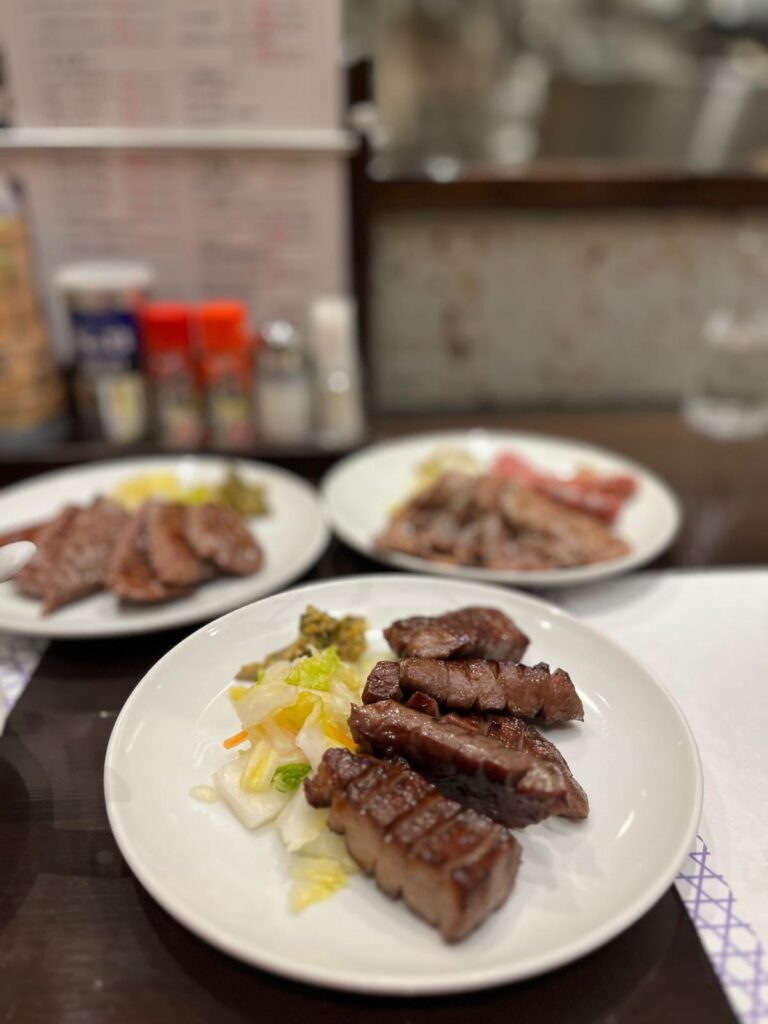
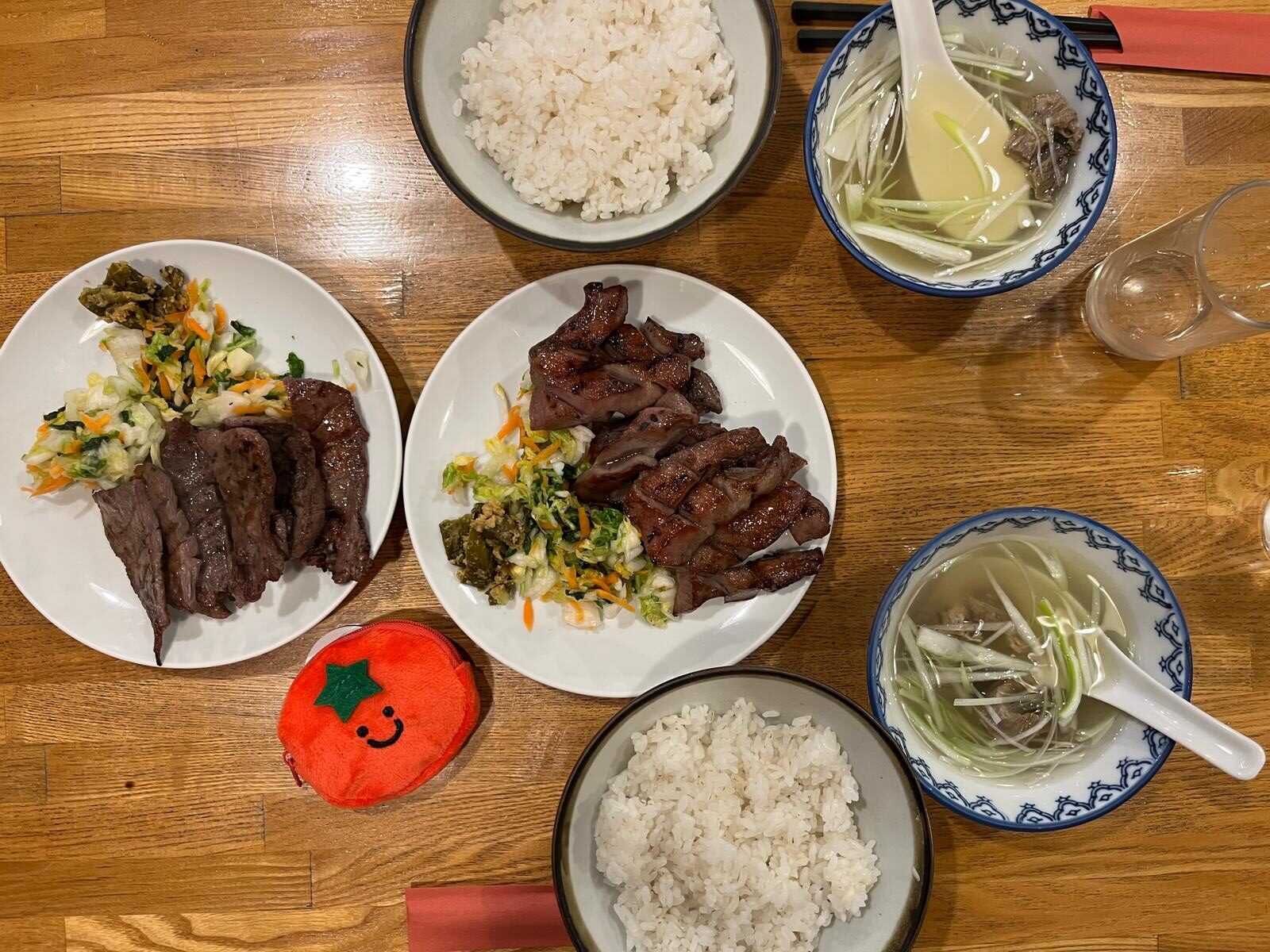
My take: I did try Kisuke, and I would still call it a good option. I just preferred Zenjiro more clearly. Kisuke makes sense if the branch location suits you better or if you want to compare two established Sendai names for yourself.
Best for:
Travelers who want a famous gyutan name
People curious about the classic set plus a thicker specialty option
Travelers whose route already passes a convenient branch
I did try Kisuke as well, but I preferred Zenjiro overall.
3. Aji Tasuke (researched)
Why it stands out:
It is widely cited as the birthplace of Sendai gyutan
If the history matters to you, this is the most symbolic choice
I have not personally eaten here, so I would not rank it above places I have actually tried. But if your travel style values food history and originals, Aji Tasuke is one of the most meaningful names to know.
4. Rikyu (researched)
Why it stands out:
Many visitors come across Rikyu because it has multiple branches in Sendai
It is known for thick-sliced gyutan and a broad menu
It works well for lunch, dinner, and group-friendly dining
Rikyu is one of the easiest safe-bet names to recommend in a broader city guide because it is established, accessible, and easier to fit into different types of itineraries.
5. Date no Gyutan Honpo (researched)
Why it stands out:
The brand’s signature Shintan is positioned as a premium tender section of the tongue
The company is known both for restaurant dining and souvenir products
It is a good option if you want to combine a meal with edible gifts
Date no Gyutan Honpo is a useful name for travelers who want something clearly branded, easy to remember, and easy to pair with gift shopping.
6. Gyutan Kaku Vlandome (researched)
Why it stands out:
It is highlighted by Discover Sendai as one of the city’s notable gyutan restaurants
It is a downtown option rather than just a station default
It may appeal to travelers who want something a bit different from the biggest chains
I have not eaten here myself, so I would treat it as a good research option rather than a personal recommendation. But if you are building a shortlist beyond the most obvious names, it is worth knowing.
What to order
If you are new to gyutan, the easiest mistake is ordering the cheapest basic set and assuming that will show the dish at its best.
Best beginner move
Order a standard gyutan set meal if you want the classic Sendai experience with rice, soup, and sides.
Best upgrade
Choose a thicker or premium cut if your budget allows.
Why this matters: The appeal of Sendai gyutan is the contrast between the browned outside and the juicy interior. Thicker cuts show that better.
Useful menu words to watch for
厚切り / 極厚 / 極太 = thick-cut or extra-thick
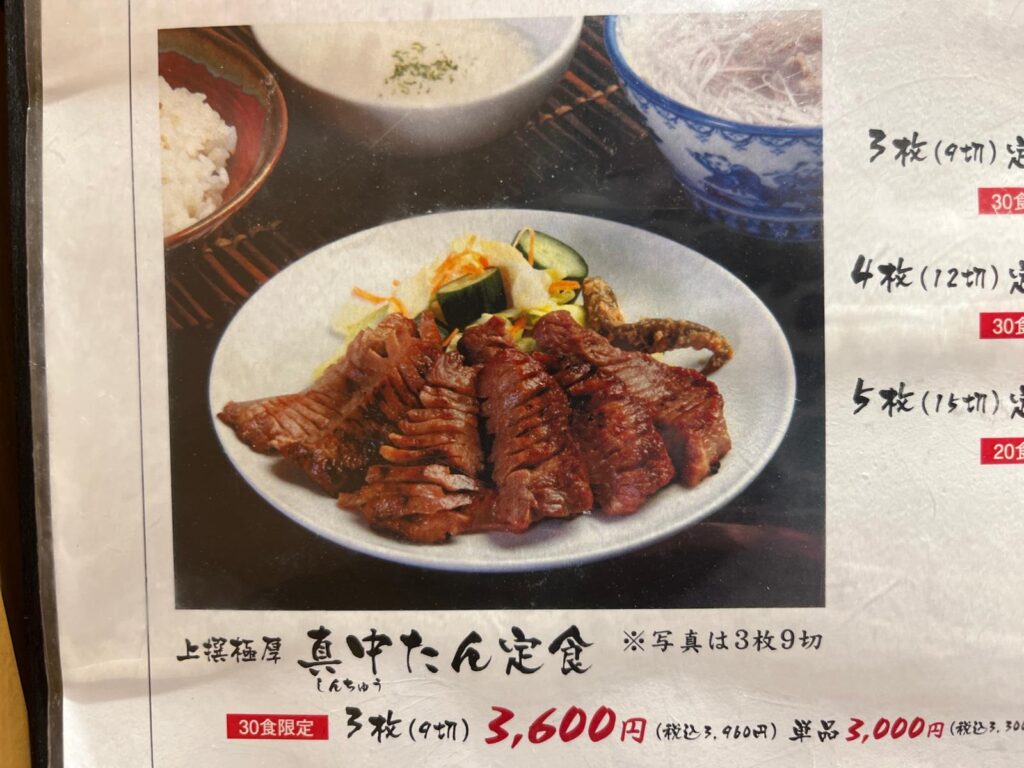
真中 / 芯 / 芯たん = names often used for premium middle or center sections, depending on the restaurant
定食 = set meal
My practical ordering advice
First-time and cautious: order the classic set
First-time but serious about food: order the thick-cut or premium set
Only one gyutan meal in Sendai: pay a bit more and make it count
A premium center-cut style is the kind of order that makes more sense if gyutan is one of your main Sendai food priorities.
Gyutan Street explained
Gyutan Street (牛たん通り) is on the 3rd floor of JR Sendai Station. It is not a food-stall lane. It is a row of proper sit-down gyutan restaurants.
The current official lineup includes:
Zenjiro
Kisuke
Rikyu
Date no Gyutan Honpo
Iseya
Yakisuke (焼助)
This is one of the most useful things to understand before you go. If you hear “Gyutan Street” and imagine casual street food, you will be surprised. What you are really getting is a concentration of specialist restaurants in a very convenient location.
Why Gyutan Street is useful
Easy if you arrive by train
Easy if you are leaving by train
Easy if you only have a short stop in Sendai
Good for comparing several famous names in one place
Why Gyutan Street is not automatically best
It is one of the most obvious places for visitors to go
Queues can build at peak times
You may get a calmer experience by choosing a city branch away from the station
Queue tips
If avoiding a long wait matters to you, this is the easiest strategy:
1. Do not default to Gyutan Street unless convenience matters most
If you are already at Sendai Station and want the shortest walking route, Gyutan Street makes sense.
If you care more about avoiding crowds, consider a branch elsewhere in the city.
2. Go outside the main lunch window
A practical target is:
Before 11:30 am
Or after about 1:30 pm
3. Weekdays are easier than weekends
This sounds obvious, but for a food stop like gyutan it makes a real difference.
4. Keep a backup in mind
If your first choice looks packed, it helps to know your second choice before you arrive.
For what it is worth, we were lucky: there was no queue at all when we went to Zenjiro and Kisuke, at branches away from Sendai Station.
How much to budget
The useful short answer is:
Budget lunch or simple set: around the low ¥1,000s
Solid standard set: around the ¥2,000s
Thicker or premium set: roughly the mid-¥2,000s to ¥4,000s+
Gyutan in Sendai does not have to be a splurge, but the better cuts are usually worth the extra money if this is one of your trip’s food priorities.
This spread shows one full set meal plus two extra shared beef tongue dishes, not a standard single set.
How to choose the right restaurant for your trip
Choose Zenjiro if:
You want my strongest firsthand recommendation
You care most about the food itself
Thick, juicy cuts are your priority
Choose Kisuke if:
You want another well-known Sendai classic
The branch location works better for your itinerary
You want a simpler, recognizable option
Choose Aji Tasuke if:
You care about food history
You want to try the birthplace name
Choose Rikyu if:
You want a practical, established option with broad appeal
You are traveling with other people
Choose Date no Gyutan Honpo if:
You want a signature premium cut like Shintan
You also want to shop for edible souvenirs
Choose Gyutan Street if:
You are train-based
You want convenience first
You do not mind queues
Final recommendation
If you are only going to eat gyutan once in Sendai and want my most practical answer, I would tell you this:
Start with Zenjiro if food quality is the main priority
Use Gyutan Street if station convenience matters more than avoiding queues
Consider Aji Tasuke if the origin story matters to you
Consider Rikyu or Date no Gyutan Honpo if you want dependable big-name alternatives
That gives you a shortlist that is actually usable, not just longer.
If you want my detailed firsthand comparison between the two restaurants I personally tried, read: