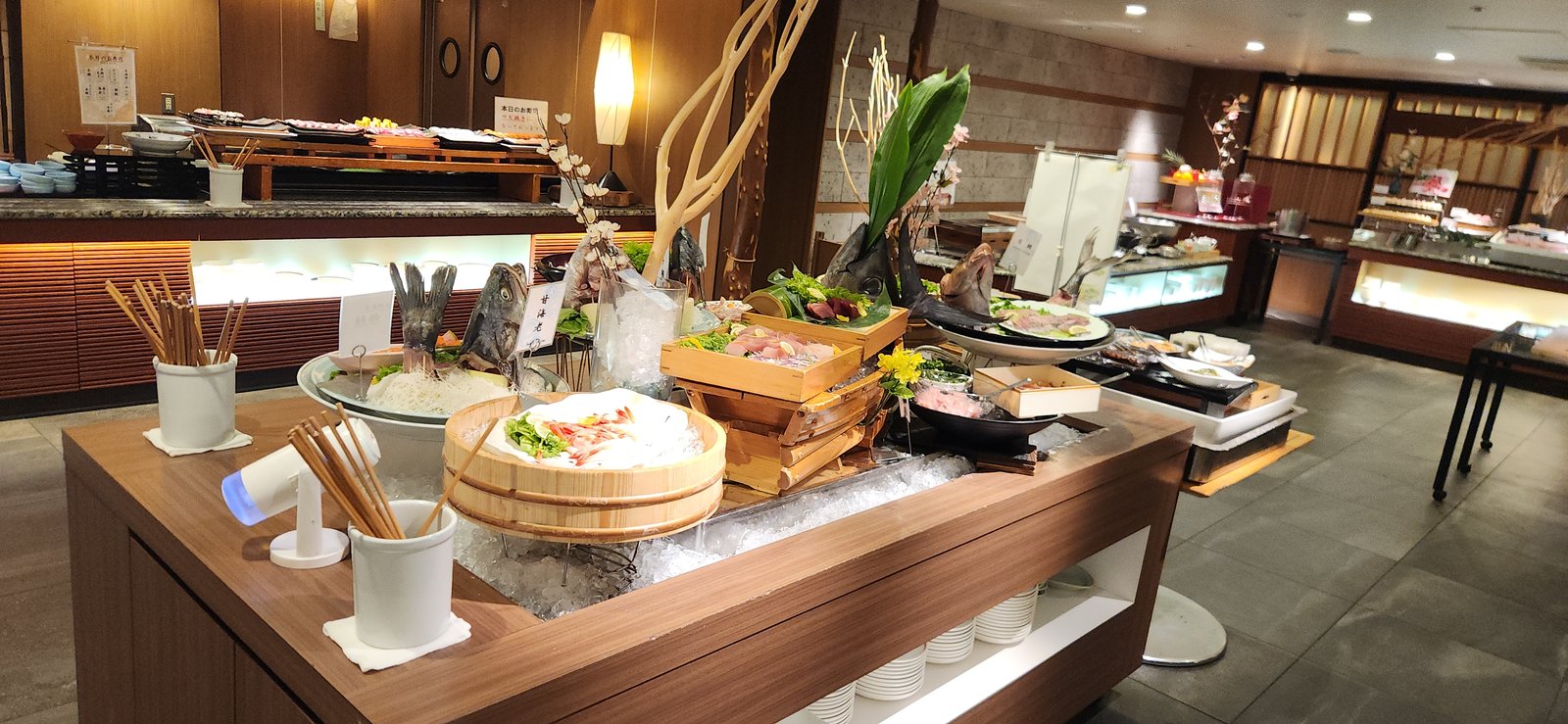
If you book a Japanese resort hotel, onsen hotel, or large ryokan-style hotel, you may see a dinner option described as a buffet, dinner buffet, or viking.
For first-time visitors, this can raise a lot of questions.
Is it casual or formal? Is it included in the room rate? Do you need to choose a dinner time? Are drinks included? Is it good, or just a large cafeteria?
The answer depends on the hotel, but Japanese hotel dinner buffets can be very good, especially in resort areas where the buffet highlights local seafood, regional dishes, grilled items, seasonal ingredients, or family-friendly variety.
Quick checklist before booking
Before you book a Japanese hotel dinner buffet plan, check these details:
- Is dinner actually included? Some hotel rates include breakfast only, while others include both dinner and breakfast.
- Which restaurant is included? Large hotels may have more than one dinner venue, and the buffet may be tied to a specific plan.
- Is dinner included every night? If you book multiple nights, confirm whether dinner is included for each night.
- What kind of buffet is it? A seafood buffet, seasonal buffet, Japanese/Western buffet, and general dinner buffet can feel quite different.
- When is dinner served? Some hotels ask you to choose a dinner time during check-in. Others allow you to arrive any time within a certain dinner period.
- What is the last entry time? This matters if you are arriving late by train, bus, or car.
- Are drinks included? Do not assume an all-you-can-eat buffet includes alcohol or soft drinks.
- Can the buffet handle dietary needs? If you have allergies or dietary restrictions, contact the hotel directly.
- Is pricing per person? In Japan, meal-inclusive hotel stays are often priced per person, not only per room.
- What should you do if you skip dinner? If dinner is included and you decide not to eat at the hotel, notify the hotel. It may be less of an issue for a buffet than for a set-course meal, but it is still courteous.
What does “viking” mean in Japan?
In Japan, viking or baikingu often means buffet or all-you-can-eat buffet.
It does not mean a Viking-themed restaurant. It simply refers to a buffet style where guests choose from a selection of dishes.
You may see this written as:
- バイキング
- ビュッフェ
- Buffet
- Viking
- Dinner buffet
- Japanese/Western buffet
- Japanese/Western/Chinese buffet
- Seafood buffet
The exact meaning depends on the hotel, so always read the meal plan details.
Is a hotel dinner buffet included in the room price?
Sometimes yes, sometimes no.
In Japanese hotel booking, meal plans are very important. You may see options like:
- Room only
- Breakfast included
- Dinner and breakfast included
- Half board
- One night with two meals
- Buffet dinner plan
- Kaiseki dinner plan
- Seafood buffet plan
A hotel may offer several plans for the same room. One plan may include breakfast only. Another may include dinner and breakfast. Another may include a specific restaurant or upgraded dinner option.
Do not assume that every booking includes dinner.
Also do not assume that every dinner-included plan uses the same restaurant. A large hotel may have multiple dinner venues.
How dinner time usually works
Many hotel dinner buffets use assigned or selectable time slots.
The hotel may ask you to choose a dinner time at check-in, or you may select it when booking. Some hotels allow you to arrive any time within a certain dinner period instead. During busy seasons, dinner may be divided into set seatings.
Common examples might be:
- Early dinner seating
- Later dinner seating
- Last entry time
- Last order time
- Fixed dining window
This matters if you arrive late. If your train or drive reaches the hotel after dinner entry time, you may miss part or all of dinner.
For rural hotels and resort hotels, I recommend arriving earlier than you would for a city hotel. Dinner is part of the stay, so do not treat it like a flexible restaurant reservation in a big city.
If your dinner is included but your plans change, tell the hotel if you are skipping it. For a buffet, the hotel may not need to prepare an individual set meal for you, but notifying them is still the polite thing to do.
What food can you expect?
Japanese hotel dinner buffets vary a lot, but they often include a mix of:
- Sashimi
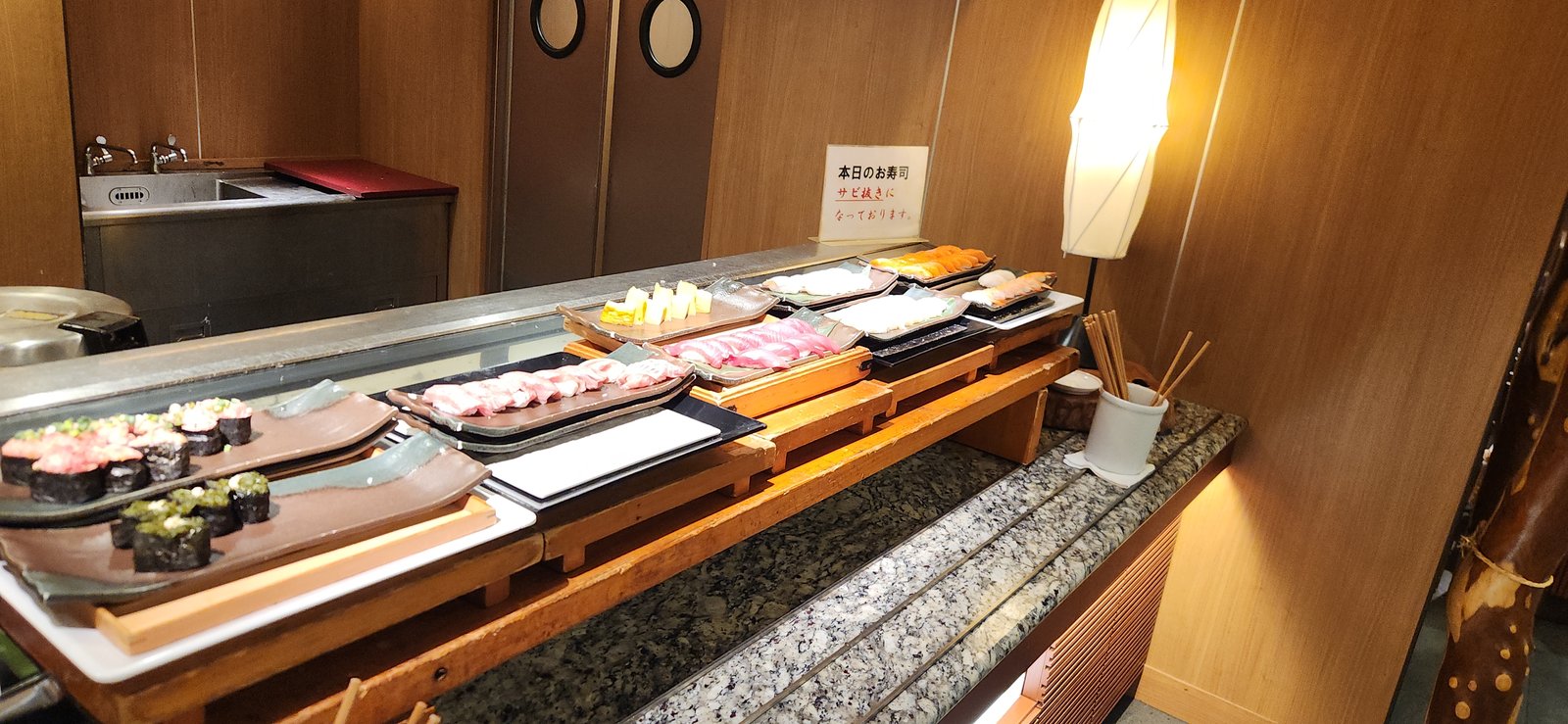
- Sushi
- Grilled fish or seafood
- Tempura
- Meat dishes
- Noodles
- Rice dishes
- Miso soup
- Local vegetables
- Regional specialties
- Western-style dishes
- Desserts
- Fruit
- Child-friendly items
Some buffets are general Japanese/Western/Chinese buffets. Others have a stronger theme, such as seafood, crab, local beef, seasonal vegetables, or regional cuisine.
Seafood buffets: what to know
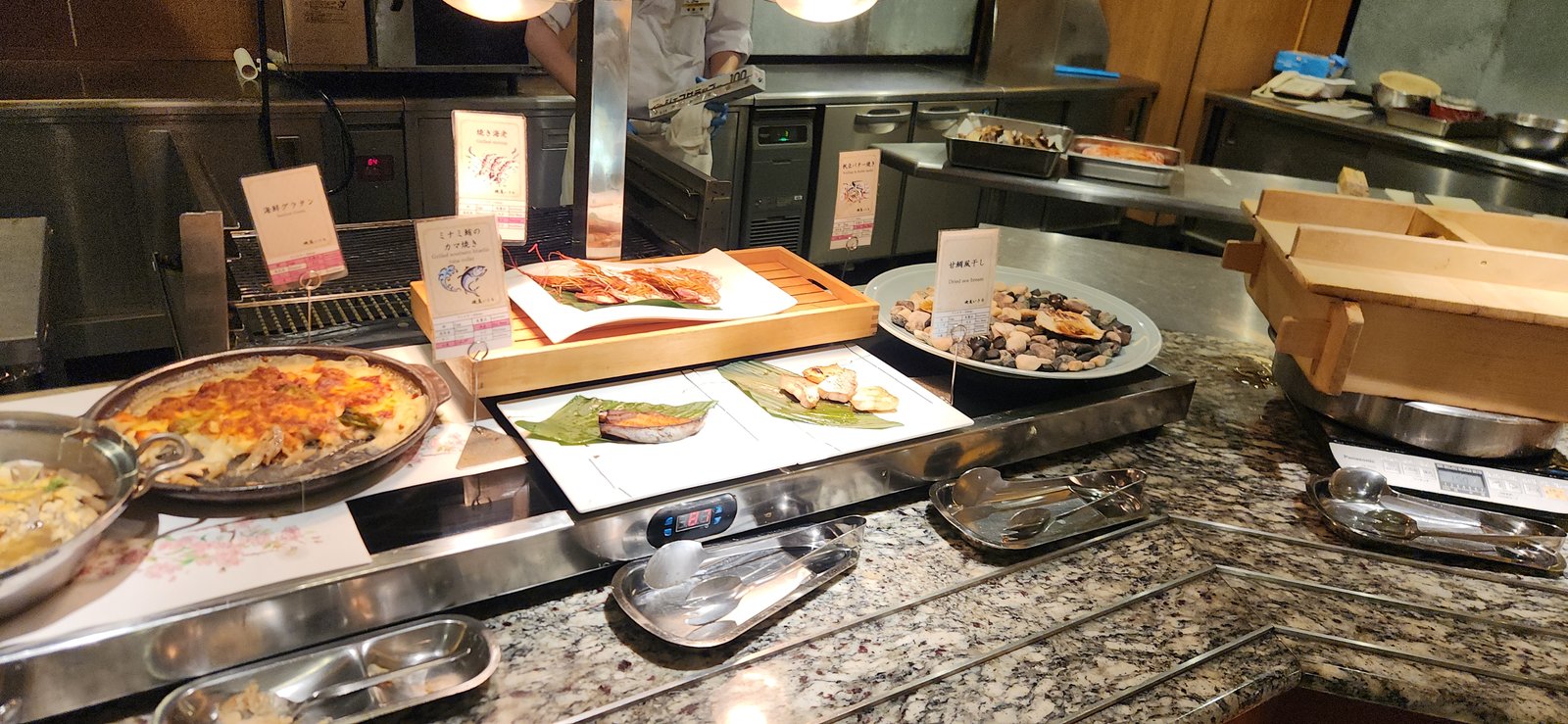
Seafood buffets can be a strong choice in coastal destinations, but the details matter. Some buffets may focus on sashimi and sushi. Others may include grilled seafood, shellfish, crab, oysters, or cooked fish dishes. Some are high quality, while others are simply general buffets with a few seafood items.
If seafood is the main reason you are choosing a plan, look for specific wording in the booking description. A plan that says “seafood buffet” is more useful than a generic “dinner buffet.”
Related example: In my Hotel Matsushima Taikanso review, the dinner example is the seafood buffet at Isana (磯魚), where the sashimi and grilled seafood were the dishes that stood out. Our plan did not specify the buffet type, and at check-in we were assigned the general Chinese, Western, and Japanese buffet. We asked to switch to the seafood buffet and were able to do so free of charge, so it is worth asking.
You can read more about that specific stay in my Hotel Matsushima Taikanso review.
Are drinks included?
Not always.
Tea, water, and basic soft drinks may be included at some buffets, but alcohol is often extra. Some hotels offer an optional all-you-can-drink plan for an added fee.
If you care about drinks, check:
- Whether soft drinks are included
- Whether alcohol is included
- Whether there is an all-you-can-drink option
- Whether local sake or wine costs extra
- Whether payment is made at the restaurant or charged to the room
Do not assume “all-you-can-eat” means “all-you-can-drink.”
Is it good for families?
Yes, buffet dinners are often good for families.
Children can choose familiar foods, picky eaters have more options, and parents do not need to worry as much about everyone eating the same set meal.
Buffets also make it easier for mixed groups. One person can eat seafood, another can eat meat, another can eat noodles, and someone else can focus on dessert.
If you are travelling with children or a multi-generational family, a dinner buffet may be much easier than a formal course meal.
Is it formal or casual?
A hotel dinner buffet is usually more relaxed than a set-course restaurant meal.
There may be families, tour groups, large dining rooms, and people walking back and forth between stations. That does not make it bad, but it does mean the atmosphere is usually practical and comfortable rather than quiet and intimate.
If you are trying to decide between a buffet and a more formal hotel dinner, I cover that separately in my guide to kaiseki vs dinner buffet in Japanese hotels.
Buffet etiquette in Japan
Japanese hotel buffets are not difficult, but a few habits help.
Take small portions first
It is normal to go back for more. Start with smaller portions so you do not waste food.
Use the correct plate or tray
Some stations may have specific plates, bowls, or small dishes. Follow the setup.
Do not touch food with your personal chopsticks
Use the serving tongs, spoons, or utensils provided.
Watch for one-way flow
Some buffets are arranged to reduce crowding. Follow the natural direction if there is one.
Be mindful of timing
If the restaurant has a last order or closing time, do not start a large meal too late.
Avoid photographing other guests
If you take food photos, avoid including faces or private moments of other diners.
Buffet vs convenience store dinner
In some places, skipping hotel dinner and eating outside is easy. In others, it is not.
Before declining a dinner plan, check the local area:
- Are restaurants nearby?
- Are they open at night?
- Do they require reservations?
- Is the hotel far from the station?
- Will you have a car?
- Is there a convenience store nearby?
- Are you arriving late?
In resort areas, hotel dinner may be the most convenient option. In cities, you may prefer to eat outside.
My practical recommendation
Choose a hotel dinner buffet if:
- You are staying in a resort area
- You want an easy dinner without leaving the hotel
- You are travelling with kids
- You like variety
- You are not sure what everyone wants to eat
- The buffet highlights local ingredients
- The hotel is not near many restaurants
If you are choosing between a buffet plan and a set-course dinner plan, do not only compare the price. Think about how you actually want the evening to work: flexible and easy, or slower and more structured.
Final thoughts
Japanese hotel dinner buffets can be much better than the word “buffet” might suggest, especially in scenic or coastal areas.
The key is to check the exact meal plan. A generic buffet and a seafood-focused buffet can be very different experiences. A breakfast-only stay and a two-meal stay can also feel like completely different hotel choices.
When booking a hotel in Japan, do not skip the meal-plan details. They may be one of the most important parts of the stay.
FAQ
What does viking mean in Japanese hotels?
In Japanese hotels, “viking” usually means buffet or all-you-can-eat buffet. It does not mean a Viking-themed restaurant.
Are Japanese hotel dinner buffets included in the room rate?
Only if you book a meal-included plan. Check whether your plan includes breakfast only, dinner and breakfast, or a specific dinner restaurant.
Are drinks included in Japanese hotel buffets?
Not always. Water and tea may be included, but alcohol is often extra. Some hotels offer paid all-you-can-drink plans.
Do I need to reserve a dinner time before arrival?
Not always. Some hotels ask you to choose a dinner time during check-in, while others allow you to arrive any time within a certain dinner period. Check the meal-plan notes and pay attention to last entry time.
Can I skip dinner if it is included?
You should notify the hotel if you are skipping an included dinner. It may be less of an issue for a buffet than for a set-course dinner, but it is still courteous to let the hotel know.