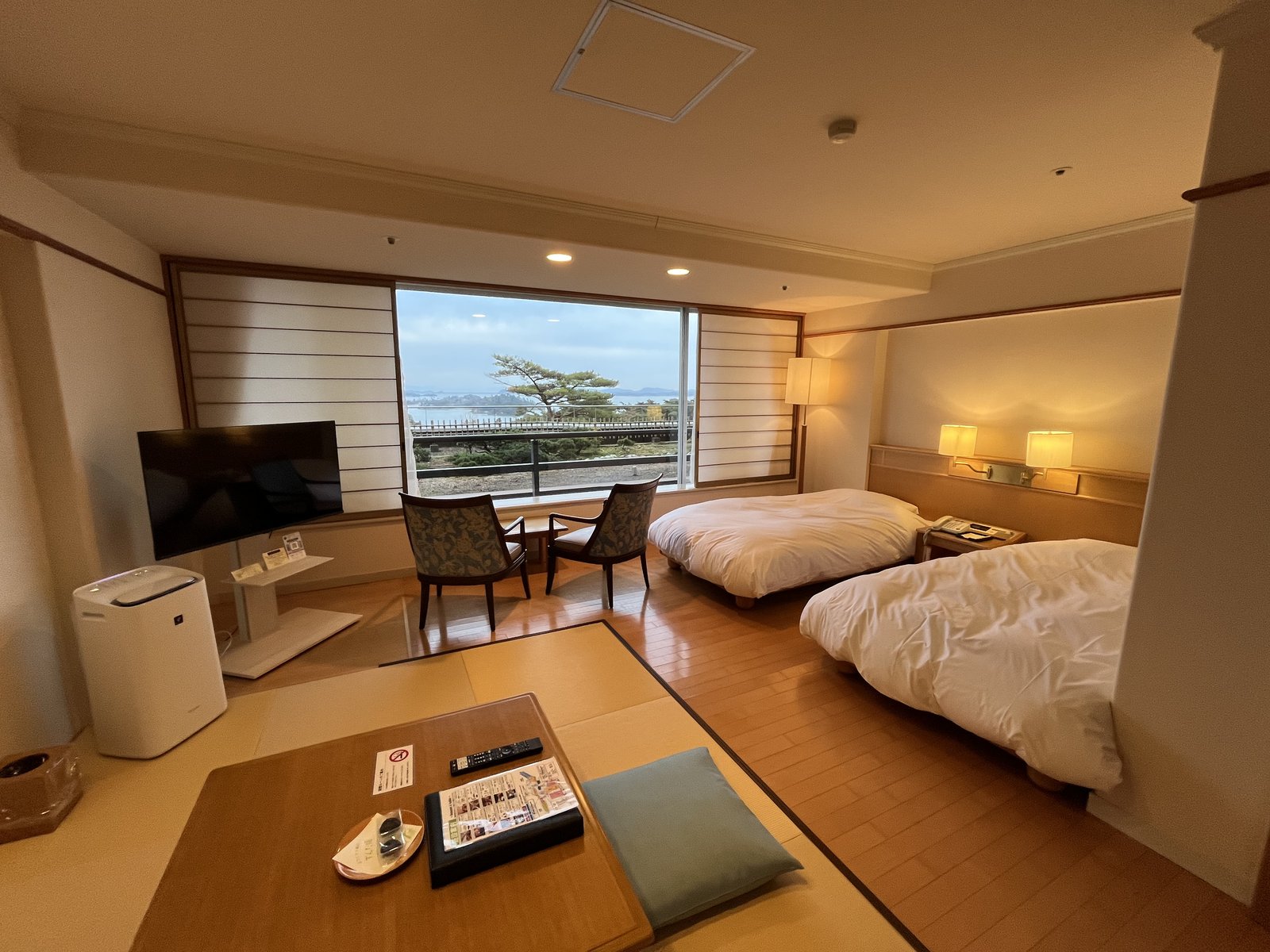
If you are booking hotels or ryokan-style stays in Japan, you may see a room type called a Japanese-Western room (和洋室).
At first, the name can sound confusing. Is it a Japanese room? Is it a Western room? Will you sleep on a futon or a bed? Is there tatami flooring? Is it suitable for families?
The short answer: a Japanese-Western room usually combines Western-style beds with some kind of Japanese-style tatami or sitting area. It can be one of the most comfortable room types for international travellers because you get the familiar comfort of a bed while still having a more Japanese-style space where you can relax.
This room type is especially worth paying attention to in scenic hotels, onsen hotels, and resort-style properties, where the room itself can become part of the stay instead of just a place to sleep.
| Room type | Sleeping style | Best for | Watch out for |
|---|---|---|---|
| Japanese-style | Futon on tatami | Traditional experience | Floor sleeping may be uncomfortable |
| Western-style | Beds | City stays, convenience | Less atmosphere in scenic areas |
| Japanese-Western | Beds plus Japanese elements | Comfort plus atmosphere | Layouts vary; check photos |
What is a Japanese-Western room?
A Japanese-Western room is a hybrid hotel room style.
The exact layout depends on the hotel, but it often includes:
- Western beds
- A tatami area
- Low seating, cushions, or a small table
- Japanese-style design elements
- A private toilet and bathroom or shower area
- More floor space than a standard compact hotel room
In Japanese, this room type may be listed as 和洋室. You may also see English wording such as:
- Japanese-Western room
- Japanese and Western style room
- Japanese-Western combination room
- Room with tatami area and beds
- Japanese-Western style room with sea view
The label is not enough on its own. The actual room description and photos matter more.
Some Japanese-Western rooms have a large tatami area. Some only have a small raised platform. Some have two beds and futons for extra guests. Some are modern and hotel-like, while others feel closer to a ryokan room with beds added.
How is it different from a Japanese-style room?
A Japanese-style room usually has tatami flooring and futon bedding.
In many traditional ryokan, you sit on the floor during the day, and staff may lay out futons on the tatami at night. This can be a memorable experience, especially if you want a more traditional stay.
The tradeoff is comfort. Some travellers love sleeping on futons. Others find it too firm, especially if they are not used to sleeping close to the floor.
A Japanese-Western room is easier for many first-time visitors because you normally sleep in a bed. You still get some of the atmosphere of a Japanese room, but without committing fully to futon sleeping.
How is it different from a Western-style room?
A Western-style room in Japan is usually closer to what travellers expect from hotels elsewhere: beds, a desk or small seating area, and a private bathroom.
This can be practical, especially in city hotels and business hotels. But in scenic areas, hot spring towns, and resort hotels, a standard Western room may feel less special.
A Japanese-Western room often gives you more flexibility. The beds are still there, but the tatami area should not feel purely decorative. In a good room, it becomes a place to drink tea, unpack, talk, work for a short while, or relax after a bath.
That is exactly how we used it at Hotel Matsushima Taikanso: we slept in the Western beds, and the tatami area became our spot for tea and a little work during a four-night stay.
Who should book a Japanese-Western room?
A Japanese-Western room is especially good for:
- Couples who want comfort but also some Japanese atmosphere
- Families who need more space
- Travellers who do not want to sleep on futons
- Older travellers who prefer beds
- People staying more than one night
- Travellers who want a more relaxing room experience
- Anyone booking a scenic hotel where the room view matters
This room type can be especially nice if you plan to spend time at the hotel. If you are only sleeping there for one night before catching an early train, it may not matter as much. But if the hotel itself is part of the trip, a Japanese-Western room can make the stay feel more comfortable.
When it may not be worth paying extra
A Japanese-Western room is not always necessary.
You may not need one if:
- You are trying to keep the trip as cheap as possible
- You will spend almost no time in the room
- You are staying in a city where location matters more than room style
- You are happy with a compact Western room
- You specifically want the full traditional futon experience
The key question is: will the room itself improve your stay?
In a scenic place like Matsushima, Hakone, Kinosaki, or a mountain onsen town, the answer may be yes. In a city where you are out all day, it may not be worth paying extra.
What to check before booking
Do not book based only on the phrase “Japanese-Western room.” Check the details carefully.
1. Does it have beds, futons, or both?
Some rooms have Western beds only. Others have beds plus futons for additional guests. If you are booking for a family or group, check how many people will sleep in beds and how many will sleep on futons.
2. Is the tatami area separate or part of the same room?
A larger room may have a proper sitting area. A smaller room may only have a small tatami corner. Photos matter here.
3. Is the room sea-facing, mountain-facing, or no-view?
In scenic hotels, this can make a big difference.
4. Is the room renovated?
Some Japanese hotels have a mix of older and renovated rooms. A Japanese-Western room can be modern and beautiful, or it can feel dated. Look at recent photos and room names carefully.
5. Is the bath private, shared, or both?
Many hotel-style properties include a private toilet and bath or shower, but not all ryokan-style stays do. Check whether the room has a shower or bath if that matters to you.
6. Are there steps or level changes?
Some Japanese rooms have raised tatami areas or small steps at the entrance. This may matter for older travellers, small children, or anyone with mobility concerns.
Are Japanese-Western rooms good for families?
Yes, often.
Families may find them useful because the tatami space gives kids somewhere to sit or play without being on a bed. If the room allows extra futons, it may also work well for parents and children sharing one room.
But always check the sleeping arrangement. A listing may say the room fits four people, but that does not mean there are four beds. It may mean two beds plus futons.
Are Japanese-Western rooms good for couples?
Yes, especially in resort hotels or ryokan-style properties.
For couples, the appeal is usually atmosphere and comfort. You get a room that feels more special than a standard hotel room, but you still have beds. If the room also has a good view, it can become a major part of the stay.
In this type of stay, the room, view, tatami space, and bath can all work together to make the hotel feel like part of the trip.
Japanese-Western room vs ryokan room: which should you choose?
Choose a traditional Japanese-style ryokan room if you want the more classic experience: tatami flooring, futon bedding, yukata, dinner, baths, and a slower traditional rhythm.
Choose a Japanese-Western room if you want a more comfortable compromise: beds, a more familiar sleeping setup, and still some Japanese design.
For many first-time visitors, the Japanese-Western room is the safer choice.
My practical recommendation
If you are staying in a scenic hotel or ryokan-style resort for more than one night, check whether a Japanese-Western room is available.
It is not always the cheapest choice, but it can make the stay much more comfortable, especially if:
- You want beds
- You want more space
- You enjoy having a tatami sitting area
- You plan to spend time relaxing at the hotel
- The room has a good view
I would not pay extra for this room type everywhere. But in the right hotel, it can be one of the best room choices for travellers who want comfort and atmosphere.
Related example
In my Hotel Matsushima Taikanso review, the Japanese-Western room is a good example of when this room type is worth paying extra for: the beds, tatami space, room size, and bay view made the room feel like part of the trip, not just a place to sleep.
Final thoughts
A Japanese-Western room is not just a random hotel category. It can be one of the easiest ways to enjoy a more Japanese-feeling stay without giving up the comfort of a bed.
If you are booking accommodation in Japan and see a Japanese-Western room available, do not skip over it. Open the photos, check the view, confirm the bedding, and compare the price. It may be exactly the balance you are looking for.
FAQ
What does Japanese-Western room mean in Japan?
A Japanese-Western room usually means a hotel room that combines Western beds with Japanese-style elements such as tatami flooring, low seating, or a separate tatami sitting area.
Do Japanese-Western rooms have beds?
Usually, yes. That is the main reason many travellers choose them. However, some rooms may also use futons for extra guests, so check the sleeping arrangement before booking.
Is a Japanese-Western room better than a Japanese-style room?
It depends on what you want. A Japanese-style room feels more traditional, but usually means sleeping on futons. A Japanese-Western room is often more comfortable for travellers who prefer beds.
Are Japanese-Western rooms good for families?
Often, yes. The extra tatami space can be useful, and some rooms allow additional futons for children. Always check the room capacity and bedding details.