Why timing matters
Cherry blossom season in Miyagi is short. Once full bloom is reached, peak viewing typically lasts only five to seven days. If you arrive a week too early or a week too late, the experience changes dramatically. This article helps you understand how timing works, what to expect in Miyagi specifically, and how to check current forecasts before committing to your travel dates.
When do cherry blossoms bloom in Miyagi?
Miyagi sits in the southern Tohoku region, which means sakura season arrives noticeably later than Tokyo or Kyoto, typically by three to four weeks.
The Sendai benchmark is the most widely quoted figure for Miyagi planning. In 2026, Sendai’s official first bloom date was March 31, and full bloom was reached around April 4, classified as “Very Early” and approximately 8–9 days ahead of average. Japan-Guide estimated the best viewing window for Sendai at April 6–12 in 2026.
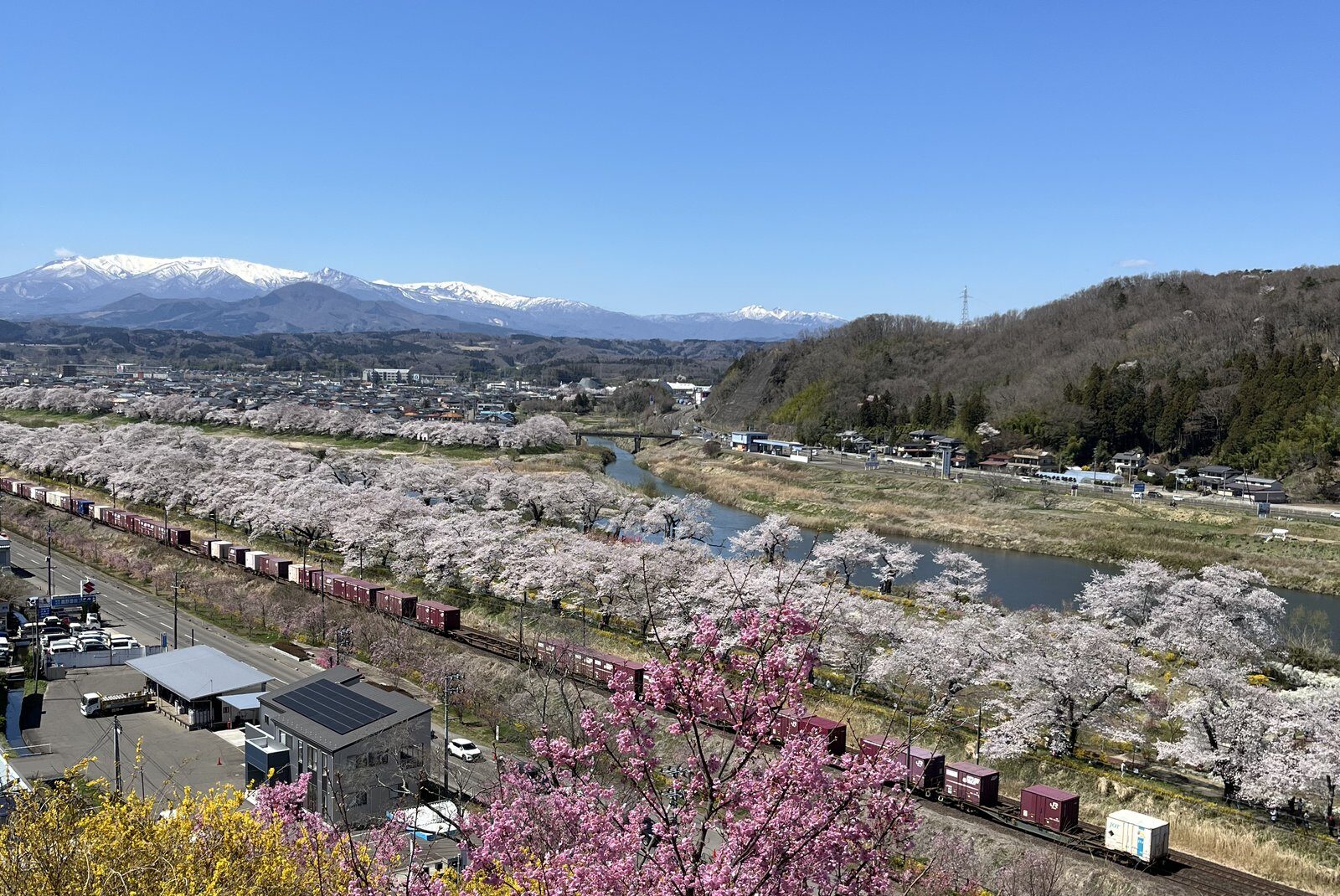
That matched what we saw. We were based in Matsushima from April 6 to 10, 2026, and when we visited Shiroishigawa Hitome Senbonzakura on April 8, the riverbank was in full bloom. The cherry trees outside our ryokan window in Fukushima were also in full bloom on April 10.
A key pattern to understand: not all spots in Miyagi bloom at the same time. The Matsushima coast and shrine areas tend to bloom later than Sendai, while spots at higher elevation may also lag. This staggered timing is actually useful for travellers. If you miss the peak in Sendai, the bloom may still be excellent a short distance away.
| Location | Typical first bloom | Typical full bloom | Notes |
|---|---|---|---|
| Sendai (city parks) | Late March to early April | Early to mid-April | Warmest urban area; earliest in the prefecture |
| Shiroishi River / Ogawara / Shibata | Early April | Early to mid-April | Broadly follows Sendai; Shibata Sakura Festival usually runs first two weeks of April |
| Matsushima area: Saigyo Modoshi no Matsu Park | Mid-April | Mid-April to late April | Typically later than Sendai; good for later arrivals |
| Shiogama Shrine | Mid-April | Late April to early May | Home to the unique late-blooming Shiogama Cherry; season can extend into early May |
All dates are indicative based on typical years. Bloom can shift by one to two weeks depending on winter temperature and spring weather. In warm years like 2026, all of these windows shifted earlier.
Why timing is harder than it looks
The sakura window in any one location is narrow. Full bloom, the stage most people picture when they think of Japanese cherry blossoms, typically lasts only five to seven days under normal conditions. Rain or strong wind can shorten it further.
This is why checking the weather forecast is just as important as checking the bloom forecast. A beautiful full bloom week can be dramatically shortened by a day of heavy rain and wind. Equally, mild cloudy days can actually help blossoms last slightly longer than on hot, sunny days.
Compounding this, forecast accuracy improves significantly the closer you get to the actual bloom date. Forecasters begin releasing annual predictions in early February, but specific dates only firm up in late March and early April. If you are booking international flights, a rough early-season estimate is enough for planning your travel window. If you are already in Japan and deciding where to go day by day, the real-time forecast tools below are the most useful.
One useful mental model: plan around “mankai” (満開, full bloom), not “kaika” (開花, first bloom). First bloom means a single tree in one location has opened. Full bloom, when 80–100% of flowers are open across the area, is what the forecasts and travel guides mean when they say “best viewing”. The gap between kaika and mankai is typically five to ten days.
Which forecasts to use
Several Japanese websites publish detailed cherry blossom forecasts specific to individual hanami locations in Miyagi. They are far more detailed than a single “Sendai” forecast can offer. These sites are in Japanese, but they work well with Google Translate and are worth using for precise local planning.
Hanami Walker Plus: Miyagi
https://hanami.walkerplus.com/list/ar0204/
Lists 21 Miyagi hanami spots with typical peak season dates, special features (night illuminations, festivals, stalls), and current bloom status when in season. Includes Shiogama Shrine, Saigyo Modoshi no Matsu Park, and less-known spots. Ranked by popularity.
Weathernews Sakura: Miyagi
https://weathernews.jp/sakura/area/miyagi/
Weather-based forecast with 19 Miyagi locations, typical peak windows, and amenity information (night illuminations, picnic-friendly, festival dates). Updated regularly during sakura season. Covers spots not always listed in English-language guides.
Jorudan Hanami: Miyagi
https://sp.jorudan.co.jp/hanami/miyagi.html
23 Miyagi spots with ranked popularity scores, typical bloom windows, and notes on whether each location has night illuminations, is near a station, or allows picnics. Useful for comparing nearby options side by side. Ranks Shiroishigawa Hitome Senbonzakura as the #1 spot in Miyagi.
All three sites are free. Using them together gives you a more complete picture of bloom timing across different parts of Miyagi, especially when you are trying to decide between multiple spots on the same trip.
Miyagi in a typical year: the regional picture
A few key landmarks for planning:
Sendai is the standard reference city. It is consistently one of the warmest spots in Miyagi, so its urban parks tend to bloom among the earliest in the prefecture. Tsutsujigaoka Park and Nishi Park typically follow the Sendai forecast closely.
Shiroishi River, Ogawara / Shibata area: The Shibata Sakura Festival, timed to follow bloom conditions, ran April 1–16 in 2026. This gives a practical reference window for future years. Funaoka Castle Park shares essentially the same timing.
Matsushima coast, Saigyo Modoshi no Matsu Park: This hilltop park overlooking Matsushima Bay is consistently cited as blooming from mid-April to late April, noticeably later than Sendai. In 2025, Japan-Guide reported that Saigyo Modoshi no Matsu Park reached full bloom around April 16, while Sendai’s best viewing period was already coming to an end. This makes it a useful backup destination if you arrive after peak bloom in Sendai. The elevated hilltop setting with views of Matsushima Bay also makes it one of the most scenic spots in the region.
Shiogama Shrine (Shiogama): One of the most unusual sakura spots in Miyagi. Over 20 cherry tree varieties are planted here, including the Shiogama Cherry (鹽竈桜), a late-blooming variety unique to the shrine and designated as a National Natural Monument. The overall blooming season here typically runs from mid-April to early May, with the Shiogama Cherries usually at their best in late April. A cherry blossom festival and evening illuminations are held during the season, with the flower festival on the fourth Sunday of April. This spot is especially useful for travellers who arrive in late April, when Somei Yoshino elsewhere in Miyagi has already finished.
The advantage of early bloom, late bloom, and petal fall
Most planning advice focuses on hitting peak bloom. But arriving slightly outside peak has genuine advantages.
Arriving before full bloom means smaller crowds, less competition for parking and train seats, and often better light for photography. Trees with partial blooms against a clear sky can be just as beautiful as a wall of solid pink, and the popular spots are usually less crowded.
Arriving after peak bloom is often dismissed as “missing it,” but late-stage sakura has its own character. The Matsushima coast and Shiogama Shrine are likely still at or near their best when Sendai’s Somei Yoshino is fading. Some parks with mixed varieties, such as Tsutsujigaoka Park in Sendai, continue blooming with late-opening types like weeping cherry for another week or more after the main peak.
Petal fall: 花吹雪 (hanafubuki): At the very start of petal fall, when the wind picks up, cherry petals drift through the air in what Japanese call 花吹雪 (hanafubuki), literally “cherry blossom snowstorm.” It is one of the most beautiful moments of the entire sakura season, and many people consider it as memorable as peak bloom. Along a river like the Shiroishi River, falling petals also collect on the water’s surface, drifting downstream in pale pink clusters. If you happen to arrive during this stage, do not feel you have missed out. It is a different stage of the season, not a worse one.
How to plan for Miyagi sakura: a strategy guide
How many days should you allow?
Give yourself at least four to five days in Miyagi during sakura season. This is not about filling every day with activity. It is about having enough flexibility to respond to the forecast.
One or two days will mean your entire trip depends on whether a single day happens to be at peak bloom and in good weather. Four to five days gives you enough room to shift your best days to match the weather, try different spots at different stages, and recover a lost day if it rains.
Which spots for which conditions?
| Plan | Use it when |
|---|---|
| Plan A: Shiroishigawa Hitome Senbonzakura | Clear weather, bloom near peak, and you have at least a half day. This is your main priority |
| Plan B: Sendai city parks (Tsutsujigaoka, Nishi Park) | Weather is mixed, you want easy access from your hotel, or you only have a short morning or afternoon window |
| Plan C: Matsushima / Shiogama area | You arrive after peak bloom in Sendai, if you prefer late-blooming varieties, or if you are staying in the coastal area |
| Plan D: Indoor activity (gyutan lunch, shopping, museum) | Rain is forecast all day; do not try to force an outdoor sakura visit in heavy rain |
Plan D is not a failure. It is good planning. Sakura in the rain is atmospheric in small doses, but a full day of rain significantly reduces the experience and can accelerate petal fall. Save your outdoor time for the better-weather days.
Planning timeline
| Time before visit | What to do |
|---|---|
| 2–3 months before | Choose your general Miyagi region and book accommodation (sakura season fills quickly in popular areas) |
| 3–4 weeks before | Start watching the Miyagi-specific Japanese forecast sites above for initial bloom predictions |
| 1 week before | Check local bloom reports and weather forecasts; confirm which spots are likely at peak during your dates |
| 1–2 days before | Choose your exact spot based on current bloom status and the 2-day weather forecast |
| Morning of visit | Re-check rain, wind, and any crowd or transport notices for that day before you leave |
The morning-of check matters more than people realise. A sunny forecast can shift to rain, and rain in the forecast can clear by 10:00 a.m. The Japanese forecast sites above often update bloom status the same day during peak season.
Quick checklist before you go
- Check current bloom status from one or more of the Japanese forecast sites above, two to three weeks before your visit.
- Look for the Shibata Sakura Festival official dates on the Shibata Town Tourism Association website (skbk.or.jp). Festival dates are announced annually based on expected bloom.
- If driving, check official parking information closer to your visit. Parking availability, shuttle bus details, and traffic guidance change each year.
- Build a four-to-five day travel window if your primary purpose is sakura, especially for international visitors.
- Always check the weather forecast two days before and again the morning of any planned outdoor visit.
What to do if your dates are not perfect
- Earlier than expected: Many spots may still have early-stage blooms. Saigyo Modoshi no Matsu Park and Shiogama Shrine will likely still be ahead of peak even if Sendai has already bloomed.
- Later than expected: Shiogama Shrine’s late-blooming varieties and Tsutsujigaoka Park’s mixed-variety planting can extend the season by a week or more. The petal-fall stage along the Shiroishi River is beautiful in its own right.
- Bad weather: Build in a rest day, eat gyutan in Sendai, and wait for the next clear window.
FAQ
How long does sakura last in Miyagi?
Full bloom at any one spot typically lasts five to seven days. Mild, dry weather extends it; rain and wind shorten it. Because Miyagi has multiple spots blooming at different times (from early April in Sendai to late April at Shiogama Shrine), the overall regional window can feel two to three weeks long.
Is early April a good time to visit Miyagi for sakura?
Early to mid-April is the general target window. In 2026, Sendai bloomed unusually early, with first bloom on March 31, full bloom around April 4. Always check a current forecast rather than relying on historical averages alone.
What if I arrive in late April? Have I missed it?
Not necessarily. Shiogama Shrine’s unique late-blooming varieties typically peak in late April and can last into early May. Saigyo Modoshi no Matsu Park in Matsushima also peaks later than Sendai, often mid-to-late April. Late April can be a good time to visit these spots.
What are the best Japanese forecast sites for Miyagi?
The three most useful are Hanami Walker Plus (hanami.walkerplus.com), Weathernews Sakura (weathernews.jp/sakura), and Jorudan Hanami (sp.jorudan.co.jp/hanami). All three cover individual Miyagi locations with typical bloom windows. Use them with Google Translate.