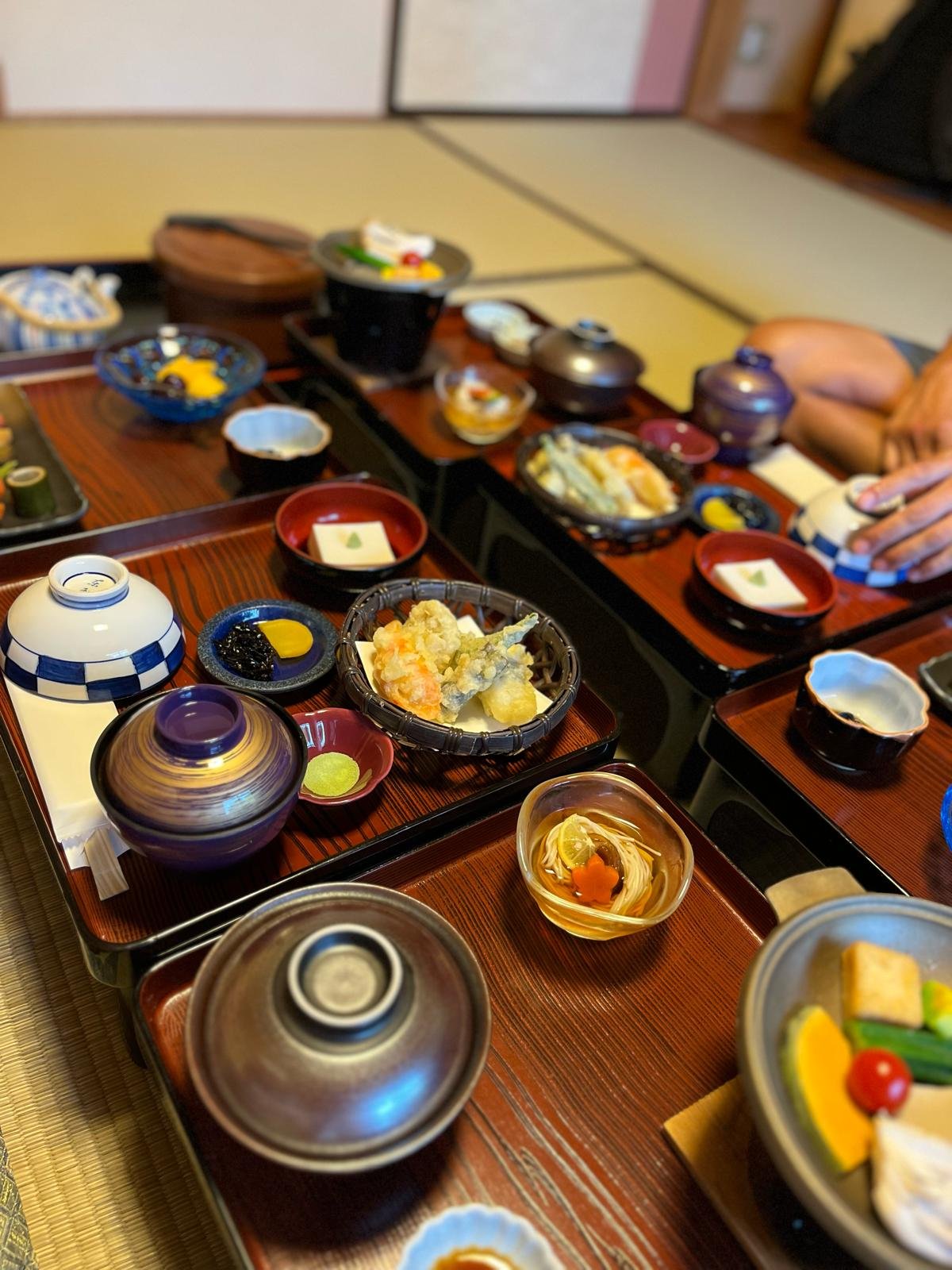
When booking ryokan, onsen hotels, or resort hotels in Japan, the choice between kaiseki vs buffet dinner can be one of the most important parts of the stay.
But the dinner plan may not be obvious at first. One hotel may offer a kaiseki dinner. Another may offer a buffet. A larger hotel may offer both, depending on the room package you book.
So which should you choose?
The simple answer is:
Choose kaiseki if you want a slower, more traditional, seasonal Japanese course meal.
Choose a dinner buffet if you want more variety, flexibility, and an easier meal for families or mixed groups.
Both can be good. The better choice depends on your travel style, budget, appetite, and expectations.
Quick comparison
| Choose kaiseki if | Choose a dinner buffet if |
|---|---|
| You want a slower, more traditional Japanese meal | You want more variety and flexibility |
| Dinner is one of the main reasons for the stay | You want an easier meal after sightseeing or a long travel day |
| You are comfortable with a set menu | You prefer choosing your own dishes and portions |
| You enjoy seasonal ingredients and careful presentation | You are travelling with kids, picky eaters, or a mixed group |
| You want the meal to feel like an event | You want the meal to feel relaxed and practical |
Best for and skip if
| Meal style | Best for | Skip or be cautious if |
|---|---|---|
| Kaiseki | Ryokan stays, special occasions, seasonal Japanese food, couples, slower dinners, travellers who enjoy set menus | You are very picky, dislike seafood or unfamiliar textures, need a quick meal, or have dietary needs the hotel has not confirmed |
| Dinner buffet | Families, mixed groups, resort hotels, seafood variety, bigger appetites, travellers who want flexibility | You want a quiet formal dinner, dislike busy dining rooms, or care more about service and presentation than variety |
What is kaiseki?
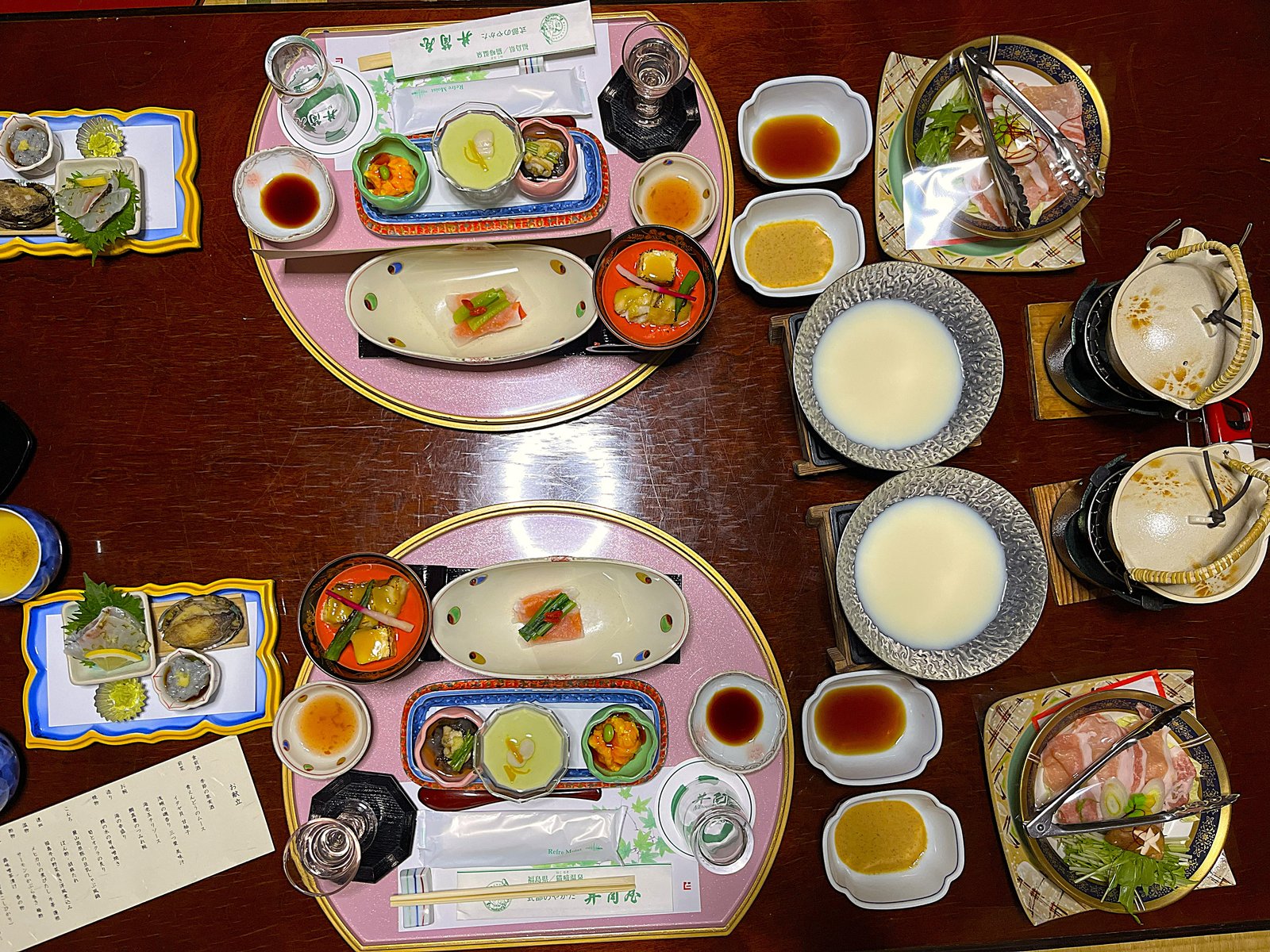
Kaiseki is typically a multi-course Japanese meal. In ryokan and high-end hotels, it often focuses on seasonal ingredients, careful presentation, and a sequence of small dishes, but the formality and quality can vary by property.
A kaiseki dinner may include dishes such as:
- Appetizer
- Soup
- Sashimi
- Grilled fish or meat
- Simmered dish
- Seasonal vegetables
- Rice
- Miso soup
- Pickles
- Dessert
The exact structure depends on the property and season.
Kaiseki is not only about eating a lot. It is about pacing, presentation, seasonality, and the experience of the meal.
At Nekonaki Onsen Izutsuya in rural Fukushima, our kaiseki-style dinner was served in our room and moved through many seasonal courses, including fresh sashimi and tender abalone. After a long driving day, it was exactly what we wanted. For more on what to expect, see What Is Kaiseki Dinner?
What is a Japanese hotel dinner buffet?
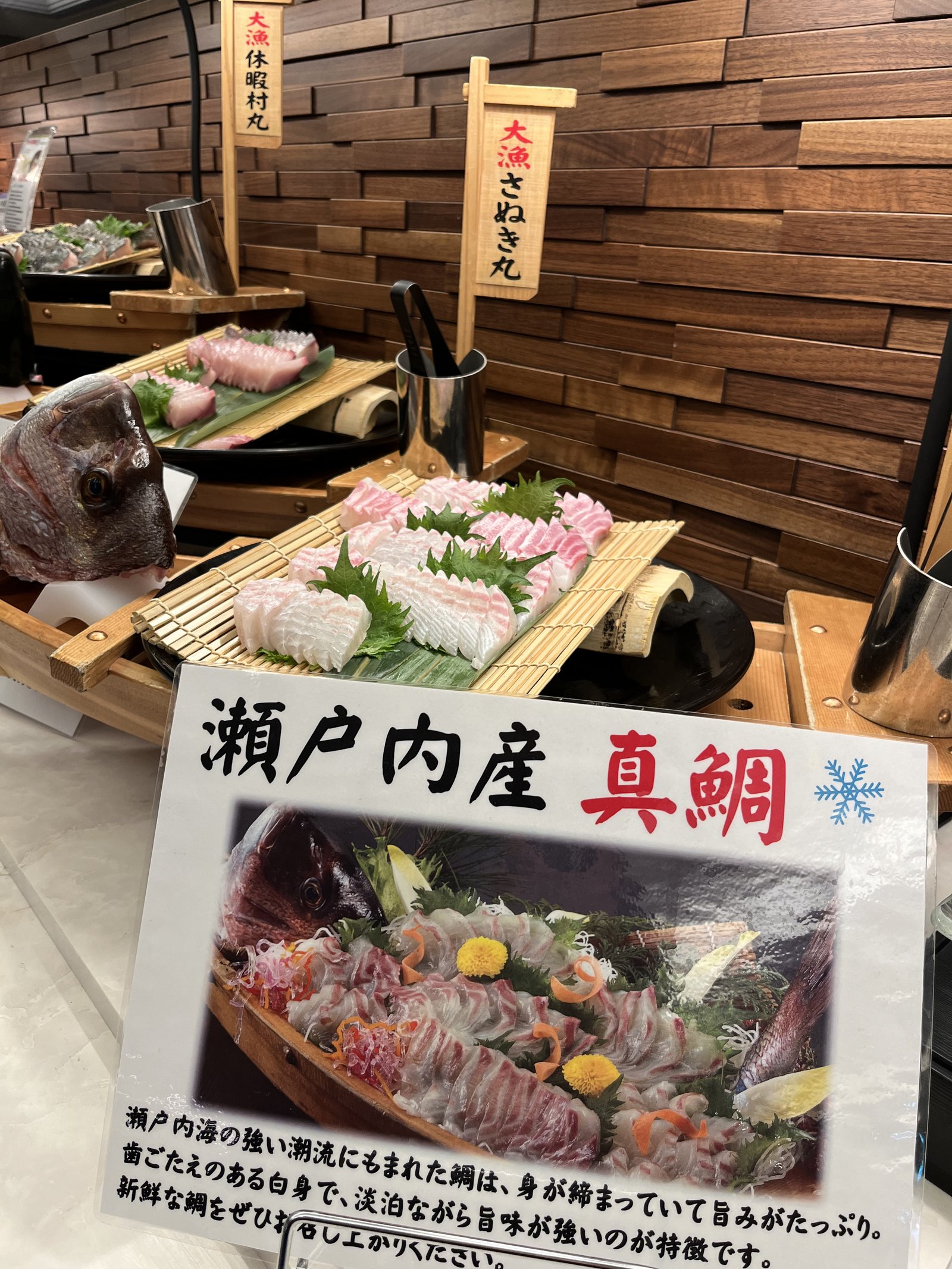
A hotel dinner buffet is a more flexible meal where guests choose dishes from different stations.
In Japan, buffets may also be called viking or baikingu. This simply means buffet or all-you-can-eat style. If you want a fuller explanation of how buffet plans work, see my guide to Japanese hotel dinner buffets.
A hotel buffet may include:
- Sashimi
- Sushi
- Grilled seafood
- Tempura
- Meat dishes
- Noodles
- Rice
- Soup
- Salad
- Local dishes
- Western dishes
- Desserts
- Child-friendly foods
Some buffets are general Japanese/Western/Chinese buffets. Others focus on seafood, local produce, crab, beef, or seasonal themes.
Atmosphere: formal vs relaxed
Kaiseki usually feels more formal.
You sit down, dishes are served in order, and the meal has a slower rhythm. It can feel special, especially in a ryokan or small inn.
A buffet is more relaxed. You walk around, choose what you want, and go back for more. The dining room may be larger and busier, especially at family-friendly hotels.
Neither is automatically better. They serve different moods.
Choose kaiseki if you want the meal to feel like an event.
Choose buffet if you want dinner to feel easy and flexible.
Food choice: curated vs variety
Kaiseki is curated. The chef and hotel decide the meal flow. This is part of the appeal. You may get ingredients or preparations you would not have ordered yourself.
The downside is that you have less control. If you dislike certain foods, are picky, or have dietary restrictions, kaiseki can be more difficult unless the hotel can accommodate you.
Buffets offer more choice. You can eat more of what you like and skip what you do not. This is especially useful for families, groups, and travellers who are unsure about unfamiliar dishes.
Portion size and appetite
Kaiseki can look small at first because each dish is carefully portioned, but the full meal can be filling. Still, it is not always designed for people who want large portions of one favourite dish.
Buffets are easier if you have a big appetite or want to sample many things. You can return for more seafood, dessert, noodles, or rice.
If you are travelling with people who eat very different amounts, a buffet may reduce stress.
Timing and pacing
Kaiseki is slower and more structured. You may need to arrive at a specific dinner time, and the meal may take longer.
A buffet may also use time slots, but the pacing is more under your control. You can eat quickly, slowly, or focus only on the dishes you want.
Many hotels offer a few dinner time options at check-in, but this varies. In some cases, you choose a specific dinner time. In others, especially with buffets, the hotel may ask you to arrive within a broader dining window.
If you are tired after a long travel day, a buffet may feel easier. If you want a special evening, kaiseki may feel more rewarding.
Which is better for families?
For most families, a buffet is easier.
Children can choose familiar items. Parents can avoid explaining every dish. Picky eaters have options. The meal usually feels less formal.
Kaiseki can still be a great family experience if your children are comfortable with Japanese food and a slower dinner, but it may not be the easiest default.
Which is better for couples?
For couples, it depends on the trip.
Choose kaiseki for a special ryokan night, anniversary, or more traditional atmosphere.
Choose buffet if you want a relaxed stay, more food variety, or a hotel that feels casual and scenic rather than formal.
Which is better for solo travellers?
Solo travellers may prefer either one.
A buffet can feel easy because you can eat at your own pace and choose what you like. Kaiseki can feel more special, but solo dining in a formal meal setting may feel awkward for some travellers.
If you are unsure, check photos of the dining room and reviews from solo travellers.
Which is better for picky eaters?
Buffet.
Kaiseki is not impossible for picky eaters, but it is less flexible. If you are not comfortable with seafood, raw fish, seasonal vegetables, or unfamiliar textures, a buffet gives you more control.
If you have dietary restrictions, contact the hotel before booking or as early as possible. Some hotels may be able to help, especially with advance notice, but accommodation is not guaranteed and last-minute changes may not be possible.
Which is better for seafood lovers?
Either can be excellent.
A kaiseki dinner may present seafood beautifully, often with seasonal and local ingredients.
A seafood buffet may let you eat more sashimi, grilled seafood, sushi, or local seafood dishes.
In coastal areas, I would compare the actual meal plan rather than choosing based on category. A strong seafood buffet may be better for your preferences than a basic kaiseki plan, while a high-end kaiseki meal may be more memorable than a generic buffet.
Which is better value?
This depends on what you value.
Kaiseki may feel expensive, but it includes preparation, presentation, service, and seasonal ingredients. It is part of the ryokan experience.
A buffet may feel like better value if you care about variety and quantity. It can also be better value for families because everyone can find something they like.
But do not judge only by price. A cheap buffet can be disappointing. A good kaiseki dinner can justify a higher room rate. A high-quality seafood buffet can also be a reason to book a specific hotel.
What to check before choosing
Before booking, check these details:
1. What exactly is included?
Does the plan include dinner and breakfast? Breakfast only? A specific restaurant? A specific upgraded dinner?
2. Is it kaiseki, buffet, or something else?
Some plans simply say “Japanese dinner” or “seasonal dinner.” Read the details.
3. Are drinks included?
Alcohol is often extra for both kaiseki and buffet plans.
4. Can the hotel handle allergies or dietary restrictions?
Ask the hotel before booking if you have allergies or dietary restrictions. Some hotels may be able to help with advance notice, but you should not assume they can adjust the meal, especially at the last minute.
5. Is the meal served in-room, private dining room, or restaurant?
This changes the atmosphere a lot.
6. Is the dinner plan the same every night?
For kaiseki dinner, my experience is that some hotels try to change the menu if you are staying multiple nights, so you are not eating the exact same thing. Two nights is usually not a problem in my experience, but after that you may start seeing some repeated dishes depending on the property.
7. What time is dinner?
In my experience, hotel dinners in Japan commonly start somewhere around 5:30pm to 7:30pm, but it depends on the hotel. To be conservative, expect to start dinner before 7:00pm unless your hotel says otherwise. You may choose the dinner time at check-in, select it when booking, or be asked to arrive within a broader dining window. If you arrive late with a dinner plan, the hotel may not be able to accommodate you, especially with a set-course dinner.
My practical recommendation
Choose kaiseki if:
- You want a traditional ryokan experience
- The meal is a major reason for the stay
- You enjoy seasonal Japanese food
- You are comfortable with a set menu
- You want a slower, more refined dinner
- You are celebrating something special
Choose buffet if:
- You want variety
- You are travelling with kids
- Your group has mixed food preferences
- You want a more relaxed meal
- You like choosing your own portions
- The buffet has a strong local theme, such as seafood
How to apply this choice in coastal resort towns
In coastal resort towns, seafood is often part of the appeal. That does not mean every traveller needs a formal seafood kaiseki dinner. A strong seafood buffet can sometimes be a better fit, especially if you want variety, flexibility, or a more relaxed resort-hotel atmosphere.
When comparing plans, do not choose only by room price. Look at the meal plan. The difference between a generic dinner, a kaiseki dinner, and a seafood-focused buffet may change how you feel about the stay.
Related example: We have had both styles on the same trip. At Izutsuya, the in-room kaiseki was the highlight of a quiet ryokan night. At Hotel Matsushima Taikanso, a large resort hotel, the seafood buffet at Isana (磯魚) suited the stay better, and it was the variety that won us over.
You can read more about that specific stay in my Hotel Matsushima Taikanso review.
Final thoughts
Kaiseki and hotel buffets are both valid choices in Japan. The mistake is assuming one is always better.
Kaiseki is better for a traditional, seasonal, carefully served meal.
A buffet is better for variety, flexibility, and easy group travel.
For a ryokan night, kaiseki can be the highlight. For a resort hotel stay, a good buffet may be the most practical and enjoyable option.
Before booking, slow down and read the meal plan. In Japanese hotels, the dinner choice is not a small detail. It can shape the entire stay.
FAQ
Is kaiseki better than buffet in Japan?
Not always. Kaiseki is better for a formal, seasonal Japanese meal. A buffet is better for variety, flexibility, and families.
What does viking mean in Japanese hotels?
Viking means buffet or all-you-can-eat buffet in Japanese hotel dining.
Is kaiseki enough food?
Usually yes, because it includes many small courses. But it is designed around pacing and presentation, not unlimited portions.
Should families choose kaiseki or buffet?
Most families will find a buffet easier, especially with children or picky eaters. Kaiseki can be memorable but is more structured.