Japan has many accommodation types, but three of the most common choices for independent travellers are ryokan, resort hotels, and business hotels.
The difference matters more than it may seem. Two stays with similar prices can give you completely different trips. One may be a traditional meal-and-bath experience. Another may be a scenic resort with buffet dining and large rooms. Another may simply be a clean, compact place beside a train station.
There is no single “best” option. The best choice depends on your route, budget, luggage, transport style, and how much you want the hotel itself to be part of the experience.
This guide explains the differences in a practical way.
Quick answer
| Type | Best for | Typical strengths | Main downside |
|---|---|---|---|
| Ryokan | Traditional stay | Meals, baths, atmosphere | Less flexible, often pricier |
| Resort hotel | Scenic comfort | Views, larger rooms, facilities | May be less convenient |
| Business hotel | Practical travel | Location, price, efficiency | Smaller rooms, less atmosphere |
Choose a ryokan if you want a more traditional Japanese stay with tatami rooms, baths, yukata, and a meal-focused experience.
Choose a resort hotel if you want comfort, views, larger facilities, family-friendly rooms, buffet meals, and a more flexible vacation feeling.
Choose a business hotel if you want convenience, practical pricing, a train-station location, and a simple place to sleep.
Common booking mistakes
Mistake 1: Assuming “hotel” means Western-style
In Japan, a hotel may still have Japanese rooms, public baths, meal plans, slippers, yukata, and other traditional elements.
Mistake 2: Assuming every room has a private toilet, bath, or shower
Business hotels almost always do. Many ryokan and resort hotel rooms do too, but not all. Some rooms only have a toilet, and in some properties guests are expected to use the public bath. Check the room facilities carefully.
Mistake 3: Assuming every public bath is a natural onsen
A hotel bath may be beautiful and relaxing without being a natural hot spring. Check the bath description if this matters to you.
Mistake 4: Comparing prices without meals
A business hotel may look cheaper, but if a ryokan or resort hotel includes dinner and breakfast, compare the total trip cost.
Mistake 5: Booking a scenic resort without checking access
Some resort hotels are inconvenient without a car or shuttle. Always check how you will arrive and leave.
What is a ryokan?
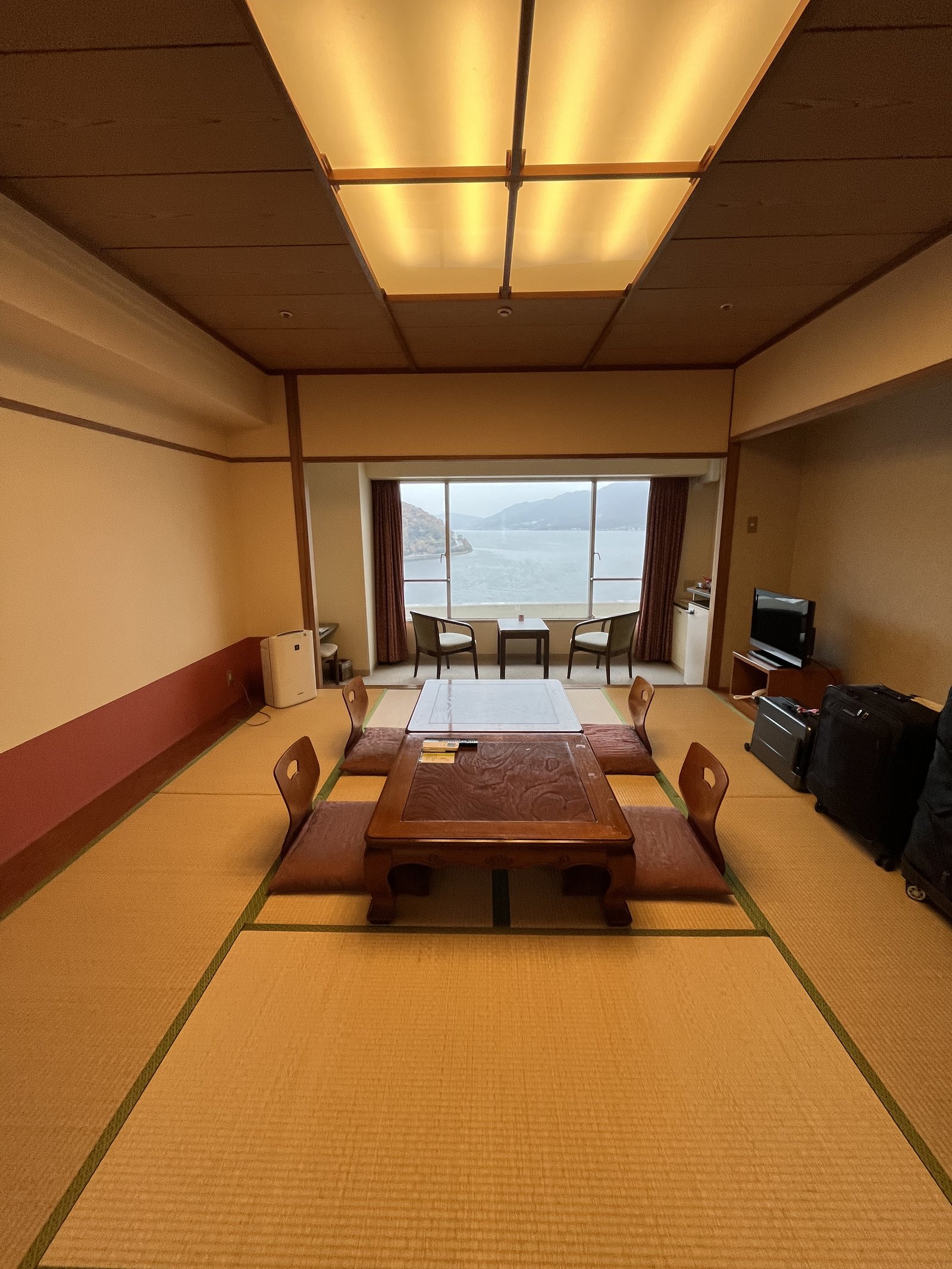
A ryokan is a traditional Japanese inn. The exact experience varies, but common elements include tatami rooms, futon bedding, yukata robes, public baths or onsen baths, and dinner and breakfast served in-house.
Some ryokan are small and family-run. Others are large and hotel-like. Some are deeply traditional, while others are modern luxury properties.
Ryokan also vary widely in formality and price, so do not rely on the label alone. Check the room photos, bath details, meal plan, and recent reviews before assuming what kind of stay you will get.
The most important thing to understand is that a ryokan is often not just “a place to sleep.” It is the experience.
At many ryokan, dinner is a major part of the stay. The meal may be kaiseki, a multi-course Japanese dinner using seasonal ingredients. Breakfast is often Japanese-style. The rhythm of the stay is slower and more structured than a standard hotel.
Related example: In my Nekonaki Onsen Izutsuya review, the ryokan is an older, rural inn where the in-room kaiseki dinner, shared onsen, and warm service mattered far more than modern room design.
What is a resort hotel in Japan?
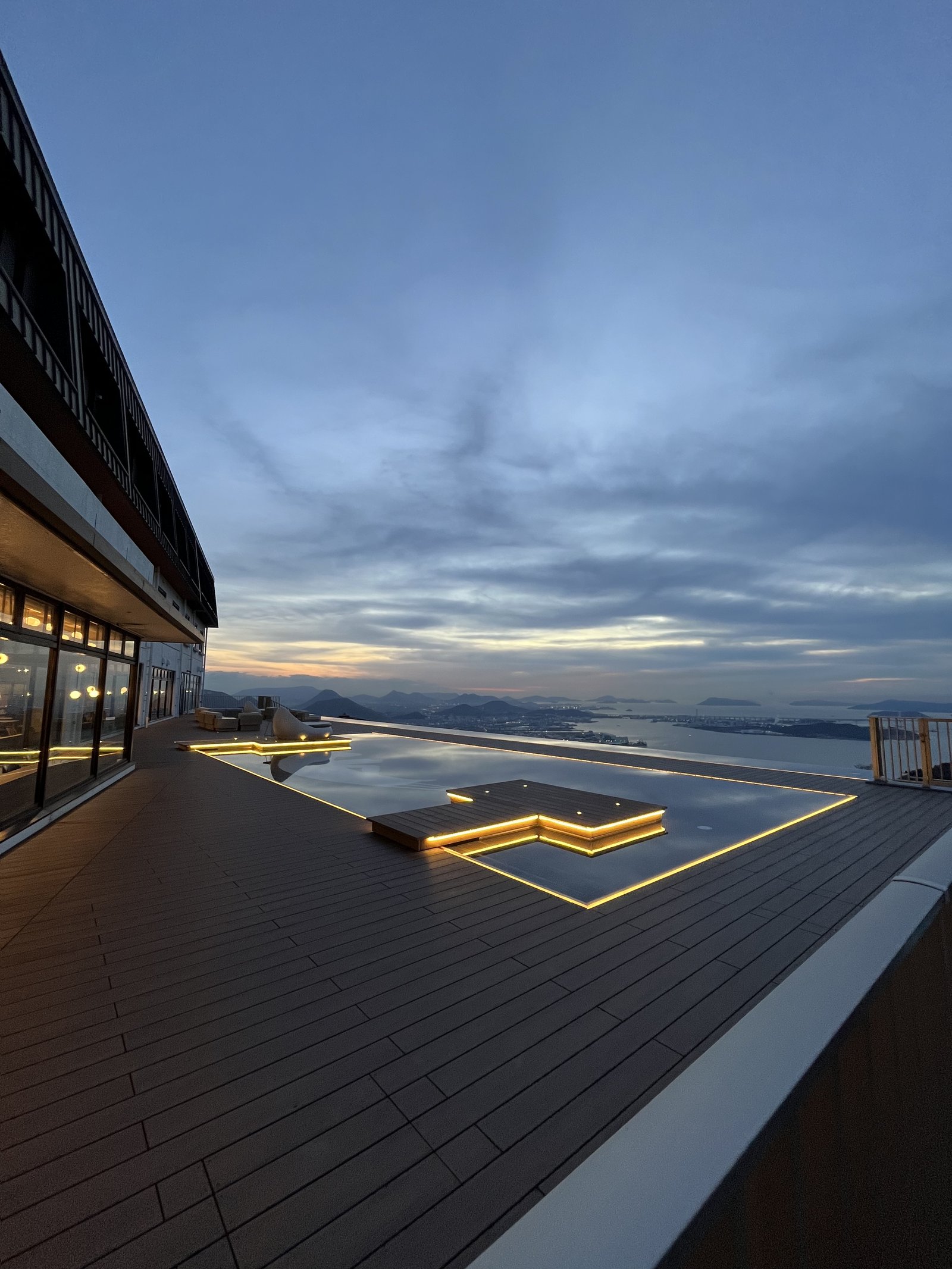
A resort hotel is usually more hotel-like and less traditional than a ryokan, but it may still include some Japanese elements.
Resort hotels are common in scenic places: hot spring towns, coastal areas, mountain areas, lake areas, ski areas, and family vacation destinations.
They may offer:
- Larger rooms
- Japanese-Western rooms
- Public baths
- Buffet meals
- Multiple restaurants
- Lounges or cafes
- Gift shops
- Shuttle buses
- Scenic views
- Parking
- Family-friendly facilities
Compared with a ryokan, a resort hotel usually feels more flexible. You may have beds instead of futons. Dinner may be buffet instead of kaiseki. The property may be larger. There may be more room types and more guests.
This can be a very good fit for travellers who want comfort and scenery, but not necessarily a fully traditional ryokan experience.
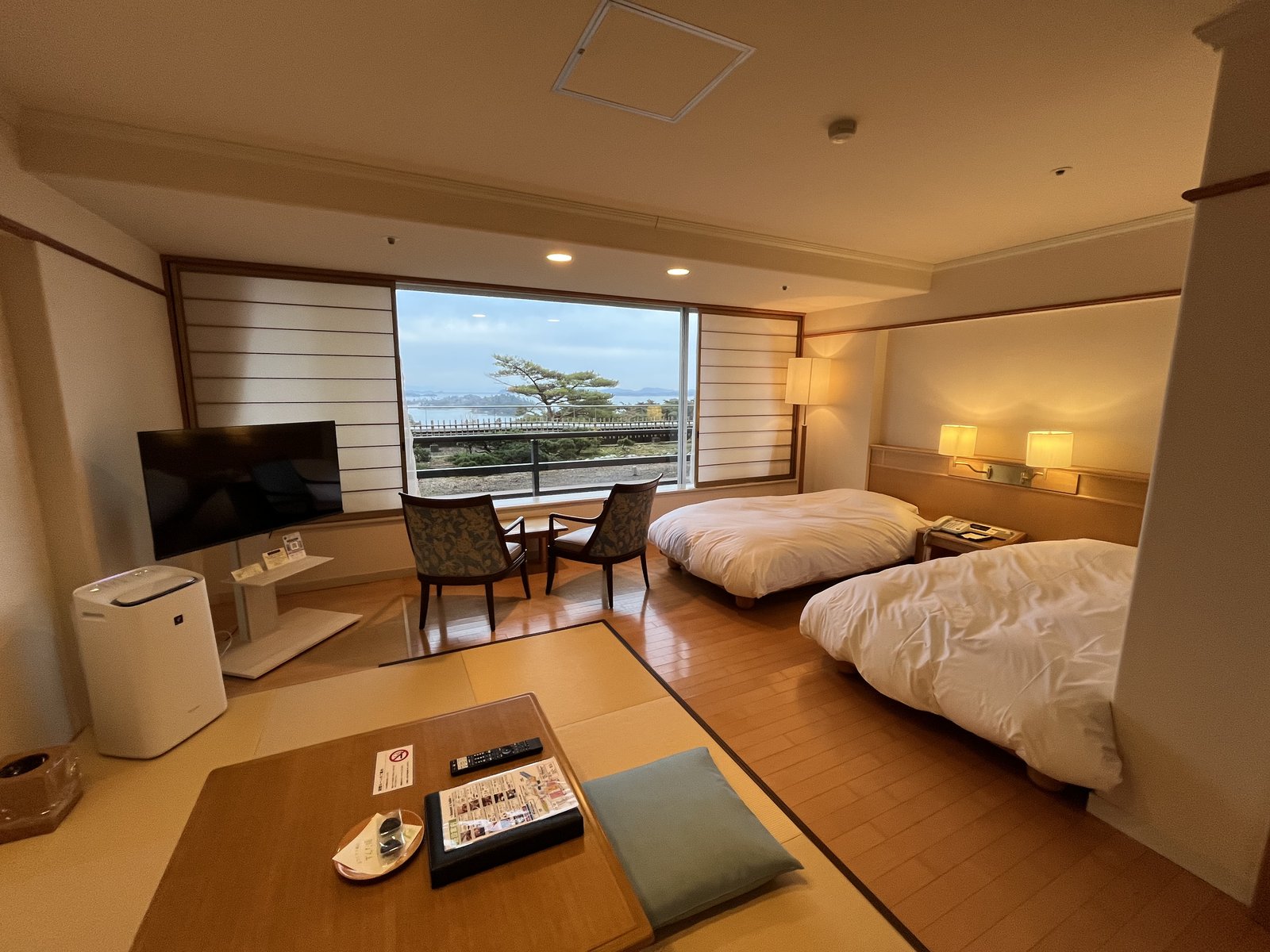
Related example: In my Hotel Matsushima Taikanso review, the property works as a resort-hotel example: bay views, a larger Japanese-Western room, public bath, buffet dining, parking, and a quieter base outside the main station area.
What is a business hotel?
A business hotel is the practical workhorse of Japan travel.
These hotels are usually located near train stations, city centres, office districts, or transport hubs. Rooms are often small, clean, and efficient. They are designed for business travellers, solo travellers, short stays, and people who mainly need a reliable place to sleep.
A business hotel may offer:
- Compact rooms
- Western beds
- Private bathroom
- Coin laundry
- Vending machines
- Simple breakfast
- Excellent station access
- Often lower prices than resort hotels or ryokan
Business hotels are not usually romantic or scenic, but they are extremely useful.
If your trip is full of early trains, late arrivals, city sightseeing, or one-night stops, a business hotel may be the smartest choice.
Simple does not mean bad. Many business hotels in Japan are clean, comfortable, and well-run; they just focus on efficiency and location rather than atmosphere.
Room differences
Ryokan rooms
Ryokan rooms often use tatami flooring and futon bedding. Some have private baths, but many guests use the public bath or onsen. In more traditional properties, staff may prepare your futon while you are at dinner.
This can be a memorable experience, but it may not be ideal for everyone. If you dislike sleeping on the floor, check whether the ryokan has beds or Japanese-Western rooms.
Resort hotel rooms
Resort hotels often have more room variety. You may find Western rooms, Japanese rooms, Japanese-Western rooms, family rooms, and view rooms.
Japanese-Western rooms can be especially useful in resort hotels because they give you Western beds plus a tatami area, often with more space than a compact city hotel room.
If this room type is new to you, I have a separate guide to Japanese-Western hotel rooms in Japan.
Business hotel rooms
Business hotel rooms are usually compact. They may be perfectly clean and comfortable, but do not expect much extra space. If you have large luggage, two people sharing a small room, or several nights in one place, room size matters.
Business hotels are best when location and price matter more than atmosphere.
Meal differences
Meals are one of the biggest differences.
Ryokan meals
Ryokan meals are often included, especially in onsen areas or countryside destinations. Dinner may be kaiseki or another set-course meal. Breakfast is often Japanese-style.
The meal is usually part of the experience, not just something to fill your stomach.
Resort hotel meals
Resort hotel dining can include kaiseki, buffet meals, Western restaurants, seafood restaurants, or other specialty restaurants. Breakfast is often buffet style.
This can be easier for families, picky eaters, and travellers who want variety.
If you are not sure how this works, I have a separate guide to Japanese hotel dinner buffets.
Business hotel meals
Business hotel breakfast is usually simpler. Some hotels have a buffet, some have a set meal, and some have breakfast that may not be worth paying extra for.
In a city, this is usually not a problem. You can eat at cafes, convenience stores, train stations, or local restaurants.
Bath differences
Ryokan baths
Many ryokan are built around the bath experience. If the ryokan is in an onsen area, the hot spring bath may be the main reason to stay.
Resort hotel baths
Resort hotels may also have public baths, open-air baths, or onsen facilities, but the experience varies. Some use natural hot spring water; others use heated water in a scenic bath.
The view or setting may still make the bath worthwhile, even if the bath is not technically a natural hot spring.
Business hotel baths
Most business hotel rooms have a compact unit bath. Some larger business hotels also have a public bath, but this is not guaranteed.
Location differences
Ryokan are often in scenic or hot spring areas. Some are close to stations, while others require a shuttle, bus, or car.
Resort hotels are often slightly outside the most convenient transport area because they prioritize views, space, parking, or scenery.
Business hotels are usually the most convenient for transportation.
This is why the right choice depends on your trip style. If you are moving every day by train, business hotels are efficient. If you are staying two nights in a scenic place, a ryokan or resort hotel may be more memorable.
Price differences
Business hotels are often the most budget-friendly.
Ryokan and resort hotels can look expensive, but the comparison is not always simple because meals may be included. If a stay includes dinner, breakfast, public bath access, and a better room, the total value may be different from a room-only hotel.
Prices can also change dramatically by season, date, and destination. Resort hotels and ryokan can become much more expensive during peak periods, and business hotels are not always cheap in popular cities or on busy dates.
Still, you should be honest with yourself. If you will not use the bath, meals, view, or room space, you may be overpaying.
Which one is best for first-time visitors?
For a first trip to Japan, I would usually mix accommodation types.
A practical route might include:
- Business hotels for city stays
- One ryokan for a traditional experience
- One resort hotel in a scenic area where the view or bath matters
This gives you variety without making every night expensive.
Which one is best for families?
Families often do well with resort hotels or larger ryokan.
Resort hotels may be easier because they often have larger rooms, buffet meals, parking, and more flexible facilities. Japanese-Western rooms can be especially useful.
Business hotels can work for families, but rooms may feel tight unless you book carefully.
Which one is best for couples?
Couples may enjoy either a ryokan or resort hotel, depending on the trip.
Choose a ryokan if you want a more intimate, traditional, meal-focused stay. Choose a resort hotel if you want views, comfort, and a slightly more relaxed hotel environment.
Which one is best for road trips?
For road trips, resort hotels and ryokan are often better than business hotels, especially in scenic areas.
Look for:
- Easy parking
- Larger rooms
- Public bath
- Dinner included or nearby restaurants
- Access to viewpoints or countryside sights
My practical recommendation
Use each accommodation type for what it does best.
Book a business hotel when you need convenience.
Book a ryokan when the traditional stay, bath, and meal are the main experience.
Book a resort hotel when you want scenery, comfort, larger rooms, and facilities without necessarily going fully traditional.
For scenic destinations, I often prefer choosing at least one hotel where the room, view, bath, or meals feel connected to the destination instead of treating every stay as just a place to sleep.
Final thoughts
The best accommodation in Japan is not always the fanciest one. It is the one that matches the role it needs to play in your trip.
For one night before a train, a business hotel may be perfect.
For a special hot spring night, a ryokan may be unforgettable.
For a scenic base where you want views, meals, baths, and comfort, a resort hotel may be the best fit.
Before booking, ask yourself one simple question:
Is this hotel just for sleeping, or is it part of the trip?
Your answer will usually tell you which type to choose.
FAQ
Is a ryokan better than a hotel in Japan?
Not always. A ryokan is better if you want a traditional meal-and-bath experience. A hotel may be better if you want convenience, beds, flexibility, or lower cost.
What is the difference between a ryokan and a resort hotel?
A ryokan is usually more traditional, often with tatami rooms, futons, and kaiseki meals. A resort hotel is usually larger and more hotel-like, often with buffet dining, multiple room types, parking, and family-friendly facilities.
Are business hotels in Japan good?
Yes. Business hotels are usually clean, efficient, and convenient. They are best for city stays, solo travellers, short stays, and train-based itineraries.
Should I stay in a ryokan on my first trip to Japan?
If your budget allows, one ryokan night can be memorable. But you do not need to stay in ryokan every night. Mixing hotel types is often more practical.