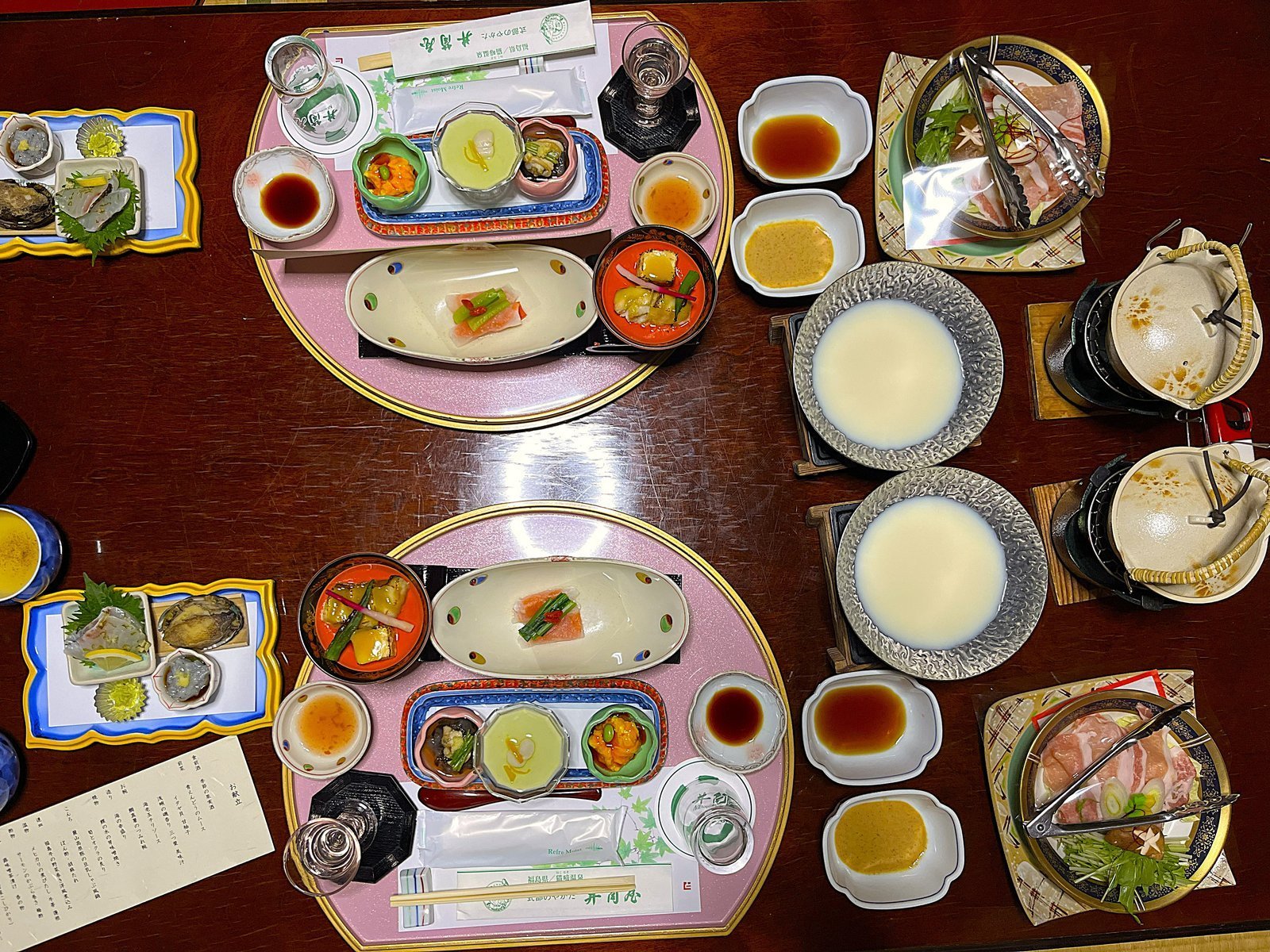
For a first ryokan stay in Japan, I usually think booking dinner and breakfast is the best way to experience the stay properly.
A ryokan is not just a room with tatami mats. At many traditional ryokan, the meals are part of the reason to stay: dinner may be a multi-course seasonal meal, breakfast is often a Japanese-style set meal, and the whole schedule is built around arriving, bathing, eating, resting, and checking out the next morning.
That said, I do not think every ryokan stay needs dinner and breakfast. Once you have experienced a few ryokan, it makes sense to be more selective based on the location, price, reviews, arrival time, length of stay, and your own food preferences.
This guide explains how ryokan meal plans usually work, when dinner and breakfast are worth booking, and when it may be smarter to choose a simpler plan.
Quick Answer
If this is your first ryokan stay, I would usually book dinner and breakfast included, especially if the ryokan is in a rural area, onsen town, or place where nearby restaurants are limited.
If you have already stayed at several ryokan, it becomes more reasonable to be selective. You might skip dinner if you are arriving late, staying in a city with restaurants you want to try, staying multiple nights at the same ryokan, or if the meal reviews do not justify the price. You might skip breakfast if you are leaving very early, prefer sleeping in, or do not enjoy Japanese-style breakfast.
For us, we generally like booking ryokan with meals because Japanese cuisine is one of our favourite parts of travelling in Japan. We also check meal photos and reviews carefully before booking, so our experience may be slightly biased toward choosing places where the food already looks promising. This is our travel style, not a rule every traveller needs to follow.
Do Ryokan Usually Include Dinner and Breakfast?
Traditionally, many ryokan are built around a one-night, two-meal stay. In Japanese, you may see this described as 1泊2食付き or 夕朝食付き, meaning one night with dinner and breakfast.
In practice, it depends on the ryokan and the booking plan.
Some ryokan mainly sell dinner-and-breakfast plans. Others may offer several choices, such as:
- 夕朝食付き / 1泊2食付き — dinner and breakfast included
- 朝食付き — breakfast included
- 素泊まり — room only, no meals
- 夕食付き — dinner included, though this is less common than dinner-and-breakfast plans at many traditional ryokan
- Upgraded dinner plans with better ingredients, larger meals, or seasonal specialties
The important nuance is that ryokan meals are usually plan-based, not ordered casually like hotel room service. Dinner and breakfast are often packaged together, but modern booking platforms may still show breakfast-only, room-only, or upgraded dinner options.
Choose the plan intentionally. Do not assume every ryokan room includes meals, and do not assume you can add dinner casually after arrival.
Why Dinner and Breakfast Are Worth It for a First Ryokan Stay
For a first-time ryokan experience, I think dinner and breakfast are usually worth booking because they help you experience the ryokan as it is meant to be enjoyed.
It is similar to staying at a resort and actually using the resort facilities. You can technically sleep there and leave, but you may miss the thing that makes the stay feel different from a normal hotel.
A full ryokan stay usually has a rhythm:
- arrive in the afternoon
- check in and settle into the room
- use the onsen before dinner
- eat dinner at the ryokan, either in your room, a private dining room, a restaurant area, or a shared dining hall depending on the property
- relax in the room or take another bath
- wake up for breakfast
- check out around 10:00
If you remove both meals, the stay can still be pleasant, but it may feel closer to a Japanese-style hotel room than a full ryokan experience.
This is especially true in rural areas. Restaurants may be limited, close early, or require driving. At that point, booking dinner is not only about the experience — it is also practical.
What Is Kaiseki Dinner?
Ryokan dinner is often described as kaiseki or kaiseki-style. In practical terms, this usually means a multi-course Japanese dinner built around seasonal ingredients, small dishes, and careful presentation.
Not every ryokan dinner is formal kaiseki. Some ryokan serve hot pot plans, buffets, regional set meals, or simpler multi-course meals. But when people talk about the “full ryokan experience,” they are often thinking of a dinner where the food is part of the stay, not just something to eat before bed.
If you are interested in the deeper history and meaning of kaiseki, it is worth reading a separate guide. The short version for booking is: check the meal photos and plan description, not just the word “kaiseki.”
When I Would Book Dinner and Breakfast
I would usually book dinner and breakfast when:
- It is your first ryokan stay
- The ryokan is in a rural area or onsen town
- You are arriving early enough to enjoy dinner without rushing
- Food reviews and photos look strong
- The meal is one of the reasons the ryokan is well rated
- Nearby restaurants are limited or inconvenient
- You want a slow, self-contained evening
- The price difference between room-only and dinner-included feels reasonable
This is what made sense for our stay at Nekonaki Onsen Izutsuya. We were using it as a rural stopover after visiting Miharu Takizakura, and the in-room dinner became the main highlight of the stay. If we had booked room-only, the ryokan would have felt much less memorable.
When I Would Skip Dinner
Dinner is usually the bigger decision because it adds more cost and affects your schedule.
I would consider skipping dinner if:
- You are arriving late
- You want to eat at a specific restaurant nearby
- You are staying in a city like Kyoto, Tokyo, Kanazawa, or Sendai
- You are staying several nights at the same ryokan and want variety
- The dinner reviews look average compared with the price
- You do not enjoy multi-course Japanese meals
- You have dietary restrictions the ryokan may not be able to handle
- You want a more flexible evening
- You are on a tighter budget and the meal plan changes the price significantly
For multi-night stays, we sometimes skip the meal plan for one night or two. That gives us a chance to try restaurants nearby, or to keep things simple with sashimi, vegetables, salad, or side dishes from a supermarket. Ryokan meals can be excellent, but if every dinner is rich and structured, we sometimes want a lighter or more flexible evening.
One thing to remember: ryokan dinners are usually prepared in advance. This is not like ordering room service at a hotel. If you want dinner, book it with the room or contact the ryokan before arrival.
When I Would Book Breakfast
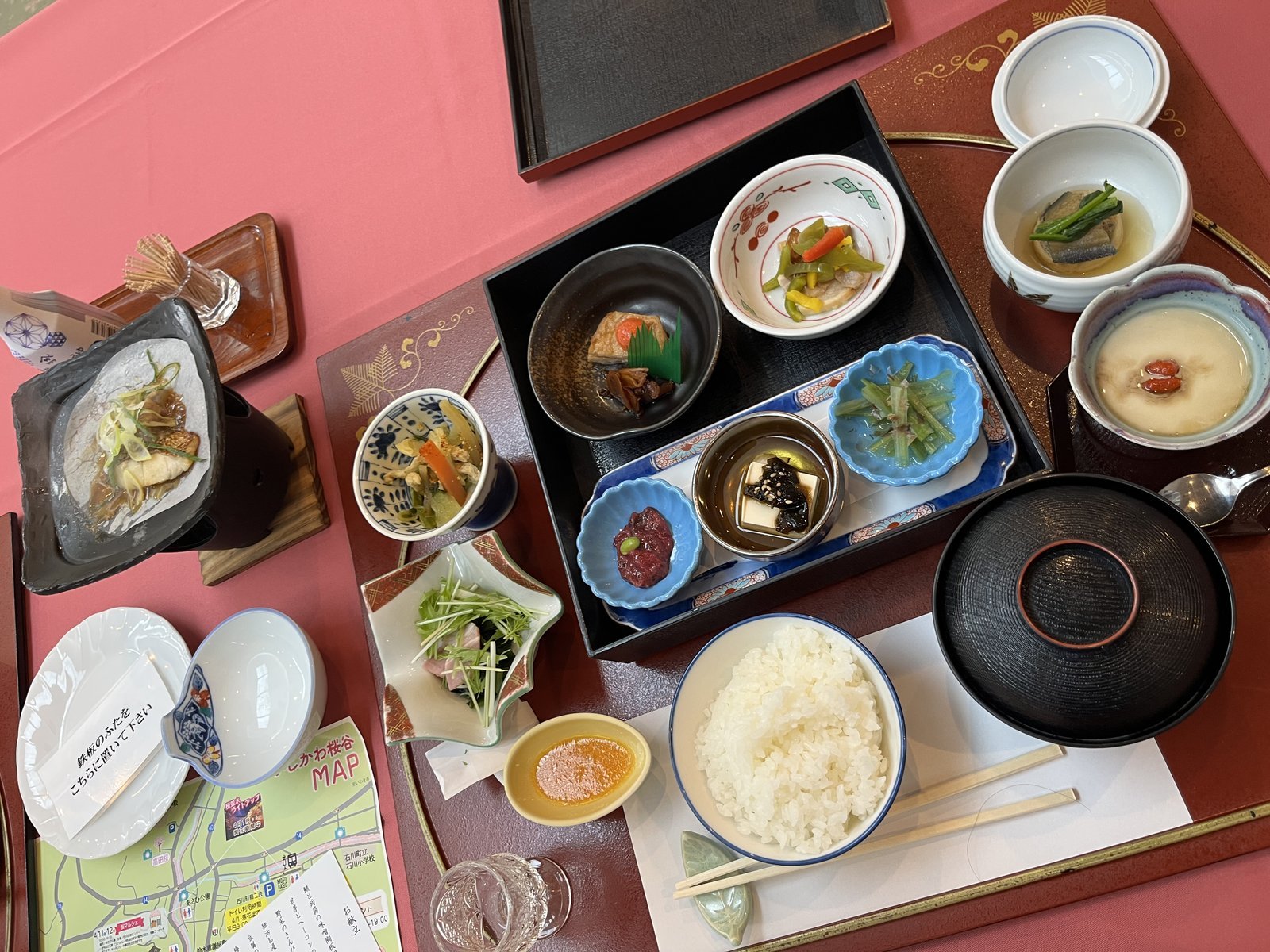
Breakfast is usually easier to justify than dinner because it helps the morning run smoothly.
I would book breakfast if:
- You want the full ryokan experience
- You like Japanese breakfast
- You are staying somewhere rural
- You do not want to search for food early in the morning
- You plan to leave soon after check-out
- The breakfast reviews look good
At many ryokan, breakfast is a Japanese-style set meal with rice, miso soup, grilled fish, pickles, egg, tofu, vegetables, seaweed, or natto. The exact dishes vary by ryokan.
For us, breakfast is usually a positive part of the stay because we enjoy Japanese breakfast. I am also personally a big fan of natto, so whenever it is available in Japan, I am happy to have it in the morning.
When I Would Skip Breakfast
Breakfast may not be worth adding if:
- You are a night owl and really want to sleep in
- You have an early train, flight, or long drive
- Breakfast time is too early for your schedule
- You strongly prefer coffee and a light western breakfast
- You do not enjoy typical Japanese breakfast dishes
- The ryokan is in a city with many breakfast options nearby
The timing matters. Ryokan breakfast often finishes earlier than hotel breakfast, sometimes around 8:30 or 9:00. For some travellers, that is perfect because it helps them start the day early. For night owls, it can feel restrictive.
A slow morning can still work at a ryokan, but it is usually a Japanese-style slow morning: wake up, eat breakfast, maybe take a bath, pack, and check out — not sleep until late morning.
How We Check Ryokan Meal Quality Before Booking
We usually check reviews carefully before booking a ryokan with meals.
One site we often check is Jalan because it usually has many photos and detailed review scores. In our experience, a rating above around 4.3 is usually a strong sign of quality. For us, this has been a helpful personal benchmark rather than a strict rule.
We have still booked meal-included ryokan below 4.3 when the price, route, or location made sense. So far, no ryokan meal has truly disappointed us or felt unsatisfying. But we should be honest: we love Japanese cuisine, so we may be more forgiving or more excited about ryokan meals than someone who prefers western food.
When checking reviews, I would look for:
- Recent meal photos
- Comments about dinner quality
- Comments about breakfast quality
- Whether meals are served in-room, in a private dining room, or in a dining hall
- Whether the food looks seasonal or generic
- Whether reviewers mention quantity being too much or too little
- Whether the ryokan can handle dietary restrictions
- Whether drinks are included or charged separately
Do not rely only on the overall score. A ryokan can have a high room or bath rating but a weaker meal rating, or the opposite.
Useful Japanese Meal-Plan Terms
These are the words I would look for when booking on Japanese sites:
| Japanese term | Meaning |
|---|---|
| 夕朝食付き | Dinner and breakfast included |
| 1泊2食付き | One night with two meals included |
| 朝食付き | Breakfast included |
| 素泊まり | Room only, no meals |
| 夕食付き | Dinner included |
| 部屋食 | Meal served in the room |
| 個室食 | Meal served in a private dining room |
| 食事処 | Meal served in a dining area |
| 会席料理 | Kaiseki-style multi-course meal |
| 和朝食 | Japanese breakfast |
These terms matter because the room photo may look the same across several plans, but the meal plan can change the price and experience dramatically.
What We Usually Do
For rural ryokan stays, we personally usually prefer dinner and breakfast included.
Our reasoning is simple: if we are choosing a ryokan, we usually want the full ryokan experience. The meal is part of that. It also removes the stress of finding dinner in a rural area after driving or sightseeing.
But we are becoming more selective. If we already know the area, have a restaurant we really want to try, are arriving late, or are staying at the same ryokan for multiple nights, we would not automatically book dinner every night. If breakfast ends too early and we want a more flexible morning, we might also think twice.
For first-time ryokan travellers, though, I would still recommend booking at least one stay with dinner and breakfast. After that, you can decide whether future ryokan meals are worth it for your travel style.
Best For
Booking dinner and breakfast is best for travellers who:
- Are staying at a ryokan for the first time
- Love Japanese food
- Want the full ryokan experience
- Are staying in a rural area or onsen town
- Prefer a relaxed evening without searching for restaurants
- Are interested in seasonal and local dishes
- Are okay with fixed meal times
Skip or Be Selective If
You may want to skip dinner, breakfast, or both if:
- You are arriving late
- You want maximum schedule flexibility
- You are staying in a city with many food options
- You have specific restaurants planned
- You are staying multiple nights and want to try local restaurants or lighter supermarket meals
- You have dietary restrictions that the ryokan cannot confirm in advance
- You are a night owl and breakfast timing feels too early
- You do not enjoy Japanese-style meals
- The meal plan price is much higher than the room-only price and reviews do not justify it
Final Thoughts
If you are booking your first ryokan stay in Japan, I would usually choose dinner and breakfast included.
It is the easiest way to understand why ryokan stays are different from normal hotels. You get the room, the bath, the food, and the rhythm of the stay together.
But once you have experienced that a few times, you do not need to book every ryokan the same way. The best choice depends on your route, appetite, budget, arrival time, length of stay, and how much you care about Japanese meals.
For us, dinner and breakfast are usually worth it because we love Japanese cuisine and ryokan meals have never felt disappointing. But that is a personal preference, not a universal rule. The practical answer is: book the full meal plan when the food is part of the reason to stay, and be selective when the meal plan starts to limit the trip more than it improves it.
FAQ
Do ryokan usually include dinner and breakfast?
Many traditional ryokan plans include dinner and breakfast, but not all. Check whether your plan says 夕朝食付き, 1泊2食付き, 朝食付き, or 素泊まり.
Is ryokan dinner always kaiseki?
No. Ryokan dinner is often kaiseki-style, but some ryokan serve hot pot, buffet, regional set meals, or simpler dinner plans.
Should I book dinner for my first ryokan stay?
Usually yes, especially in a rural area or onsen town. Dinner is often part of the ryokan experience, not just an add-on.
Should I book breakfast at a ryokan?
Usually yes if you enjoy Japanese breakfast and do not need to leave very early. Breakfast can make the morning easier, especially in rural areas.
Should I book meals every night if I stay at the same ryokan for several nights?
Not always. For multi-night stays, you may want to book meals for some nights and leave other nights open for local restaurants, lighter supermarket meals, or schedule flexibility.