Shared onsen baths are one of the biggest things travellers worry about before staying at a ryokan in Japan.
The idea can feel intimidating if you did not grow up with public bathing culture. You may wonder where to change, whether you need a swimsuit, how to wash, what to do with your towel, and whether the room itself has a shower or bath.
The good news is that shared onsen baths are usually calm, quiet, and straightforward once you understand the flow.
This guide explains how shared onsen baths work, what to expect from a shared onsen bath in Japan, and how to avoid the most common mistakes.
What Does “Shared Onsen Bath” Mean?
A shared onsen bath means the bath is used by multiple guests, not just your room.
In most ryokan, shared baths are separated by gender. There is usually one bath area for men and one for women. Inside each area, there may be an indoor bath, an outdoor bath, washing stations, and a changing room.
This is different from a private bath. A private bath is a bath area that you reserve or use privately for a set time, usually without other guests entering during your slot. It may also be called a family bath, private onsen, or kashikiri-buro. A private bath can be useful for couples, families, or friends who want to bathe together, depending on the bath size and the ryokan’s rules.
A private bath is also different from a room with its own onsen bath. In that case, the bath is attached to your room and you can use it without reserving a shared facility. Those rooms are usually more expensive.
Not every ryokan has private baths or rooms with in-room onsen. If this matters to you, check before booking.
Do All Ryokan Rooms Have an In-Room Bath or Shower?
No. This can surprise foreign travellers.
At a normal hotel, many travellers assume the room will have its own shower or bath. At a ryokan, especially an older or more traditional one, some rooms may not have an in-room bath or shower because guests are expected to use the shared bathing facilities.
Some rooms may have only a toilet and sink. Some may have a full unit bath. Some higher-end rooms may have a private open-air bath. Room facilities can vary even within the same ryokan, so check the exact room type before booking.
Do You Wear a Swimsuit?
No, not in a normal shared onsen bath.
In traditional onsen baths, guests bathe without swimsuits. You undress in the changing room, wash your body at the washing area, then enter the bath.
There are exceptions, such as some mixed-gender baths, public bathing facilities, or special swimsuit-required zones. But for a standard ryokan onsen, the answer is simple: no swimsuit, unless the facility clearly says otherwise.
This can feel strange at first if you are not used to it. But in Japan, this is normal onsen etiquette. The atmosphere is usually quiet and practical, not awkward.
If this makes you uncomfortable, look for accommodation with a private bath or a room with its own bath.
Step-by-Step: How to Use a Shared Onsen Bath
1. Bring what you need
From your room, bring your towel, room key, and any small toiletries you need. Many ryokan provide towels, soap, shampoo, and conditioner, but this varies.
Do not bring your phone or camera into the bath area.
2. Enter the correct bath area
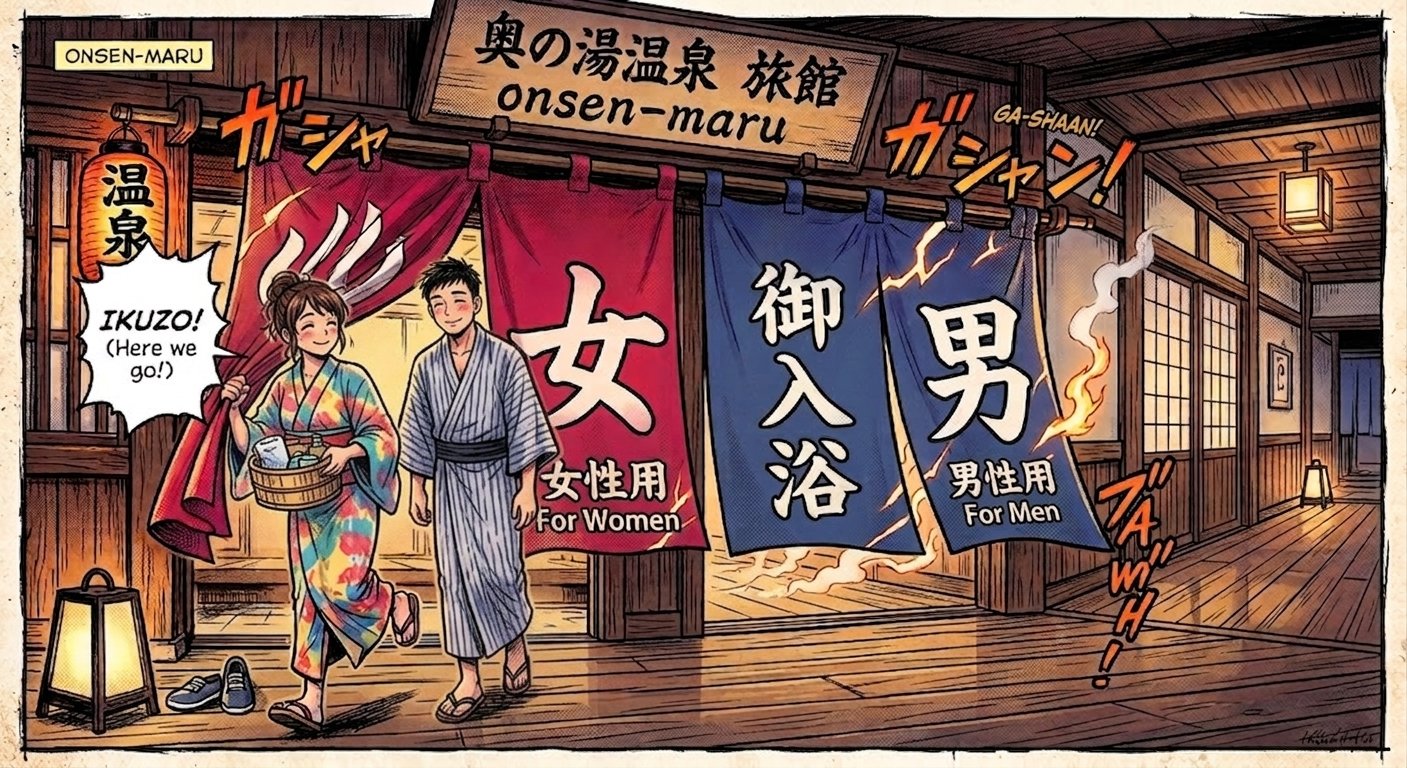
Baths are usually separated by gender. The entrance may be marked with Japanese characters, colours, or curtains.
Common signs:
- 男 / 男湯 = men
- 女 / 女湯 = women
Men’s entrances are often marked with blue or dark blue curtains, and women’s entrances are often marked with red or warm-coloured curtains. This is common, but do not rely only on colour. Always check the characters or ask staff if you are unsure.
Some ryokan switch the men’s and women’s bath areas at different times of day, so check the signs each time.
3. Undress in the changing room
Leave your clothes and large towel in a basket or locker. Bring only the small towel into the bathing area if one is provided.
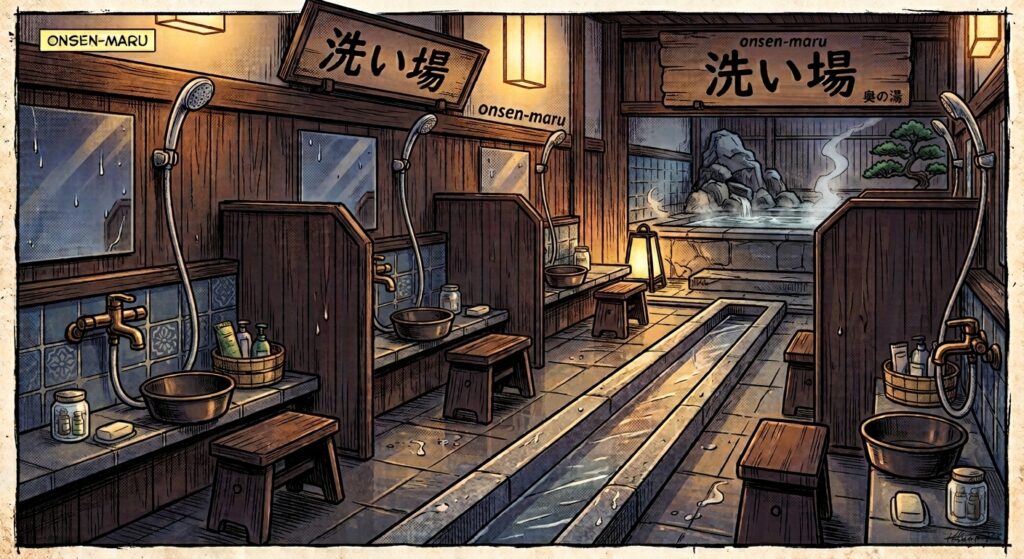
4. Wash before entering the bath
This is the most important rule.
Sit at a washing station and wash your body before entering the bath. Rinse off all soap and shampoo completely. The bath is for soaking, not for washing.
5. Tie up long hair
Hair should not touch the bath water. If you have long hair, tie it up before entering the bath.
6. Enter the bath slowly
Onsen water can be hot. Enter slowly and let your body adjust. Do not jump in, splash, or swim.
7. Keep your towel out of the water
Do not put your towel in the bath water. You can place it on your head, leave it at the side, or keep it nearby.
8. Dry slightly before returning to the changing room
Before going back into the changing room, use your small towel to wipe off some water. This helps keep the floor dry.
Indoor Bath vs Outdoor Bath
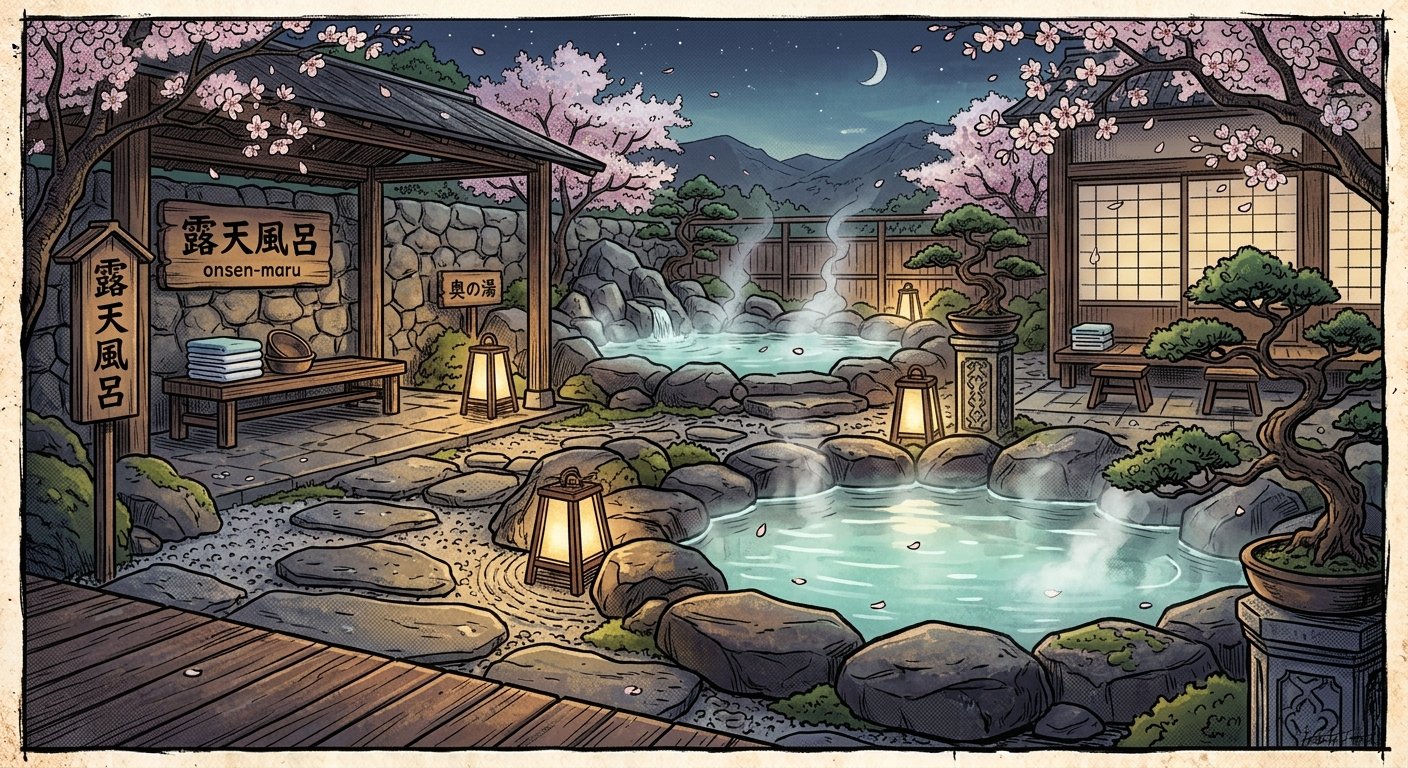
Many ryokan have both indoor and outdoor baths.
Indoor baths are usually easier to use and may be larger. Outdoor baths, called rotenburo, can feel more atmospheric because you are soaking outside in fresh air.
But outdoor baths are not always large. During our stay at Nekonaki Onsen Izutsuya, the indoor bath was a decent size, but the outdoor bath felt small. In our experience, the outdoor bath would fit two people comfortably, while three would feel tight.
This is a good reminder that “outdoor bath” does not always mean a large scenic pool. Sometimes it is a small but pleasant bath attached to the main bathing area.
When Is the Best Time to Use the Onsen?
The quietest times are often:
- Soon after check-in, before dinner
- Later in the evening
- Early in the morning
The busiest times are often just before dinner or shortly after dinner, depending on the ryokan.
If the bath is small, timing matters. Going slightly earlier or later can make the experience much more relaxing.
What If You Feel Nervous?
Feeling nervous is normal the first time.
A few tips help:
- Go during a quieter time
- Watch what others do, respectfully
- Focus on the basic steps: change, wash, soak, dry
- Do not worry about doing everything perfectly
- Choose a ryokan with a private bath if shared bathing feels too stressful
Most people are focused on their own routine. The experience usually feels less awkward than you imagine.
Common Mistakes to Avoid
Avoid these common mistakes:
- Entering the bath before washing
- Putting your towel in the bath water
- Letting long hair touch the bath water
- Bringing your phone into the bath area
- Talking loudly
- Swimming or splashing
- Taking photos
- Using soap or shampoo in the bath itself
- Leaving the washing station messy
What About Tattoos?
Tattoo policies vary by onsen and ryokan.
Some places allow tattoos, some ask guests to cover them, and some do not allow tattooed guests in shared baths. Policies have become more flexible in some tourist areas, but you should still check in advance if this applies to you.
If the policy is unclear, contact the ryokan before booking. Policies can also change over time, so it is worth checking the ryokan’s website or posted signs for the most current rules.
Shared Bath or Private Bath: Which Should You Choose?
Choose a shared bath if you want the standard ryokan onsen experience and feel comfortable following the basic etiquette.
Choose a private bath if:
- You are nervous about shared bathing
- You are travelling as a couple, family, or group of friends and want to bathe together
- You have tattoos and are unsure of the policy
- You need more privacy
- You want a more relaxed first onsen experience
A private bath can be a good bridge for first-time visitors. Just remember that private bath rules still depend on the ryokan. Check whether it needs a reservation, whether there is an extra fee, how long each slot is, and how many people can use it at once.
Final Thoughts
Shared onsen baths are not complicated once you understand the rhythm.
Wash first. Keep the bath water clean. Stay quiet. Keep your towel and hair out of the water. Respect the space.
If you can do those things, you will be fine. Once the nervousness passes, the experience may feel calmer than you expected.
FAQ
Do you wear a swimsuit in a shared onsen bath?
No, not in a normal shared onsen bath. Traditional onsen are used without swimsuits. Only some special facilities or designated zones allow or require swimwear.
Do I need to wash before entering the onsen?
Yes. You should wash and rinse your body at the washing station before entering the bath.
Can I bring my phone into the onsen?
No. Phones and cameras should not be used in the bath or changing area.
Are shared onsen baths separated by gender?
Most shared onsen baths are separated by gender, though some private or reservable baths can be used by couples, families, or groups.
What is a private bath at a ryokan?
A private bath is a bath area reserved for private use, often for a set time. It is different from a room with its own onsen bath, which is attached to your room.
Do ryokan rooms always have a shower or bath?
No. Some ryokan rooms do not have an in-room shower or bath because guests are expected to use the shared bathing area. Check the exact room facilities before booking.
What if I have tattoos?
Tattoo policies vary. Check with the ryokan or onsen before visiting.