Quick Answer
Parking in rural Japan is usually easier than parking in big cities, but it is not completely casual.
You should still park only in proper parking areas, check whether a lot is free or paid, and avoid assuming that street parking is okay just because the road looks quiet.
On our Tochigi, Fukushima, and Miyagi route, rural parking was generally manageable. The most stressful parking was in central Sendai, where many lots were full around lunch. Famous seasonal spots, like cherry blossom areas, can also be busier than normal.
So the simple rule is:
Rural parking is usually easier, but event parking and city parking still need planning.
Why Parking Matters for Rural Japan Trips
A rental car can make rural Japan much easier to explore.
It helps with:
- Carrying luggage
- Visiting multiple small stops in one day
- Reaching viewpoints
- Staying outside major cities
- Adjusting plans around weather or sakura timing
But every car-based route has one practical question: where do you park?
For major tourist attractions, there is often a designated lot. For smaller shrines, viewpoints, local restaurants, or seasonal places, the answer can be less obvious.
This is why parking should be part of route planning, not something you only think about after arriving.
Rural Parking vs City Parking
Rural parking and city parking feel very different.
Rural Parking
In rural areas, parking is often:
- Free or low-cost
- Near the attraction
- In open-air lots
- Easier to enter and exit
- Less stressful outside peak seasons
This was mostly our experience in rural Tochigi, Fukushima, and Miyagi.
City Parking
In cities, parking can be:
- Paid by time
- Full during lunch, weekends, or events
- Narrower
- More expensive
- Harder to understand quickly
- Less convenient than taking the train
Central Sendai was the clearest example from our route. The drive itself was not difficult, but finding parking around lunch was more stressful than rural driving.
Do Not Assume Street Parking Is Okay
In many countries, travellers are used to parking on the street if there is space.
In Japan, that is usually not the right mindset.
Street parking is generally restricted, and parking violations are taken seriously. Even if you are “only stopping for a short time,” leaving the car outside a proper parking area can still cause problems.
For a rental car, this is even more important because any parking violation may involve both the police process and the rental company.
The safer habit is simple:
If it is not a marked parking area, do not use it.
Common Parking Types in Rural Japan
Attraction Parking Lots
Many temples, parks, museums, viewpoints, farms, and tourist sites have their own parking lots.
These may be free, paid, or free only outside special event periods.
At rural attractions, the lot may not always be large, but it is usually the easiest option.
Temporary Event Parking
During cherry blossom season, autumn foliage, festivals, or illumination events, temporary lots may be set up.
These can be very useful, but they may also come with parking fees, traffic control, walking distance to the main site, limited hours, and full lots during peak times.
For famous sakura spots, I would check parking information before going and arrive earlier than you think you need to.
Coin Parking
Coin parking lots are common in cities and towns.
They are paid lots where you park in a numbered space, then pay at a machine before leaving. Some have locking plates under the car; others use gates or cameras.
Coin parking is useful when visiting restaurants, stations, shopping streets, or city areas.
Hotel and Ryokan Parking
Many rural hotels and ryokan have parking, but do not assume it is always free or unlimited.
Check whether parking is available, whether reservation is needed, whether there is a fee, whether the lot is close to the building, and whether the road to the accommodation is narrow.
For countryside stays, parking can be one of the main reasons a rental car is convenient.
Station Parking
Some train stations have nearby paid parking lots. These can be useful if you are mixing car travel with train travel, but they may fill during commuting hours or local events.
Convenience Store Parking
Convenience store parking is for customers while using that store.
It is not a sightseeing parking lot. Do not leave your rental car there while going somewhere else.
Monthly or Private Parking
Some lots look empty but are reserved for monthly users, apartment residents, or private businesses.
Do not park there unless it is clearly available for visitors.
How Coin Parking Usually Works
Coin parking can look confusing the first time, but the basic process is simple.
- Enter the lot.
- Park in an available space.
- Check your parking space number.
- Do your visit.
- Before leaving, go to the payment machine.
- Enter your space number.
- Press the adjustment/payment button.
- Pay the amount shown.
- Return to the car.
- Leave before the lock plate rises again or before the exit grace period ends.
Useful Japanese words to recognize:
精算— payment / fare adjustment駐車場— parking lot満— full空— spaces available最大料金— maximum charge時間— time / hour円— yen
If you are nervous, take a photo of the parking machine instructions before walking away from the car. Google Translate can help.
Parking at Sakura and Seasonal Spots
Seasonal attractions need extra care.
Cherry blossom spots can be calm on one day and packed on another, depending on bloom timing, weekend timing, and weather.
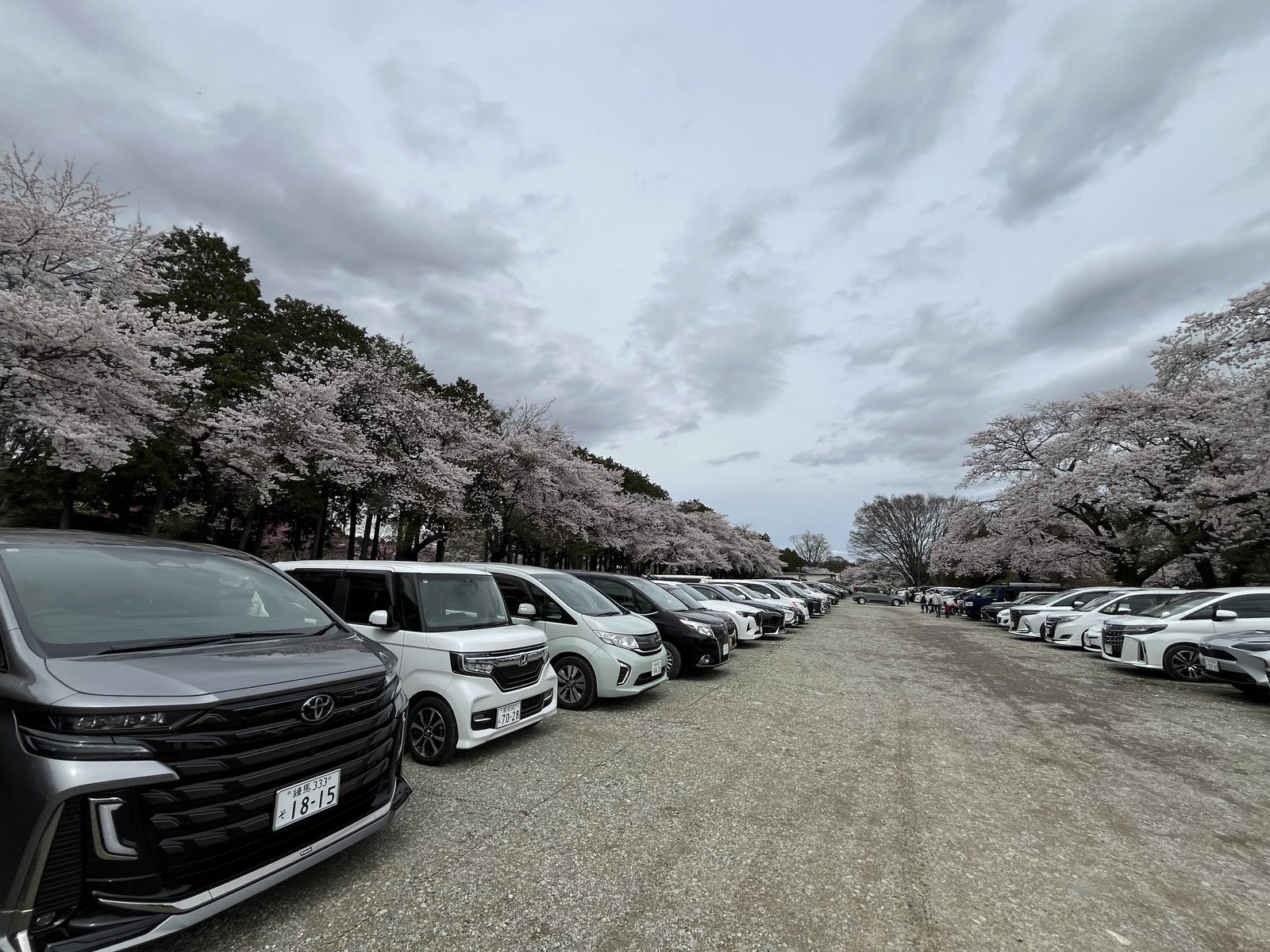
At Shiroishigawa Hitome Senbonzakura, parking was busier near the lots during our visit, but it was not too bad. Still, I would not assume that every visitor will have the same experience. Peak bloom, weekends, and good weather can change everything.
For seasonal spots, I would:
- Check official event parking information
- Bring cash for temporary lots
- Arrive earlier in the day
- Have a backup lot in mind
- Avoid trying to park at the closest possible spot
- Be patient near the entrance and exit roads
A car is very useful for sakura flexibility, but parking is part of the tradeoff.
Parking Near Shrines, Viewpoints, and Small Rural Stops
Smaller rural stops can be trickier because parking information may not be obvious in English.
Before going, check Google Maps satellite view, recent reviews mentioning parking, official access information, Street View if available, and whether the road looks narrow near the final approach.
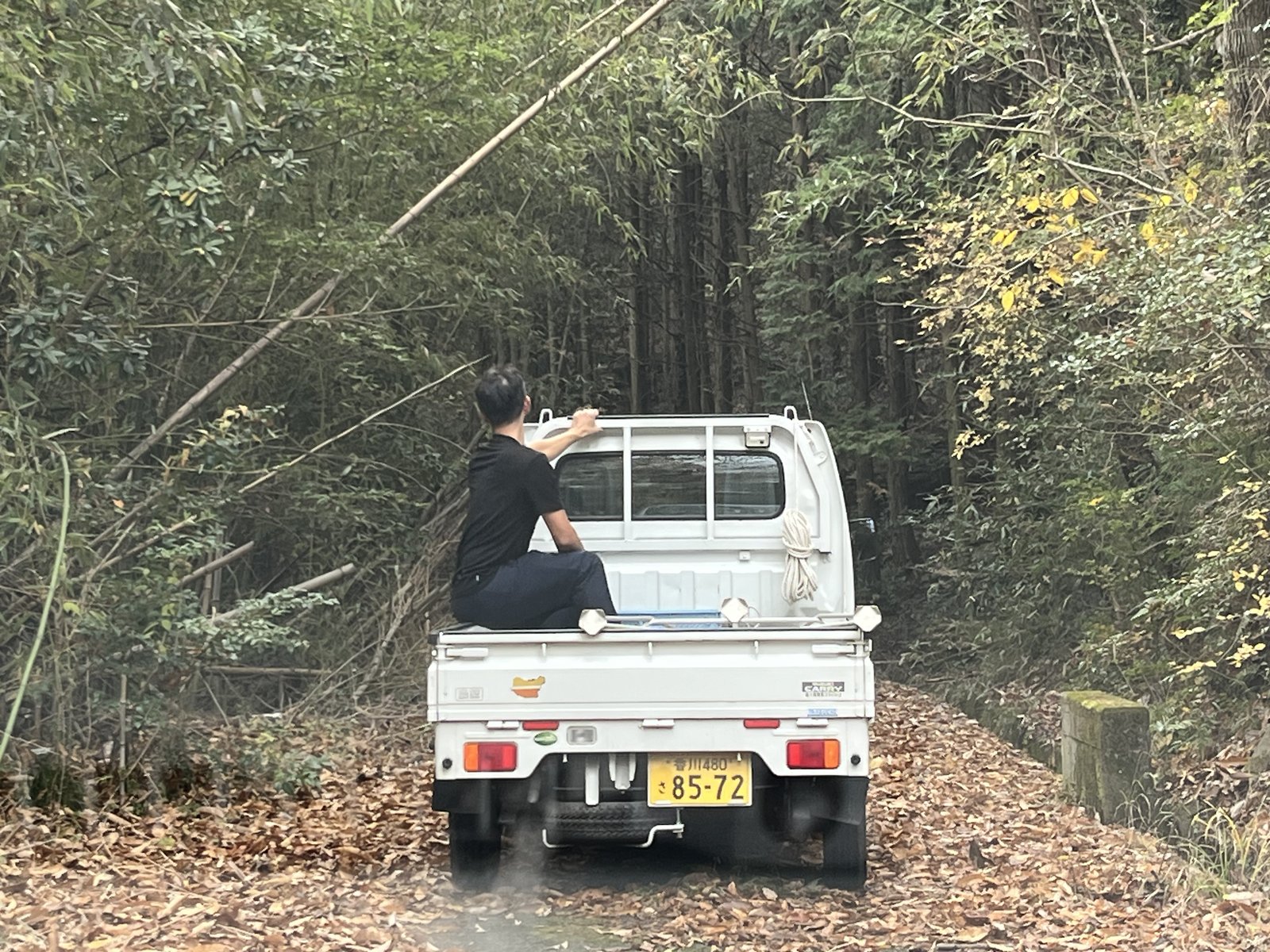
For places like rural viewpoints or small temples, the final road may be narrow even if the main route is easy. This was the case for Tomiyama and Daigyoji on our trip: the final stretch was narrow, but it was short, quiet, and had pullouts.
The parking itself may be manageable, but the approach road is worth checking.
Should You Rent a Smaller Car for Easier Parking?
In many cases, yes.
For two people, a compact car was enough for us, and I was glad we did not have a larger vehicle.
A smaller car helps with narrow parking spaces, rural access roads, coin parking lots, hotel parking, and turning around in small areas.
Unless you truly need more space, I would not rent a large car just because you are used to one at home.
What to Do If You Get a Parking Violation
Try not to get one.
If a violation sticker is placed on your rental car, do not ignore it. Follow the rental company’s instructions, and deal with it before returning the car if required.
Rental companies may charge additional fees if the violation is not handled properly, and unresolved violations can cause bigger problems than the original fine.
This is another reason to use proper parking lots, even for short stops.
Final Recommendation
Parking should not scare you away from renting a car in rural Japan.
In most rural areas, parking is manageable and often much easier than in major cities. But the key is to avoid a casual street-parking mindset.
Use marked lots, check seasonal parking in advance, bring cash, rent a car size you are comfortable parking, and avoid driving into dense city centres unless the car really adds value.
For us, the car was very useful after leaving Utsunomiya and travelling through rural Tochigi, Fukushima, and Miyagi. But in central Sendai, parking was the main reason the car felt less useful.
That is the balance I would keep in mind: rural car travel is rewarding, but city parking is often where the stress begins.
FAQ
Is parking easy in rural Japan?
Usually easier than in big cities, but not always automatic. Popular attractions, seasonal events, and small lots can still fill up.
Can I park on the street in Japan?
Do not assume so. Use designated parking lots. Street parking is generally restricted and can lead to violations.
Are rural tourist attraction parking lots free?
Many are free, but not all. Seasonal events and famous spots may charge a fee or use temporary lots.
How do I know if a parking lot is full?
Look for 満, which means full. 空 usually means spaces are available.
Is a compact car better for Japan parking?
For many travellers, yes. A compact car is easier in narrow lots, rural roads, and city parking.