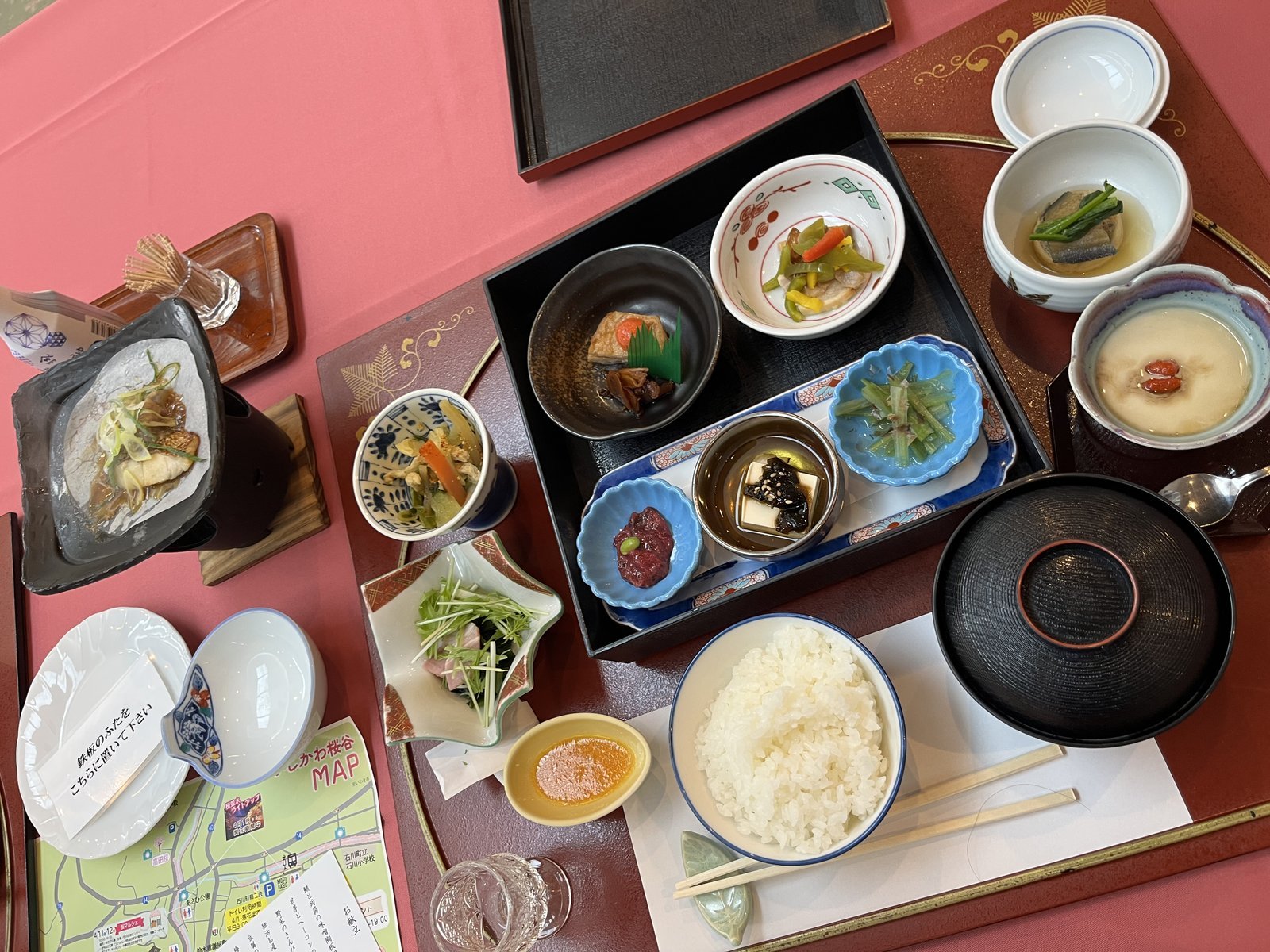
“Breakfast included” at a ryokan in Japan can mean something very different from breakfast included at a normal hotel.
Instead of a flexible buffet that runs until late morning, a ryokan breakfast is often a Japanese-style set meal served during a fixed time window. It is often served in a dining hall, restaurant area, or private dining room. Some ryokan serve breakfast in the guest room, but I would not assume this unless the plan clearly says so. Breakfast also often ends earlier than many travellers expect.
This guide explains what “ryokan breakfast included” really means, how it differs from hotel breakfast, and what to check before booking.
Ryokan Breakfast Is Usually a Proper Meal
At many ryokan, breakfast is not an afterthought.
It is usually a proper Japanese meal with several small dishes. Depending on the ryokan, it may include rice, miso soup, grilled fish, egg, tofu, pickles, seaweed, vegetables, natto, fruit, tea, or local items.
Some ryokan offer buffet breakfast, but many traditional inns serve a prepared set meal.
This can be a great experience if you enjoy Japanese food. But if you expect toast, cereal, coffee, and a casual western breakfast, you should check the plan carefully.
Breakfast May Be Served in Different Places
Ryokan breakfast can be served in:
- A shared dining hall
- A restaurant area inside the ryokan
- A private dining room
- Your room, especially at some traditional or higher-end ryokan
The serving location changes the feeling of the morning.
In-room breakfast feels private, but it is not something I would expect at every ryokan. A dining hall or restaurant area is common and can feel more efficient and organized. A buffet may feel more familiar to hotel travellers, but less traditional.
During our stay at Nekonaki Onsen Izutsuya, breakfast was served in a dining hall. When we entered, staff brought us to our assigned table. The room had multiple tables set up for small groups, and the breakfast set was already prepared. Rice, miso soup, and natto were self-serve, but what I remember most was the quality of the prepared breakfast set rather than the refill system.
Breakfast Times Are Often Earlier Than Hotels
This is one of the most important things to know.
Ryokan breakfasts often end earlier than hotel breakfasts. In our experience, breakfast may finish around 8:30 or 9:00, but exact times depend on the ryokan, so it is worth checking the current schedule when you book or at check-in. Some ryokan offer time slots, and you choose your breakfast time the night before or during check-in.
This is especially important if you are a night owl or you like sleeping in. It does not mean you cannot have a slow morning at a ryokan; it just means the slow morning usually starts earlier. You might eat breakfast, have another bath, pack slowly, and then check out by 10:00.
It also affects your morning plan. If breakfast is at 8:00 and check-out is at 10:00, you have a clear but limited window to eat, use the onsen, pack, and leave.
Is Ryokan Breakfast Kaiseki?
Ryokan breakfast is not usually called kaiseki. Kaiseki is more commonly used for dinner, while breakfast is usually better described as a Japanese-style breakfast or traditional Japanese breakfast set: simpler, lighter, and more practical, though it may still include several small dishes and feel carefully prepared.
Common Foods at Ryokan Breakfast
A ryokan breakfast may include:
- Steamed rice
- Miso soup
- Grilled fish
- Tamagoyaki or egg dish
- Tofu
- Pickles
- Seaweed
- Natto
- Simmered vegetables
- Salad
- Fruit
- Tea
- Local side dishes
Not every breakfast includes all of these. The exact meal depends on the region, season, price level, and ryokan style.
What If You Do Not Eat Fish or Natto?
Natto is a classic Japanese breakfast food made from fermented soybeans. I personally love natto and try to get it for breakfast whenever I can in Japan, but it is also famous for being an acquired taste because of its sticky texture and strong aroma.
You can still enjoy many ryokan breakfasts, but the options may be limited.
Japanese breakfast often includes fish, pickles, miso soup, and other savoury dishes. Natto is common in some places, but it is usually optional or served separately.
If you have dietary restrictions, contact the ryokan before booking. Smaller ryokan may not be able to make major changes, especially if meals are prepared in advance.
Breakfast Included vs Dinner and Breakfast Included
When booking a ryokan, check the meal plan carefully.
Common plan types include:
- Room only
- Breakfast included
- Dinner included
- Dinner and breakfast included
For the full ryokan experience, dinner and breakfast included is usually the best plan. But if you are arriving late or want to eat dinner elsewhere, breakfast-only may make more sense.
In rural areas, I usually prefer dinner and breakfast included because restaurants may be limited or require driving.
Should You Book Breakfast Included?
Usually, yes, unless you have a specific reason not to.
Ryokan breakfast helps complete the stay. It also saves you from needing to find food early in the morning, which can be inconvenient in rural areas.
I would skip breakfast included only if:
- You need to leave very early
- You strongly dislike Japanese breakfast
- You have dietary restrictions the ryokan cannot handle
- You want a flexible late morning
- You are staying in a city with many breakfast options nearby
Practical Tips for Ryokan Breakfast
Before or during check-in, ask:
- What time is breakfast?
- Where is breakfast served?
- Is it a set meal or buffet?
- Are rice and miso soup refillable?
- What time is check-out?
- Can breakfast be skipped or adjusted if you leave early?
These questions are especially useful if you are planning a long driving day, early train, or morning sightseeing.
Final Thoughts
Breakfast included at a ryokan usually means more than a quick hotel breakfast.
It is often a structured Japanese meal, served at a set time, and designed to be part of the overall stay. That can be wonderful if you know what to expect. It can also feel too early or too formal if you were expecting a casual hotel buffet.
The best approach is simple: check the meal style, check the breakfast time, and plan your morning around it.
FAQ
Is ryokan breakfast usually Japanese-style?
Yes. Many ryokan serve Japanese-style breakfast sets, though some offer buffets or western options.
What time is breakfast at a ryokan?
It depends on the ryokan, but breakfast often finishes earlier than hotel breakfasts, commonly around 8:30 or 9:00. Always check the current time window when you book or at check-in.
Is ryokan breakfast served in the room?
Sometimes, but not always. In-room breakfast exists, especially at some traditional or higher-end ryokan, but many ryokan serve breakfast in a dining hall, restaurant area, or private dining room. Check the meal location before booking.
Should I book breakfast included at a ryokan?
Usually yes, especially in rural areas where morning food options may be limited. But skip it if you need to leave very early or do not want a fixed meal time.